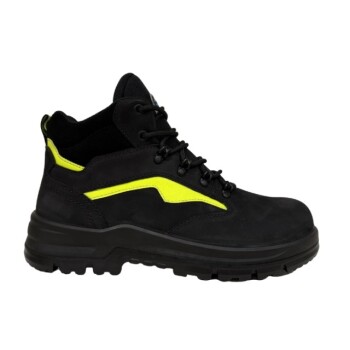
High-grip anti-slip work shoes are a critical safety necessity for personnel maintaining Membrane Bioreactor (MBR) tanks. These specialized shoes provide the essential traction required to navigate surfaces made treacherous by high-volume water discharge, chemical rinsing, and viscous biological residues. By maximizing friction on slick ladders and platforms, they serve as the primary defense against slip-and-fall accidents in these hazardous environments.
The cleaning of MBR tanks creates a uniquely dangerous environment combining chemical slickness with biological film. In this context, high-grip footwear is not a luxury—it is a fundamental stability tool required to work safely in confined spaces and at heights.
Analyzing the Environmental Hazard
The Challenge of Liquid Discharge
MBR maintenance operations inherently involve the movement of massive amounts of water. This process creates a consistently wet environment that compromises the grip of standard footwear.
Furthermore, the cleaning process often utilizes chemical rinsing agents. These chemicals can alter the surface texture of platforms, making them significantly more slippery than water alone would.
Dealing with Biological Residue
The most distinct hazard in MBR tanks is the presence of viscous biological film. This organic residue coats surfaces, creating a "lubricating" layer that is exceptionally difficult to walk on.
Standard industrial boots often fail to penetrate this film. Without specialized gear, workers risk losing traction completely, similar to walking on ice.
How High-Grip Technology Mitigates Risk
Specialized Outsole Patterns
High-grip work shoes are engineered with specific outsole designs. These patterns are not random; they are calculated to channel fluids away from the sole, ensuring better contact with the solid ground beneath.
Maximizing Friction
The core benefit of this footwear is the maximization of friction. By increasing the grip coefficient, the shoes provide a stable anchor point with every step, even on surfaces covered in slime or chemical run-off.
Operational Safety and Stability
Stability on Ladders and Heights
Maintenance personnel frequently operate on ladders or elevated platforms within the treatment unit. The consequences of a slip in these high-altitude scenarios are severe.
Anti-slip shoes provide the "bite" necessary to climb wet metal rungs securely. This stability significantly reduces the probability of catastrophic falls.
Working in Confined Spaces
MBR maintenance often forces workers into tight, confined spaces where balance is difficult to maintain.
Secure footing allows personnel to focus entirely on the cleaning task. When workers do not have to constantly worry about slipping, their efficiency and situational awareness improve.
Understanding the Trade-offs
Specificity of Design
High-grip soles are often made from softer rubber compounds to maximize surface contact. While superior on wet, slick surfaces, these soles may wear down faster if used extensively on rough, dry asphalt or concrete.
Maintenance Requirements
The effectiveness of anti-slip shoes relies on the tread pattern remaining open. If the treads become clogged with heavy sludge or dried debris, the shoe loses its ability to channel water and resist slipping.
Making the Right Choice for Your Safety
Selecting the correct footwear depends on the specific nature of your maintenance environment.
- If your primary focus is traversing biological film: Prioritize shoes with aggressive, specialized outsole patterns designed specifically to cut through viscous residues.
- If your primary focus is vertical movement: select high-grip footwear with a defined heel and arch support to ensure secure locking onto ladder rungs.
The right footwear transforms a hazardous maintenance routine into a controlled, manageable operation.
Summary Table:
| Feature | Benefit in MBR Maintenance | Outcome |
|---|---|---|
| Specialized Outsole Patterns | Channels fluids and sludge away from the sole | Increased surface contact and grip |
| High Friction Coefficient | Penetrates viscous biological films and chemical residues | Prevents slips on ice-like surfaces |
| Ladders-Specific Grip | Provides secure "bite" on wet metal rungs | Enhances safety during vertical climbs |
| Soft Rubber Compounds | Maximizes surface adhesion on slick platforms | Improved stability in confined spaces |
Partner with 3515 for Premium Protective Footwear
As a large-scale manufacturer serving distributors and brand owners, 3515 offers comprehensive production capabilities for all footwear types, anchored by our flagship Safety Shoes series. Our extensive portfolio covers work and tactical boots, outdoor shoes, training shoes, and sneakers, as well as Dress & Formal shoes to meet diverse bulk requirements.
Equip your workforce with the industry's most reliable high-grip technology. We provide customized solutions to ensure maximum safety and durability in hazardous environments like MBR tank maintenance. Contact us today to discuss your bulk manufacturing needs!
References
- Katon Bagas Fathovani, Ahmad Nalhadi. PERENCANAAN PENGENDALIAN RISIKO BAHAYA PADA AKTIVITAS KERJA WATER TREATMENT PLANT MENGGUNAKAN BOW TIE ANALYSIS. DOI: 10.36040/industri.v14i2.10711
This article is also based on technical information from 3515 Knowledge Base .
Related Products
- Advanced KPU Athletic Safety Shoe with Steel Toe Cap Anti-Slip Rotary Lacing System
- Wholesale Durable 6-Inch Work Boots | Custom & Private Label Manufacturer
- Wholesale Premium Waterproof Nubuck Safety Shoes Boots
- Durable Leather Moc Toe Work Boots for Wholesale & Custom Manufacturing
- Durable Goodyear Welt Leather Work Boots for Wholesale & Private Label
People Also Ask
- What are the key differences between steel toe and composite toe caps? Choose the Right Safety for Your Job
- What impact do steel toe caps have on toe skin health? Prevent Friction and Pressure in Your Safety Shoes
- What are the primary protective functions of safety shoes with steel toes in the automotive repair industry?
- What type of safety shoe is recommended for workers exposed to heavy machinery? Steel Toe Boots for Ultimate Protection
- How does defining specific friction interface models in FEA assist in predicting safety shoe toe cap failure modes?