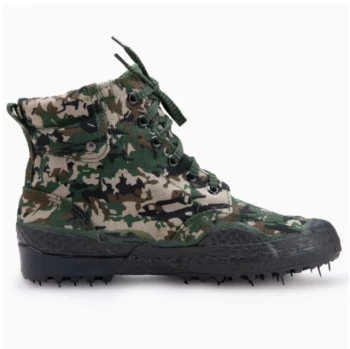
Ultimately, selecting hunting boots based on terrain and climate is the most critical gear decision you can make for ensuring comfort, safety, and performance. Boots tailored to your specific environment provide the correct support, traction, and thermal regulation, which directly translates into your ability to stay focused, hunt longer, and avoid trip-ending injuries or discomfort.
The right hunting boot isn't just footwear; it's a specialized tool engineered for a specific task. Matching the tool to the environment prevents gear failure and allows you to focus entirely on the hunt, not on your feet.
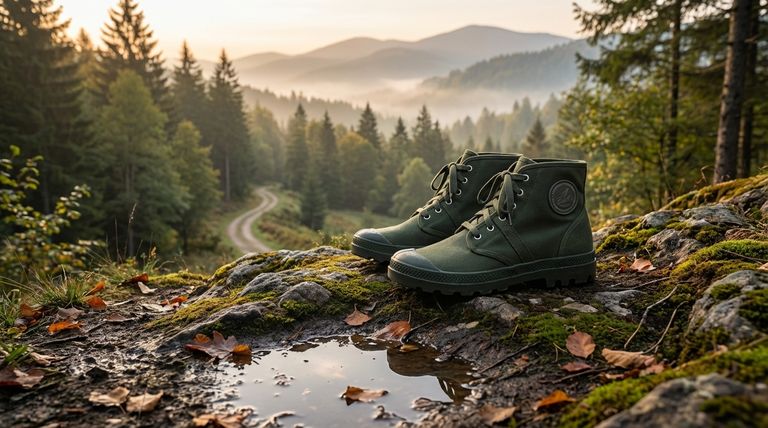
Decoding Terrain Requirements
The ground beneath your feet dictates the structural needs of your boot. A boot designed for flat farmland will fail you in the mountains, and vice-versa.
For Flat, Even Ground
When hunting in woods with minimal hiking or crossing flat farmland, your primary needs are comfort and stealth.
Look for boots with greater flexibility and a softer sole. This allows for a quieter step and reduces the fatigue associated with stiff, heavy boots on easy terrain.
For Uneven and Rocky Terrain
As the ground becomes more aggressive, support and stability become paramount.
Taller boots (8-10 inches) provide crucial ankle support to prevent rolls and sprains. A stiffer midsole protects your foot from sharp rocks and provides a stable platform on uneven surfaces.
For Wet and Muddy Conditions
Consistently wet or muddy environments demand uncompromising waterproofing and specialized traction.
Look for a reliable waterproof membrane like Gore-Tex. Equally important is an aggressive outsole with deep, widely spaced lugs that can grip slick surfaces and shed mud effectively.
Mastering Climate Control
Temperature and moisture are the enemies of comfort. Your boot's ability to manage them is essential for success, especially on multi-day or all-day hunts.
Cold Weather and Insulation
For stationary hunting in the cold, such as sitting in a tree stand, insulation is your top priority.
Insulation is measured in grams (e.g., 200g to 1200g+). A hunter sitting still requires significantly more insulation (800g+) than an active hunter who is generating body heat.
Warm Weather and Breathability
In mild or hot conditions, trapping heat and sweat is a recipe for blisters and discomfort.
Choose non-insulated boots with a breathable, moisture-wicking liner. This allows perspiration to escape, keeping your feet drier and more comfortable.
Understanding the Trade-offs
Every feature on a hunting boot comes with a trade-off. Being aware of these compromises is key to selecting the right pair for your primary hunting style.
Stiffness vs. Flexibility
A stiff, supportive mountain boot is excellent for side-hilling and navigating rocks but can feel clumsy and fatiguing on long, flat hikes. A flexible boot is comfortable on flat ground but offers poor support in challenging terrain.
Insulation vs. Versatility
A heavily insulated boot is essential for late-season cold-weather hunts but will be unbearably hot and cause excessive sweating during early-season or active hunts.
Durability vs. Weight
Boots made from thick, full-grain leather are incredibly durable but also heavy. Lighter, synthetic boots reduce fatigue but may not withstand the same level of abuse over time.
How to Apply This to Your Purchase
Choosing the right boot means honestly assessing your most common hunting scenario and prioritizing features accordingly.
- If your primary focus is stationary hunting in cold weather: Prioritize high levels of insulation (800g+) and complete waterproofing over flexibility or light weight.
- If your primary focus is active hunting in varied, rocky terrain: Prioritize ankle support from a taller boot, a semi-stiff sole for stability, and moderate insulation (or none) to match the season.
- If your primary focus is early-season or warm-weather hunting: Prioritize breathability, a flexible sole for stealth, and light weight to minimize fatigue.
The perfect hunting boot is one you never have to think about once it's on your foot.
Summary Table:
| Factor | Terrain Requirement | Climate Requirement |
|---|---|---|
| Flat Ground | Flexible, soft sole for stealth | Breathable for warm weather |
| Rocky Terrain | Tall, stiff sole for ankle support | Moderate or no insulation |
| Wet/Muddy | Waterproof membrane, aggressive outsole | Varies with temperature |
| Cold Weather | N/A | High insulation (800g+) for stationary hunting |
Ready to equip yourself with the perfect hunting boots?
As a large-scale manufacturer, 3515 produces a comprehensive range of high-performance footwear tailored for diverse terrains and climates. We provide durable, comfortable, and purpose-built hunting boots for distributors, brand owners, and bulk clients, ensuring your customers are always prepared for the hunt.
Contact us today to discuss your specific needs and discover how our manufacturing expertise can enhance your product line.
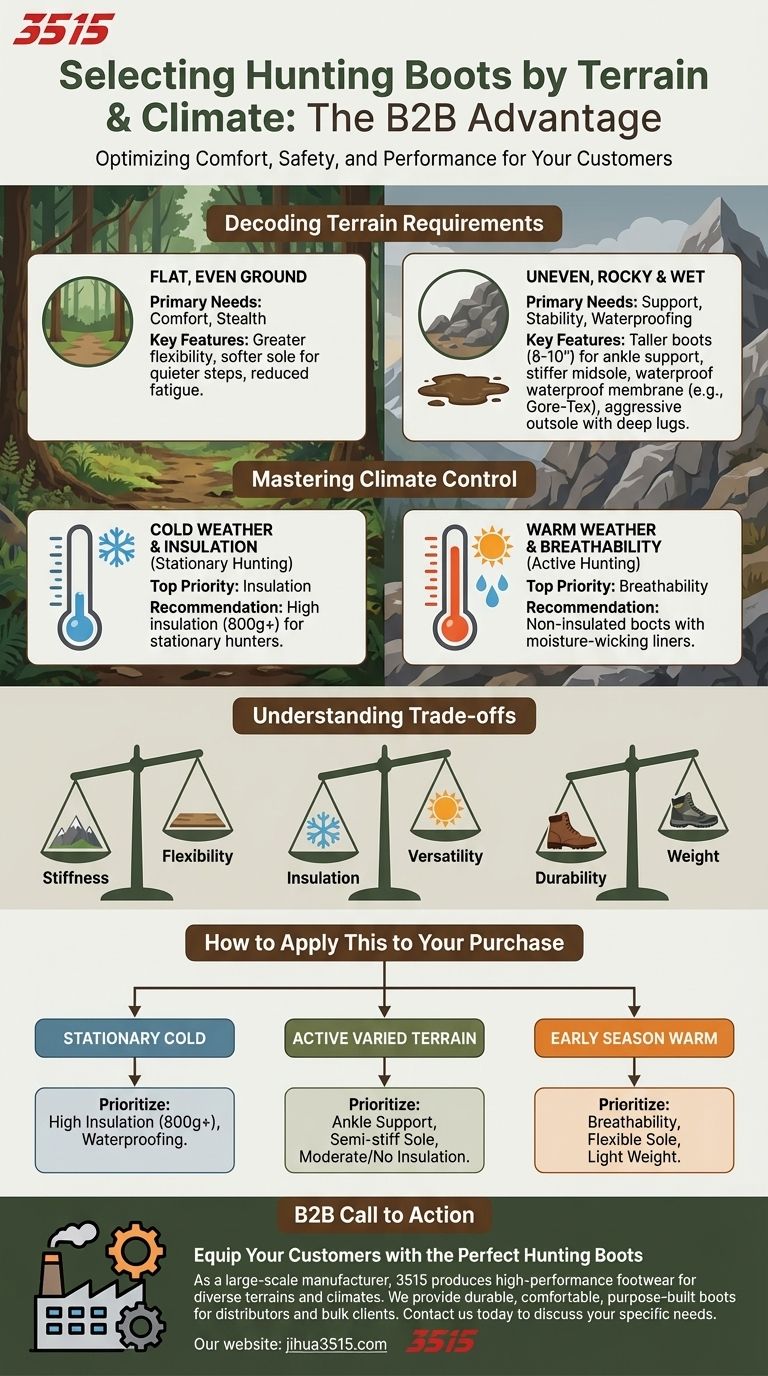
Visual Guide
Related Products
- Wholesale Lightweight Tactical Boots Custom Manufacturer for Desert & Combat Use
- High-Traction Suede Tactical Boots Wholesale & Custom Manufacturing
- Durable Leather Tactical Boots Wholesale & Custom Manufacturing for Brands
- Durable Military Combat Boots with Water Drainage for Wholesale & OEM
- Wholesale Waterproof Tactical Boots Custom Suede & High-Traction Soles
People Also Ask
- What are the common types of combat boots? Find the Right Boot for Your Mission
- What specialized protections do tactical boots offer? Maximize Endurance with High-Performance Footwear
- What is the role of high-frequency acquisition hardware in technical skill analysis for outdoor and tactical boots?
- How is the compatibility of polymer materials demonstrated in smart footwear? Enhancing Tactical & Training Performance
- What are the different types of tactical boots available? Find the Right Boot for Your Mission