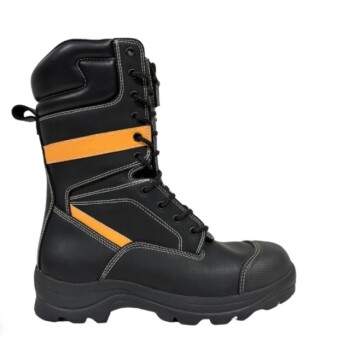
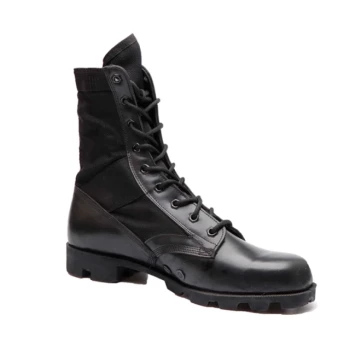
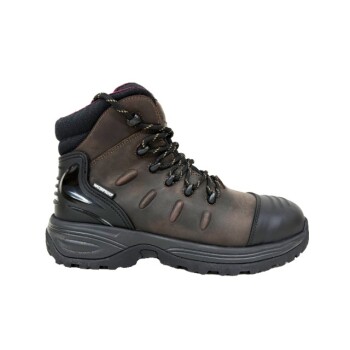
The primary benefits of nylon and synthetic fibers in firefighter boots are their ability to significantly reduce weight while providing exceptional durability, heat resistance, and breathability. These modern materials deliver rugged protection against harsh environments without the fatigue-inducing bulk of traditional materials, directly improving a firefighter's endurance and foot health over long, demanding shifts.
The core challenge in firefighter footwear is balancing uncompromising protection with the need for mobility and comfort. Synthetic materials like nylon solve this by offering a lightweight, breathable, and quick-drying alternative to all-leather construction, reducing physical strain and improving readiness.
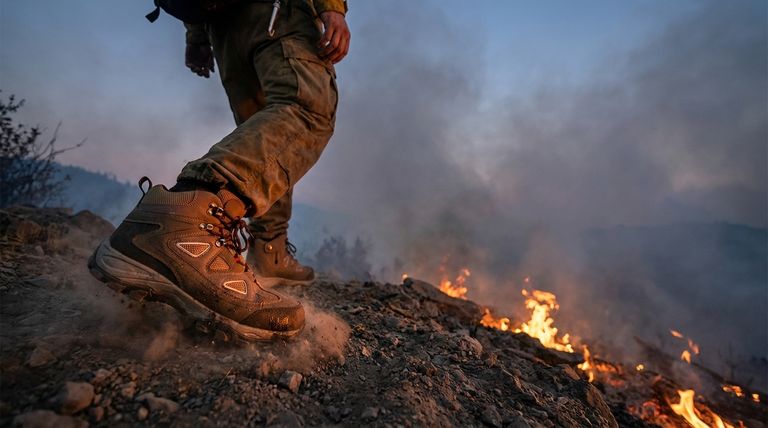
The Critical Link Between Material and Performance
To understand the value of synthetics, we must look beyond a simple list of features. Each material property directly addresses a critical challenge faced by firefighters, particularly in wildland scenarios where long hours and difficult terrain are the norm.
Reducing Fatigue with Lightweight Construction
A firefighter's energy is a finite resource. Heavy boots act as a constant drain on that energy, with every step requiring more effort.
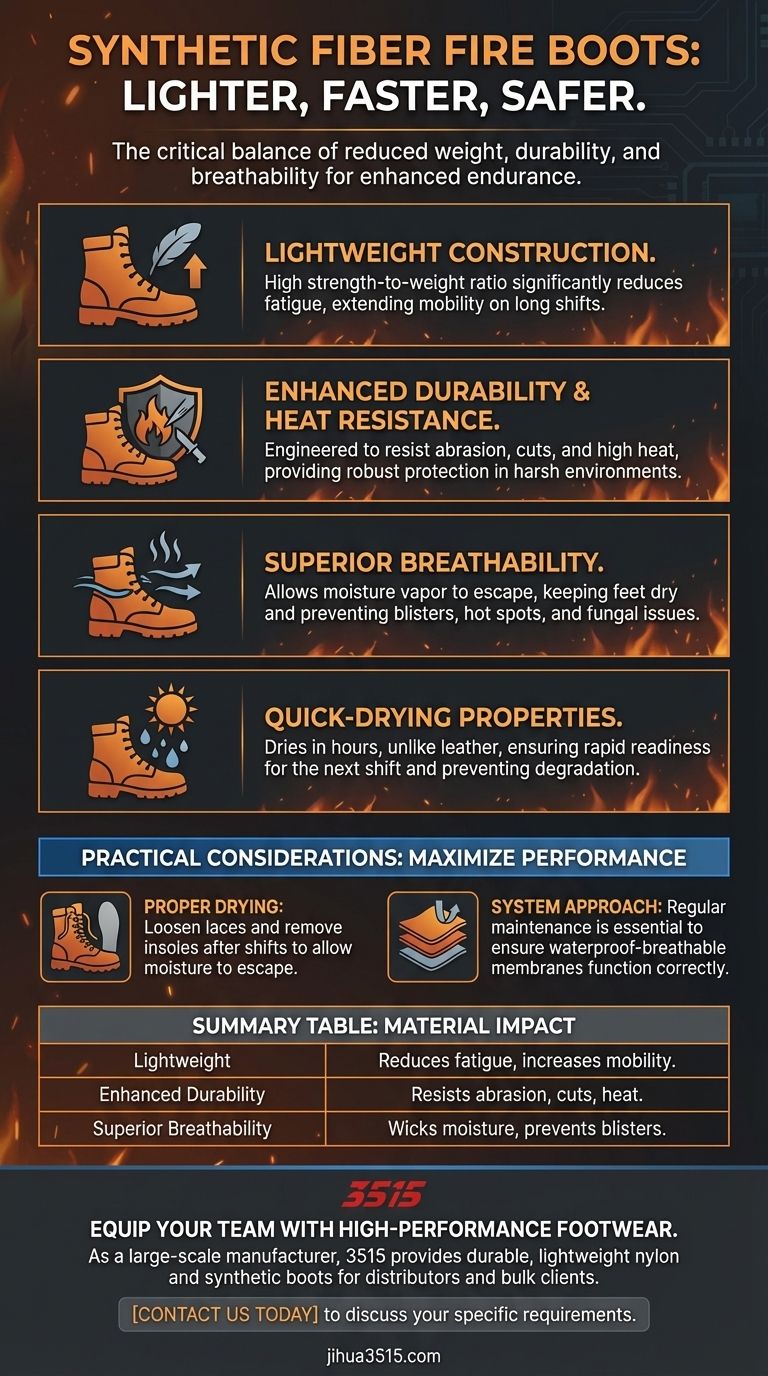
Nylon and other synthetics have a high strength-to-weight ratio. This allows for the construction of a boot that is both protective and significantly lighter, reducing overall fatigue and increasing the wearer's endurance and mobility on the fireline.
Ensuring Durability in Harsh Environments
Firefighting environments are incredibly abrasive and expose footwear to intense thermal stress.
Modern synthetic fibers are engineered for robustness. They are highly resistant to the cuts, scrapes, and abrasion common when navigating rough terrain. Furthermore, their inherent heat resistance provides a critical layer of protection in close proximity to fires.
Enhancing Foot Health Through Breathability
A boot that cannot breathe traps moisture from sweat, creating a perfect environment for blisters, hot spots, and fungal infections.
Synthetics are far more breathable than traditional non-porous materials. This property allows moisture vapor to escape, keeping the foot drier and more comfortable. This is not a matter of comfort alone; it is a critical factor in preventing debilitating foot issues during multi-day incidents.
Improving Readiness with Quick-Drying Properties
Boots can become saturated from external water sources or internal sweat. A boot that stays wet is a boot that's out of commission.
Unlike leather, which can take a very long time to dry, synthetic materials do not absorb significant moisture. They dry within hours, ensuring the boot is ready for the next shift and preventing the material degradation that can occur from prolonged dampness.
Common Pitfalls and Considerations
While the benefits are clear, relying on synthetic materials requires an understanding of their practical limitations and proper care.
The Importance of Proper Drying
The quick-drying nature of synthetics is only effective if the boot is allowed to air out properly.
Always loosen the laces and remove the insoles after a shift. This simple step allows trapped moisture deep inside the boot to evaporate, maximizing the benefit of the breathable materials and ensuring the boot is truly dry for its next use.
Synthetics Are Part of a System
Nylon uppers are often paired with waterproof-breathable membranes. The effectiveness of the entire boot system depends on each layer functioning correctly.
If a membrane fails or the exterior fabric is no longer water-repellent, the boot's breathability can be compromised. Regular cleaning and maintenance are essential to the performance of the entire boot.
Making the Right Choice for Your Role
Choosing the right boot means aligning its material benefits with the specific demands of your job.
- If your primary focus is wildland firefighting: Prioritize boots with significant nylon or synthetic panels for maximum breathability and reduced weight during long treks over difficult terrain.
- If your primary focus is all-around readiness: Look for hybrid designs that blend the proven durability of leather in high-wear areas with the lightweight, quick-drying advantages of synthetic uppers.
- If your primary focus is long-term foot health: Select boots that specifically market their moisture-wicking synthetic liners and commit to a routine of proper drying between every single shift.
Ultimately, understanding these materials empowers you to select a critical piece of equipment that enhances your safety, endurance, and effectiveness when it matters most.
Summary Table:
| Benefit | Key Impact for Firefighters |
|---|---|
| Lightweight Construction | Reduces fatigue and increases mobility on long shifts. |
| Enhanced Durability | Resists abrasion, cuts, and heat in harsh environments. |
| Superior Breathability | Wicks moisture to prevent blisters and improve foot health. |
| Quick-Drying Properties | Ensures boots are ready for the next call, faster than leather. |
Ready to equip your team with high-performance firefighter boots?
As a large-scale manufacturer, 3515 produces a comprehensive range of durable, lightweight footwear built with advanced materials like nylon and synthetic fibers. We specialize in meeting the needs of distributors, brand owners, and bulk clients who demand reliability and enhanced safety for first responders.
Contact us today to discuss your specific requirements and discover how our production capabilities can deliver the right boots for your mission.
Visual Guide
Related Products
- High Performance Fire-Retardant Waterproof Safety Boots
- Premium Flame-Retardant Waterproof Safety Boots and Shoes
- Durable Military Combat Boots with Water Drainage for Wholesale & OEM
- Wholesale Lightweight Tactical Boots Custom Manufacturer for Desert & Combat Use
- High-Traction Suede Tactical Boots Wholesale & Custom Manufacturing
People Also Ask
- Why are waterproof safety boots recommended for certain work environments? Essential Protection for Wet & Hazardous Jobs
- What roles do 3D vision systems and industrial robots play in the manufacturing of fire safety boots? Smart Automation
- How can you ensure your feet stay dry during winter walks? A Two-Part Defense System for Total Comfort
- What are the primary benefits of incorporating waterproof technology into professional and outdoor boots? Boost Value
- What is the advantage of one-piece construction in waterproof boots? Unbeatable Seamless Protection