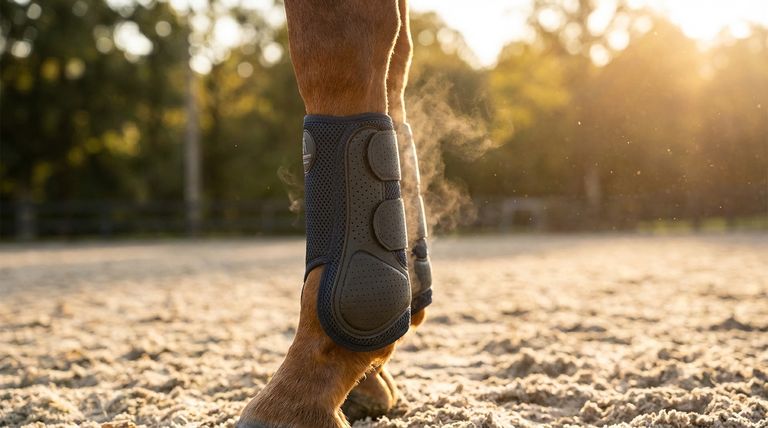
The primary benefit of breathable horse boots is their ability to prevent the dangerous buildup of heat and moisture around your horse's lower leg. By actively allowing heat to escape and moisture to evaporate, these boots significantly reduce the risk of tendon damage and common skin infections.
While all boots offer protection, breathable boots address a critical and often overlooked risk: the potential for internal leg structures to overheat during exercise. Choosing a breathable design is a proactive measure to safeguard your horse's long-term tendon health and skin integrity.
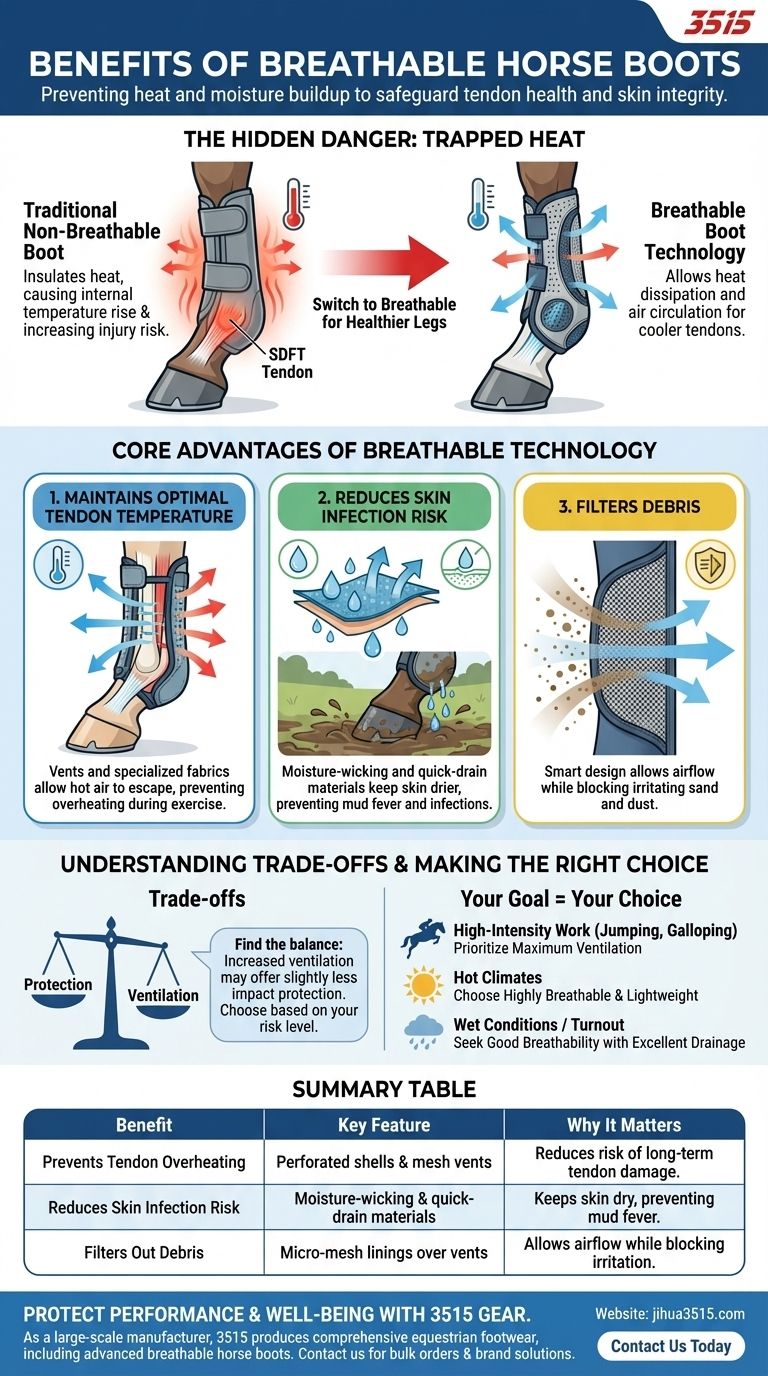
The Hidden Danger of Trapped Heat
A horse's tendons, particularly the superficial digital flexor tendon (SDFT), have a very limited blood supply. This means they cannot cool themselves efficiently once they heat up during exercise.
How Traditional Boots Exacerbate the Problem
Traditional boots made from non-breathable materials like standard neoprene act as insulators. They trap the intense heat generated by working tendons, causing the internal temperature of the leg to rise to potentially damaging levels.
The Link Between Heat and Injury
Elevated temperatures can lead to the degeneration of tendon cells over time. This cumulative damage can increase the risk of a soft tissue injury, such as a bowed tendon, which can be career-ending for an athletic horse.
Core Advantages of Breathable Technology
Modern breathable boots are engineered with materials and designs that actively counteract heat and moisture buildup, providing a safer environment for your horse's legs.
Benefit 1: Maintaining Optimal Tendon Temperature
Breathable boots use perforated shells, mesh vents, and specialized fabrics that allow hot air to escape and cool air to circulate. This ventilation is critical for dissipating heat away from the vulnerable tendons during and after strenuous work.
Benefit 2: Reducing Skin Infection Risk
Sweat and water trapped against the skin create a warm, damp environment ideal for bacteria and fungi to thrive. This can lead to conditions like mud fever, scratches, or other dermatological infections (dermatophytes).
Breathable materials wick moisture away from the skin and are often designed to drain water quickly. This keeps the skin drier and healthier, maintaining its natural barrier against pathogens.
Benefit 3: Filtering Debris
Many high-quality breathable boots incorporate specialized linings or micro-mesh over the vents. This smart design allows air to flow freely while helping to block sand, dust, and arena footing from entering the boot and causing irritation.
Understanding the Trade-offs
While highly beneficial, breathable boots involve design considerations that you should be aware of. Understanding these factors will help you select the right product for your specific needs.
Protection vs. Ventilation
A boot with more vents or constructed from lighter, more flexible materials might offer slightly less impact protection than a solid, rigid boot. The key is to find a balance that suits your discipline's risk level.
Debris Entry
Despite filtering technology, boots with significant ventilation can be more susceptible to fine dust or water entry in certain conditions compared to a sealed boot. For very muddy or wet environments, look for designs that specifically emphasize rapid water drainage.
Making the Right Choice for Your Goal
Selecting the appropriate boot depends entirely on your horse's workload and environment.
- If your primary focus is high-intensity work (show jumping, cross-country, galloping): Prioritize maximum ventilation to mitigate the significant risk of tendon overheating.
- If your primary focus is riding in hot climates: A highly breathable, lightweight boot is essential for your horse's comfort and to prevent heat-related stress on the legs.
- If your primary focus is turnout or work in wet conditions: Seek a boot that combines good breathability with excellent water-draining properties to protect skin integrity.
Ultimately, choosing a breathable boot is a critical investment in your horse's soundness and well-being.
Summary Table:
| Benefit | Key Feature | Why It Matters |
|---|---|---|
| Prevents Tendon Overheating | Perforated shells & mesh vents | Reduces risk of long-term tendon damage and injury |
| Reduces Skin Infection Risk | Moisture-wicking & quick-drain materials | Keeps skin dry, preventing mud fever and scratches |
| Filters Out Debris | Micro-mesh linings over vents | Allows airflow while blocking sand and dust from causing irritation |
Protect your horse's performance and well-being with the right gear. As a large-scale manufacturer, 3515 produces a comprehensive range of equestrian footwear, including advanced breathable horse boots designed for durability and optimal leg health. Whether you are a distributor, brand owner, or bulk client, we can meet your specific needs. Contact us today to discuss how our production capabilities can benefit your business.
Visual Guide
Related Products
- Wholesale Breathable Perforated Leather Derby Shoes with Modern Comfort Sole
- Custom Breathable Perforated Leather Derby Shoes for Wholesale & Brands
- Wholesale Breathable Perforated Leather Derby Dress Shoes for Custom Brands
- Lightweight Breathable Training Shoes for Wholesale & Custom OEM Manufacturing
- Wholesale Breathable Training Shoes Custom Athletic Footwear Manufacturer
People Also Ask
- What are the features and appropriate occasions for wearing derby shoes? A Guide to Versatile Style
- What is the main difference between Derby Shoes and Oxford Shoes? It's All in the Lacing.
- How do Derby shoes fit into business casual attire? Master the Perfect Balance of Professional Style
- What historical figure is associated with the Derby shoe? The Earl of Derby's Comfort Revolution
- Why are Derby shoes considered a valuable investment for business attire? The Ultimate Guide to Versatile Professional Footwear