At its core, cotton footwear offers exceptional comfort and breathability for casual use, but its tendency to absorb and retain moisture makes it a poor choice for athletic or wet conditions. The very properties that make it soft and pleasant against the skin become significant liabilities when performance and dryness are required.
The decision to choose cotton footwear hinges entirely on its intended environment. It excels in dry, low-intensity settings where comfort is paramount but fails significantly in situations involving sweat, rain, or demanding physical activity.
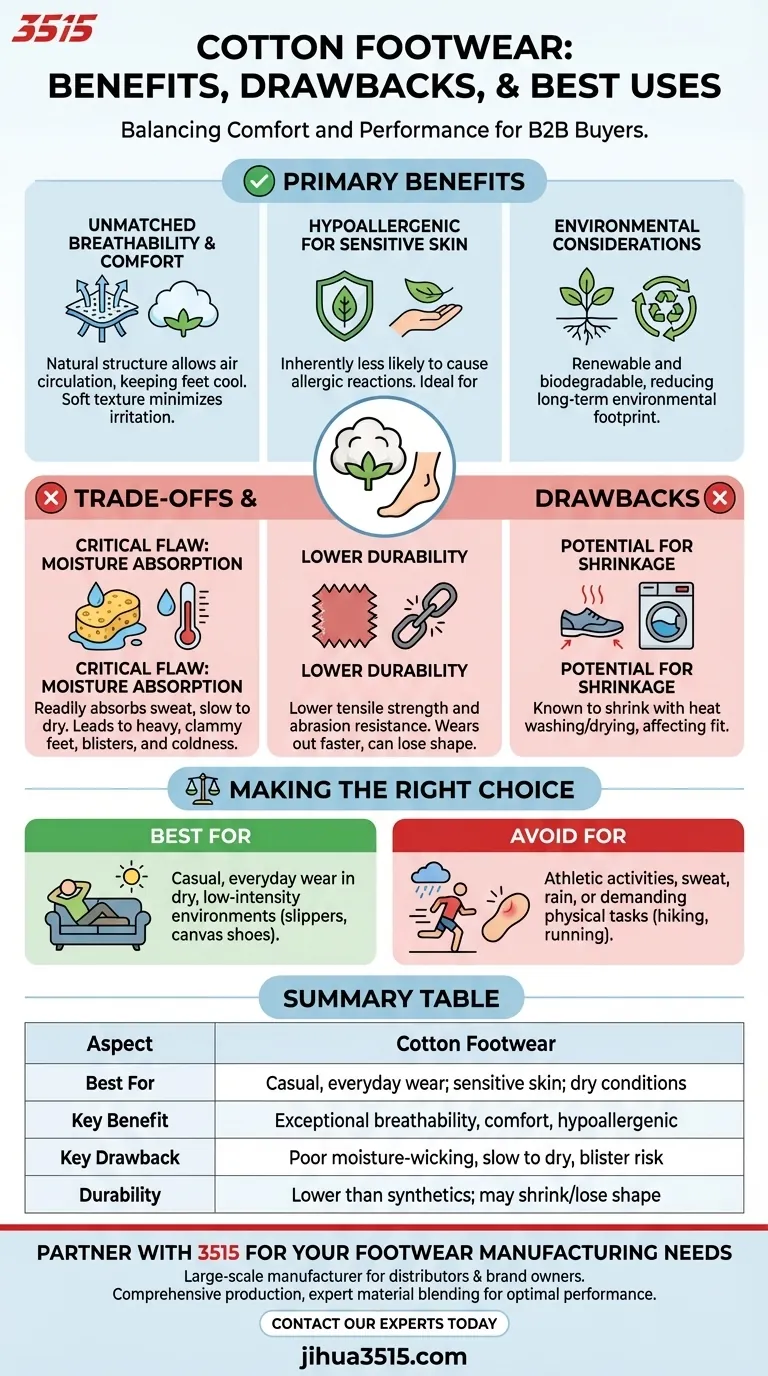
The Primary Benefits of Cotton Footwear
Cotton is a natural, plant-based fiber that has been used for centuries. Its inherent characteristics offer distinct advantages for certain types of footwear, particularly those designed for everyday comfort.
Unmatched Breathability and Comfort
The natural structure of cotton fibers allows air to circulate freely. This breathability helps to dissipate heat and reduce sweat buildup during casual wear, keeping feet cooler and more comfortable.
Its soft texture feels pleasant against the skin, minimizing the risk of irritation or chafing that can sometimes occur with rougher synthetic materials.
Hypoallergenic for Sensitive Skin
As a natural material, cotton is inherently hypoallergenic. It is less likely to cause allergic reactions or skin irritation, making it an ideal choice for individuals with sensitive skin.
Environmental Considerations
Cotton is a renewable resource and is biodegradable. Unlike petroleum-based synthetic fibers like polyester or nylon, cotton footwear will decompose over time, reducing its long-term environmental footprint.
Understanding the Trade-offs and Drawbacks
The same properties that make cotton comfortable also create its most significant weaknesses. Understanding these limitations is critical to avoid discomfort and potential foot health issues.
The Critical Flaw: Moisture Absorption
Cotton is hydrophilic, meaning it readily absorbs water. While it can absorb a significant amount of sweat, it does not wick it away from the skin and is extremely slow to dry.
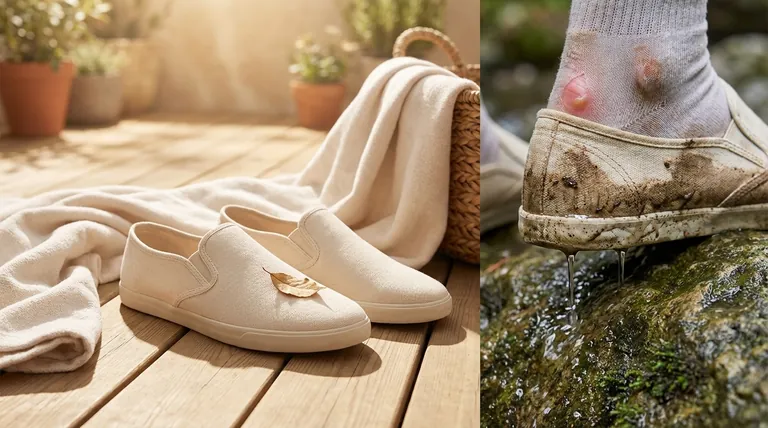
Once wet, cotton loses all of its insulating properties, becoming heavy and clammy. This trapped moisture can lead to friction, dramatically increasing the risk of painful blisters. In cold weather, wet cotton can pull heat away from the body, leading to dangerously cold feet.
Lower Durability
Compared to modern synthetics like nylon or polyester, cotton fibers have lower tensile strength and abrasion resistance. Footwear made from cotton, especially in high-wear areas, will typically wear out more quickly.
The material can also stretch and lose its shape when repeatedly washed or exposed to moisture, compromising the fit and support of the shoe over time.
Potential for Shrinkage
Cotton is known to shrink when washed and dried with heat. This can alter the fit of the footwear, potentially making it tight and uncomfortable after laundering.
Making the Right Choice for Your Activity
Selecting the right material is about matching its properties to your needs. Use these guidelines to decide if cotton is the appropriate choice for you.
- If your primary focus is casual, everyday comfort: Cotton is an excellent choice for slippers, casual sneakers, and canvas shoes meant for dry, low-intensity environments.
- If your primary focus is hiking, running, or any athletic activity: You must avoid 100% cotton footwear and socks, as its moisture retention creates a high risk for blisters and discomfort.
- If your primary focus is environmental impact or sensitive skin: Cotton is a strong contender for casual use, provided you are aware of its performance limitations.
Ultimately, understanding a material's inherent behavior is the key to choosing footwear that serves you well.
Summary Table:
| Aspect | Cotton Footwear |
|---|---|
| Best For | Casual, everyday wear; sensitive skin; dry conditions |
| Key Benefit | Exceptional breathability, comfort, and hypoallergenic properties |
| Key Drawback | Poor moisture-wicking, slow to dry, higher risk of blisters |
| Durability | Lower compared to synthetic materials; may shrink or lose shape |
Partner with 3515 for Your Footwear Manufacturing Needs
As a large-scale manufacturer, 3515 produces a comprehensive range of footwear for distributors, brand owners, and bulk clients. Our production capabilities encompass all types of shoes and boots, including designs that expertly blend materials for optimal performance and comfort.
Let us help you navigate material selection and create the perfect product line for your market. Contact our experts today to discuss your manufacturing project!
Visual Guide
Related Products
- Durable Leather High-Ankle Tactical Boots for Wholesale & Custom Manufacturing
- Lightweight Breathable Training Shoes for Wholesale & Custom OEM Manufacturing
- Durable Leather Tactical Boots Wholesale & Custom Manufacturing for Brands
- Durable Leather Work Boots for Wholesale & Custom Manufacturing
- Wholesale Breathable Perforated Leather Derby Shoes with Modern Comfort Sole
People Also Ask
- How do military uniforms and tactical boots impact the prediction of thermal risk? Essential Safety Insights
- How does the material of tactical boots affect their performance? Choose the Right Material for Your Mission
- Why is sequential analysis utilized to evaluate tactical boots? Master Dynamic Boot Development and Ergonomic Performance
- How do tactical boots differ from regular boots? Performance, Durability & Design Explained
- What are the primary differences between tactical boots and combat boots? Choose the Right Boot for Your Mission