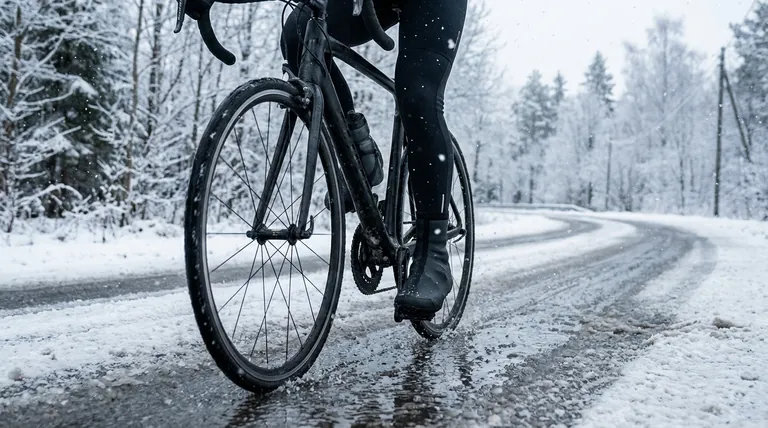
The primary advantage of winter-specific cycling shoes is that they provide a fully integrated system for warmth, insulation, and waterproofing that shoe covers cannot replicate. They are designed from the ground up to protect your feet from the elements, whereas shoe covers are an external layer added to a shoe not intended for harsh conditions.
The decision between dedicated winter shoes and shoe covers is not merely about warmth; it's a trade-off between the comprehensive, hassle-free protection of an integrated system and the affordable versatility of an add-on solution.
The Core Difference: Integrated vs. Add-On Protection
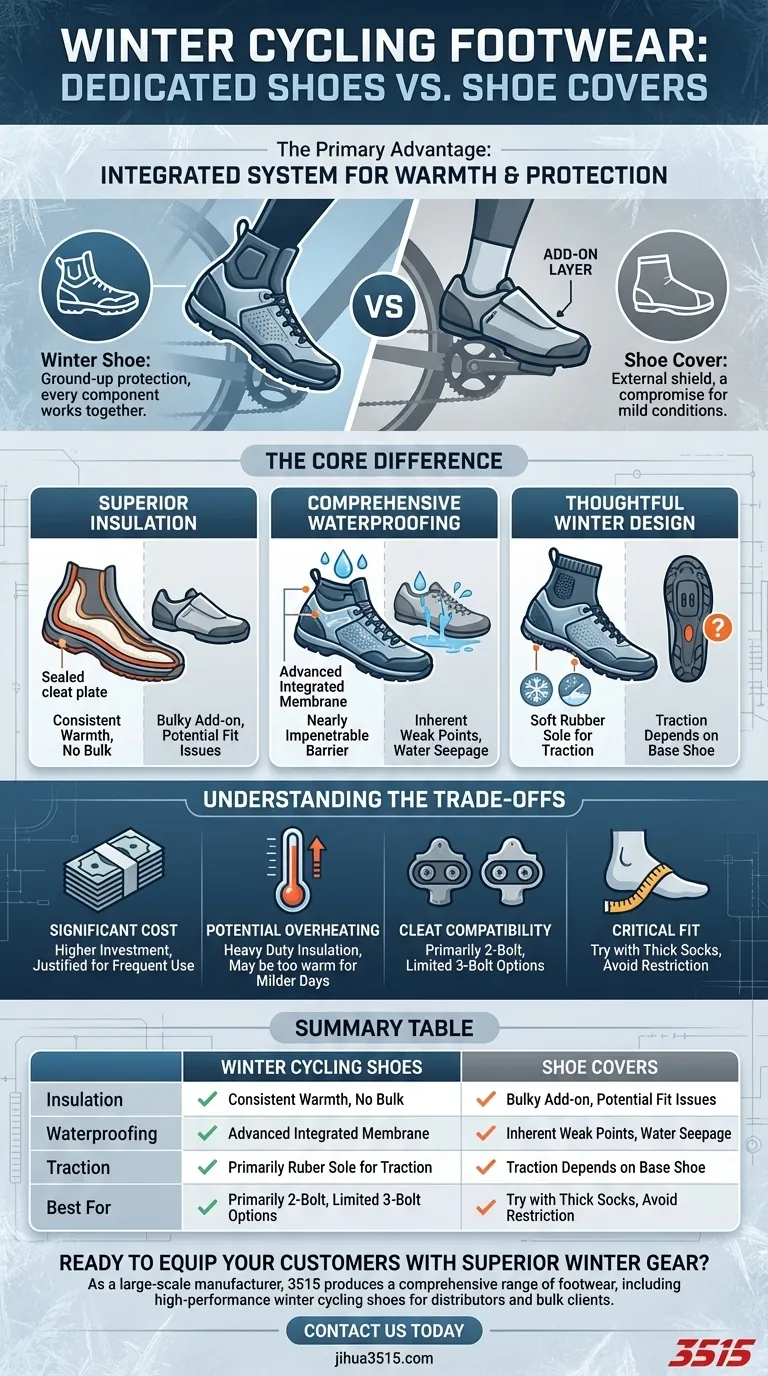
Winter shoes are purpose-built tools. Every component, from the sole to the ankle cuff, is designed to work together to keep your feet warm and dry. Shoe covers are a compromise, attempting to shield a highly ventilated summer shoe from conditions it was never meant to face.
Superior Insulation
A dedicated winter shoe has insulation built directly into its structure, completely surrounding your foot. This provides consistent warmth without the bulk or potential fit issues of cramming thicker socks into a standard shoe.
These shoes also isolate the cleat plate—a major source of cold transfer—from the sole, preventing frigid air from chilling your foot from below.
Comprehensive Waterproofing
Winter shoes often use advanced waterproof and breathable membranes, like Gore-Tex, integrated into the shoe's upper.
Features like a high, sealed ankle cuff, a folding "false tongue," and minimal seams create a nearly impenetrable barrier. Covers, by contrast, have inherent weak points at the cleat opening on the bottom and the ankle opening at the top, where water inevitably seeps in during heavy rain or from road spray.
Thoughtful Design for Winter Conditions
Beyond warmth, winter shoes include features specifically for cold-weather riding.
They typically have a higher ankle cuff with a neoprene-like grip to seal out drafts and moisture. The soles are often made of a softer rubber compound, providing much better traction for those moments when you have to walk on icy or wet surfaces.
Understanding the Trade-offs and Downsides
While technologically superior, dedicated winter shoes are not the default choice for every cyclist. Their specific design comes with practical limitations that must be considered.
The Significant Cost
There is no avoiding the primary drawback: cost. Winter-specific cycling shoes are a significant investment, often costing two to three hundred dollars. This can be difficult to justify for an item used only a few months of the year.
Potential for Overheating
The same heavy-duty insulation that makes these shoes effective in the freezing cold can cause your feet to overheat on milder winter days. A shoe that is perfect for 25°F (-4°C) may feel like an oven at 45°F (7°C).
Cleat Compatibility
The vast majority of winter cycling shoes are designed for 2-bolt "mountain bike" style cleats (like Shimano SPD). This is because the design allows for a recessed cleat and a more walkable sole. Road cyclists who are committed to their 3-bolt systems (like Look or Shimano SPD-SL) will find their options severely limited.
The Critical Importance of Fit
Proper sizing is essential. You must try these shoes on, preferably with the thick wool socks you intend to wear while riding. A shoe that is too tight will restrict blood flow, leading to colder feet and negating the benefits of the insulation.
Making the Right Choice for Your Riding
Your decision should be based on an honest assessment of your riding frequency, typical weather conditions, and budget.
- If your primary focus is riding frequently in consistently cold and wet conditions: The superior, integrated protection of a dedicated winter shoe is a worthwhile investment for your comfort and performance.
- If your primary focus is occasional riding in milder winter weather or on a tight budget: A high-quality, well-fitted pair of neoprene shoe covers provides a practical and cost-effective solution.
- If your primary focus is road cycling with a 3-bolt cleat system: Premium, insulated shoe covers are often your most realistic and effective option due to the limited availability of 3-bolt winter shoes.
Ultimately, choosing the right footwear is about matching your equipment's capabilities to the reality of your winter riding.
Summary Table:
| Feature | Winter Cycling Shoes | Shoe Covers |
|---|---|---|
| Insulation | Built-in, consistent warmth | Added layer, can be bulky |
| Waterproofing | Integrated membrane, sealed design | Potential weak points, water seepage |
| Traction | Softer rubber sole for icy surfaces | Depends on base shoe |
| Best For | Frequent riding in cold/wet conditions | Occasional riding, milder weather, budget-conscious |
Ready to equip your customers with superior winter cycling gear?
As a large-scale manufacturer, 3515 produces a comprehensive range of footwear for distributors, brand owners, and bulk clients. Our production capabilities encompass all types of shoes and boots, including high-performance winter cycling shoes designed for ultimate comfort and protection.
Contact us today to discuss how we can help you source reliable, high-quality winter cycling footwear for your market.
Visual Guide
Related Products
- Premium Insulated Safety Boots and Shoes for Wholesale & Bulk Orders
- Lightweight Breathable Sneakers with Wet-Traction Grip for Wholesale & Private Label
- Premium Suede Sport Safety Shoes for Wholesale & Bulk Orders
- Durable Waterproof Rain Boots | Custom Manufacturer for Wholesale & Brands
- Durable Rubber Sole Outdoor Shoes Wholesale & Custom Manufacturing
People Also Ask
- What are the recommended insulation ratings for mild winter conditions? A Guide for Active & Stationary Workers
- How does insulation thickness correlate with temperature ranges? A Guide to Choosing the Right Warmth
- What insulation level is needed for severe cold and stationary work? 1200g or Higher is Essential
- What safety advantages do insulated boots offer beyond warmth? Dielectric Protection & Superior Grip
- How does fleece lining contribute to the warmth of insulated boots? Trapping Air for Superior Cold Protection