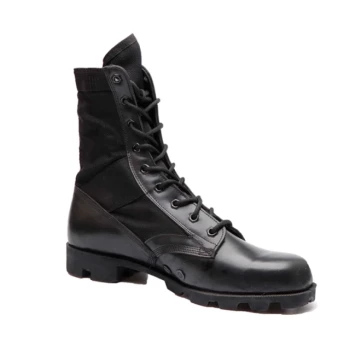
In short, the primary advantages of paddock boots are their affordability, comfort, and versatility. They serve as the practical workhorse of equestrian footwear, making them an excellent choice for beginner riders, children, and for daily schooling or barn work where comfort and durability are paramount.
The choice between paddock boots and their taller counterparts is not about which is "better," but which is the right tool for the job. Paddock boots are the versatile, everyday option for training and groundwork, while tall boots are specialized equipment for the formal requirements of the show ring.

The Core Advantages of Paddock Boots
Paddock boots are the most common type of riding boot for a reason. They offer a unique combination of practicality, accessibility, and function that serves a wide range of riders.
Financial Accessibility and Value
The most significant advantage is cost. Paddock boots are considerably less expensive than tall boots, lowering the barrier to entry for new riders or families with growing children who will quickly outgrow their gear. This also makes them a sensible choice for a second pair of boots dedicated to training, preserving more expensive tall boots for competition.
Comfort and Ease of Use
Unlike the often stiff and demanding break-in period for tall boots, paddock boots are typically comfortable right out of the box. Their ankle-height design offers more flexibility, and features like zippers or elastic gores make them quick and easy to put on and take off.
Unmatched Versatility
Paddock boots are designed for life at the barn, not just life in the saddle. They are comfortable and sturdy enough for walking, grooming, and performing daily barn chores, a task that would be cumbersome and cause unnecessary wear on tall boots.
How Paddock Boots Function for the Rider
Beyond their practical benefits, paddock boots are engineered with specific features essential for safe and effective riding.
Ensuring Safety in the Stirrup
Proper riding boots are a critical piece of safety equipment. Paddock boots feature a distinct heel, typically between 1.5 and 2 inches, which is designed to prevent the rider's foot from accidentally slipping all the way through the stirrup.
Adapting for Added Protection and Grip
By themselves, paddock boots offer minimal protection to the lower leg. This is why they are most often paired with half chaps, which are leather or synthetic coverings that zip up the side of the calf. This combination mimics the function of a tall boot, providing grip against the saddle and protecting the leg from pinching or rubbing.
Communicating with the Horse
Like any well-designed riding boot, paddock boots facilitate clear communication. The structure of the boot allows the rider to apply subtle yet precise cues to the horse's sides through leg and heel pressure, which is essential for guiding the horse and signaling transitions.
Understanding the Trade-offs: Paddock Boots vs. Tall Boots
While paddock boots are excellent for training, choosing the right boot means understanding their limitations, especially when compared to traditional tall boots.
Appearance and Show Ring Standards
The most significant difference is in appearance. Tall boots provide a seamless, elegant, and traditional look from calf to ankle. This polished presentation is the standard and is generally required for upper-level and recognized competitions. A paddock boot and half chap combination, while functional, is considered less formal and may only be acceptable in schooling shows or lower-level classes.
Rider-to-Horse Contact
Tall boots, being a single piece of leather, offer a closer and more direct feel of the horse's sides. The combination of a paddock boot and half chaps can sometimes feel slightly bulkier, creating a small but noticeable separation between the rider's leg and the horse.
Specialization vs. General Use
The trade-off is clear: paddock boots are generalists, and tall boots are specialists. Paddock boots excel in a variety of situations from mucking a stall to schooling a horse. Tall boots excel at one thing: providing the proper look, feel, and function for competitive riding.
Making the Right Choice for Your Goal
Selecting the right footwear depends entirely on your specific needs and equestrian activities.
- If your primary focus is daily training, barn work, or you are a beginner rider: Paddock boots offer the best combination of value, comfort, and versatility.
- If your primary focus is competing in recognized horse shows: Tall boots are the standard and a necessary investment for a professional appearance.
- If you are a child or a rider on a budget needing to show: A well-fitting pair of paddock boots with matching leather half chaps is an acceptable and cost-effective solution for many lower-level shows.
Ultimately, choosing the right boot is about equipping yourself with the proper tool to safely and effectively pursue your riding goals.
Summary Table:
| Advantage | Key Benefit | Ideal For |
|---|---|---|
| Financial Accessibility | Lower cost than tall boots, great value | Beginners, children, budget-conscious riders |
| Comfort & Ease of Use | Flexible, easy to put on/take off | Daily schooling and barn chores |
| Versatility | Suitable for riding and stable work | Training, groundwork, and general use |
| Safety | Heel prevents foot from slipping through stirrup | Safe riding for all levels |
| Communication | Allows precise leg cues when paired with half chaps | Effective horse-rider interaction |
Ready to find the perfect paddock boots for your equestrian needs? As a large-scale manufacturer, 3515 produces a comprehensive range of durable and comfortable footwear for distributors, brand owners, and bulk clients. Whether you need reliable paddock boots for training or versatile equestrian footwear for your customers, we deliver quality and value. Contact us today to discuss your requirements and discover how we can support your business with our extensive production capabilities!
Visual Guide

Related Products
- Wholesale Lightweight Tactical Boots Custom Manufacturer for Desert & Combat Use
- Wholesale Waterproof Tactical Boots Custom Suede & High-Traction Soles
- High-Traction Suede Tactical Boots Wholesale & Custom Manufacturing
- Durable Military Combat Boots with Water Drainage for Wholesale & OEM
- Wholesale High-Traction Camo Boots - Custom Manufacturer for Brands
People Also Ask
- What are the common types of combat boots? Find the Right Boot for Your Mission
- What specialized protections do tactical boots offer? Maximize Endurance with High-Performance Footwear
- What are the main construction similarities between tactical boots and tactical sneakers? Built for Performance & Durability
- What are the different types of tactical boots available? Find the Right Boot for Your Mission
- How is the compatibility of polymer materials demonstrated in smart footwear? Enhancing Tactical & Training Performance