The primary advantages of using rubber for work boots are its exceptional waterproofing, superior slip resistance, and outstanding durability. These qualities make rubber an ideal material for footwear in demanding and hazardous work environments where safety, protection, and longevity are non-negotiable.
Rubber isn't just one feature; it's a complete protective system. Its inherent properties provide a unique combination of safety, durability, and resilience that many synthetic materials struggle to replicate, making it a benchmark for high-performance work footwear.
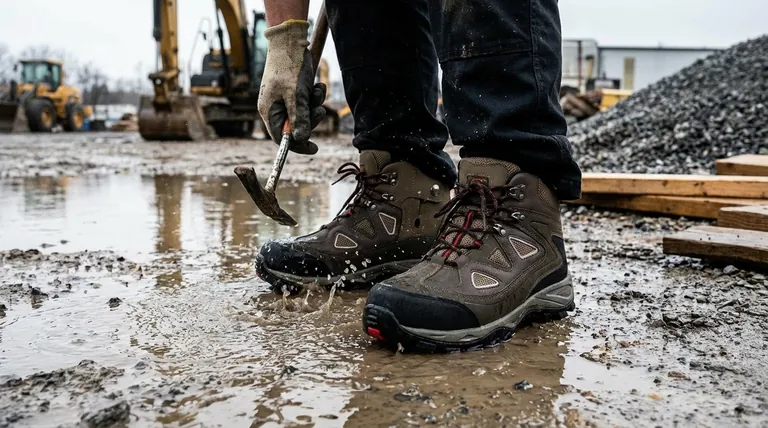
The Foundations of On-the-Job Safety
When selecting work boots, safety is the primary consideration. Rubber's natural properties directly address the most common workplace hazards.
Superior Slip and Oil Resistance
Rubber's high coefficient of friction provides excellent traction on slick surfaces. This makes it essential for preventing slips and falls in wet, muddy, or oily conditions.
Unmatched Waterproofing
Rubber is inherently non-porous, creating an impenetrable barrier against water. This is a critical feature for keeping feet dry and comfortable in any wet environment.
High Resistance to Abrasions and Punctures
The dense, tough structure of rubber makes it highly resistant to cuts, scrapes, and punctures. This quality provides a vital layer of protection against physical hazards on a job site.
Chemical Resistance
In addition to physical protection, rubber offers a degree of resistance to various chemicals. This makes it a suitable choice for certain industrial or agricultural applications where chemical exposure is a risk.
Built for Longevity and Harsh Conditions
Work boots must withstand constant abuse. Rubber is renowned for its ability to endure harsh conditions without degrading.
Inherent Durability and Aging Resistance
Rubber naturally resists wear and tear from constant use. It is also resistant to aging, meaning it is less likely to become brittle or crack over time compared to other materials.
Shape Retention and Flexibility
High-quality rubber boots maintain their original shape even after prolonged use. They also provide excellent flexibility, allowing for natural foot movement without sacrificing support.
Enhanced by Vulcanization
Many rubber boots undergo a process called vulcanization. This treatment further strengthens the material, significantly increasing its overall durability and lifespan.
Understanding the Trade-offs
No material is perfect. While rubber offers immense benefits, it's important to understand its primary trade-off.
Higher Initial Cost
Quality rubber work boots often have a higher price point than boots made from synthetic materials like PVC. This cost reflects the material's superior performance, durability, and, in the case of natural rubber, its sustainable sourcing. This higher initial investment, however, is often offset by a longer service life.
Comfort and Environmental Advantages
Beyond pure performance, rubber brings unique benefits related to user comfort and environmental impact.
Natural Shock Absorption
The elasticity of rubber provides natural shock absorption. This helps to reduce fatigue in the feet and joints during long hours of standing or walking on hard surfaces.
An Eco-Friendly Source
Natural rubber is a sustainable and eco-friendly material. It is harvested by "tapping" rubber trees without harming them, and it is fully biodegradable, unlike plastic-based synthetics.
Making the Right Choice for Your Needs
Selecting the right boot depends on your specific work environment and priorities.
- If your primary focus is safety in wet or oily environments: Rubber's combination of absolute waterproofing and superior slip resistance is unmatched.
- If your primary focus is long-term value: The higher initial cost of rubber boots is often justified by their exceptional resistance to wear, tear, and aging.
- If your primary focus is environmental impact: Choosing boots made from natural rubber supports a renewable resource and reduces long-term plastic waste.
Ultimately, choosing rubber for your work boots is an investment in uncompromising safety, proven durability, and reliable performance.
Summary Table:
| Advantage | Key Benefit |
|---|---|
| Safety | Superior slip/oil resistance, waterproof barrier, puncture resistance. |
| Durability | High abrasion resistance, shape retention, enhanced by vulcanization. |
| Comfort & Eco | Natural shock absorption, sustainable & biodegradable (natural rubber). |
| Consideration | Higher initial cost, but offers greater long-term value. |
Ready to equip your workforce with the superior protection of rubber work boots?
As a large-scale manufacturer, 3515 produces a comprehensive range of high-performance rubber footwear for distributors, brand owners, and bulk clients. Our production capabilities encompass all types of safety boots and shoes, ensuring you get durable, safe, and reliable footwear tailored to your specific needs.
Contact us today to discuss your requirements and discover how we can add value to your supply chain!
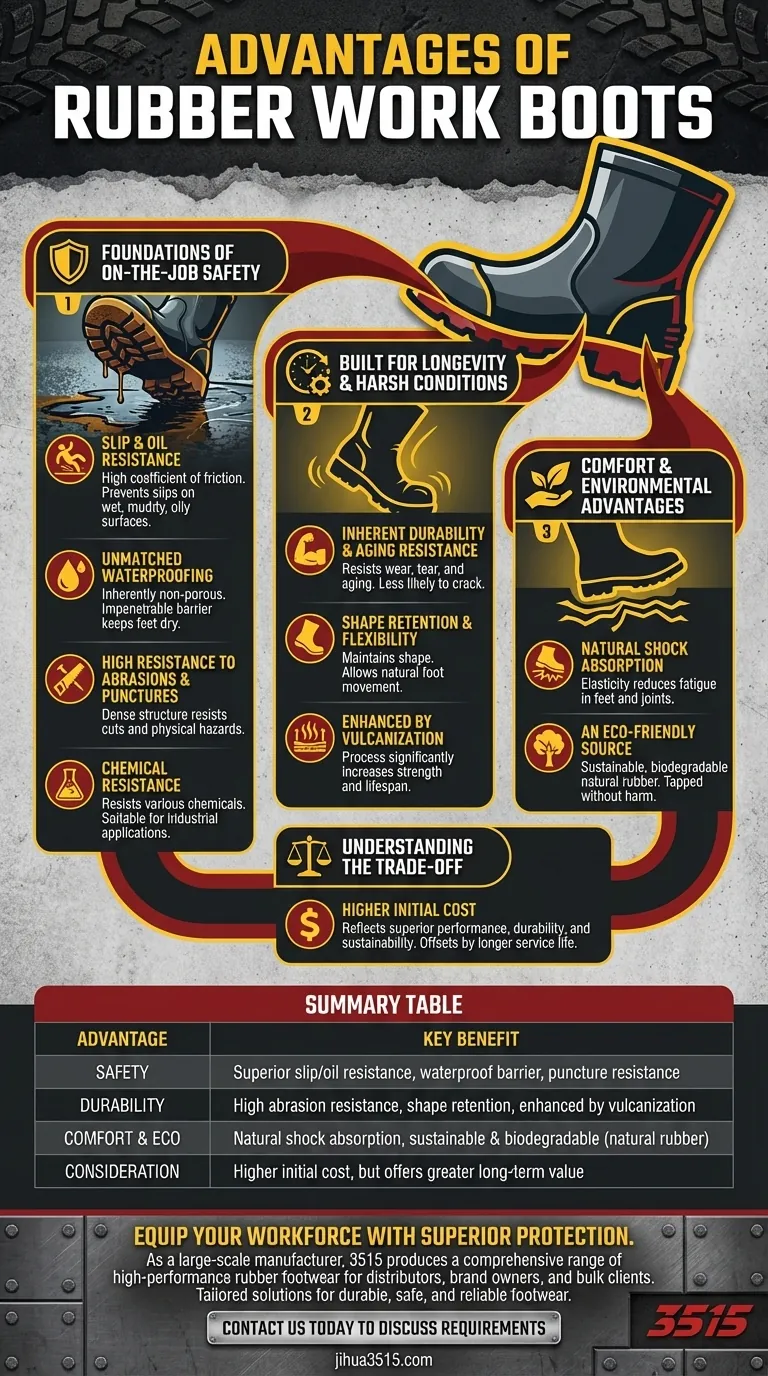
Visual Guide
Related Products
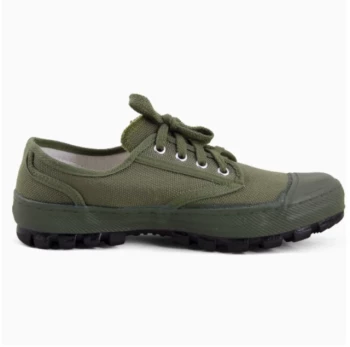
- Durable Canvas Work Shoes with Rubber Lug Sole | Wholesale Manufacturer
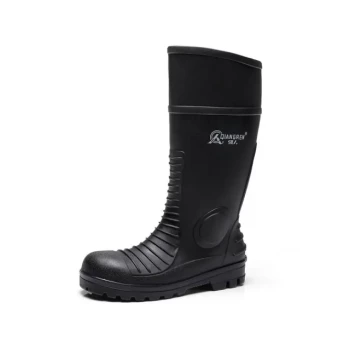
- Factory Direct Wholesale Rain Boots Durable Waterproof & Fully Customizable
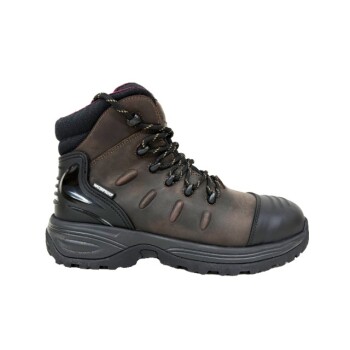
- Durable Leather Work Boots for Wholesale & Custom Manufacturing
- Durable Leather Work Boots for Wholesale & Custom OEM Manufacturing
- Wholesale Durable Leather Work Boots | 8-Inch Goodyear Welt Manufacturer
People Also Ask
- What are the properties of canvas as a shoe material? A Guide to Lightweight Comfort & Style
- Why is the selection of high-strength fabric materials necessary in the production of canvas shoes and training shoes?
- What types of jobs are canvas work boots suitable for? Ideal for Light-Duty, High-Mobility Roles
- Can canvas shoes be worn in rainy conditions? The Truth About Water Resistance
- What are the functional advantages of choosing rubber soles over leather soles for work boots? Superior Safety & Durability