
For any serious gardener, rubber boots are the gold standard for footwear due to a powerful combination of complete waterproofing, rugged durability, and effortless maintenance. They are specifically designed to handle the mud, moisture, and varied terrain of a garden, keeping you comfortable and protected through long sessions.
The core advantage of rubber boots is their uncompromising barrier against water and dirt. However, selecting the right gardening footwear requires you to look beyond this primary benefit and consider how factors like climate and comfort align with your specific needs.
The Core Advantages of Rubber in the Garden
The unique properties of natural rubber make it an ideal material for the demanding environment of a garden. It excels in three key areas: protection, durability, and ease of use.
Absolute Waterproofing
A defining feature of rubber is that it is non-porous. This creates an impenetrable shield against water, from early morning dew on the lawn to deep mud in a freshly tilled bed.
This ensures your feet remain completely dry, preventing discomfort and potential health issues that can arise from prolonged exposure to moisture.
Unmatched Durability
High-quality rubber boots are built to last. They resist scuffs, scrapes from tools or rocks, and degradation from contact with fertilizers or other garden chemicals.
This inherent toughness means a single pair can withstand seasons of heavy use, making them a wise long-term investment.
Effortless Maintenance
Perhaps one of the most practical benefits is how simple they are to clean. Unlike fabric or leather shoes, rubber boots require no special treatment.
A quick rinse with a hose is all that's needed to remove mud and debris, allowing them to be stored clean and ready for the next day.
What "Comfort" Really Means in a Gardening Boot
While protection is critical, a boot is useless if it's too uncomfortable to wear for more than a few minutes. Modern rubber boot designs prioritize ergonomics to support you through hours of work.
The Role of Flexibility
Gardening involves constant changes in posture, from walking and standing to kneeling and squatting. Rubber's natural flexibility allows the boot to move with your foot, preventing stiffness and restriction.
Support for Long Sessions
Many gardening boots feature anti-fatigue designs, including cushioned insoles and supportive shanks in the sole. This construction reduces strain on your feet, arches, and back during prolonged periods of standing or walking.
Excellent Grip and Traction
The outsoles of gardening boots are designed with deep lugs and patterns to provide a secure grip on unstable surfaces. This ensures stable footing on wet grass, soft soil, and uneven gravel paths.
Understanding the Trade-offs
While rubber boots are an exceptional tool, they are not the perfect solution for every single scenario. Being aware of their limitations is key to making an informed decision.
The PVC Alternative
Polyvinyl chloride (PVC) boots look very similar to rubber boots and also offer excellent waterproofing and easy maintenance. Their primary advantage is affordability.
However, PVC is typically less flexible and less durable than natural rubber. For the occasional gardener, PVC is a practical choice, but for frequent, heavy-duty use, rubber offers better long-term performance and comfort.
The Breathability Factor
The same property that makes rubber perfectly waterproof also makes it non-breathable. In hot and humid climates, this can lead to sweaty and uncomfortable feet.
If you primarily garden in dry, warm conditions, a lighter and more breathable shoe might be a more comfortable option.
Robustness for Demanding Terrain
Standard rubber gardening boots are perfect for soil, grass, and gravel. For more demanding landscaping work, like moving heavy stones or working on steep, rocky inclines, a more structured boot with ankle support, like a hiking boot, may provide better safety and stability.
Making the Right Choice for Your Garden
Selecting the best footwear depends entirely on the conditions you face most often.
- If your primary focus is all-weather work in wet, muddy conditions: A high-quality natural rubber boot is your best and most reliable choice.
- If your primary focus is occasional, light gardening on a budget: A PVC boot offers the necessary waterproofing and is a cost-effective solution.
- If your primary focus is gardening in a hot, dry climate: Consider a lighter, more breathable outdoor shoe to prioritize comfort and prevent overheating.
Ultimately, choosing the right footwear transforms it from a simple garment into an essential and valuable tool for your craft.
Summary Table:
| Advantage | Key Benefit |
|---|---|
| Waterproofing | Keeps feet completely dry in mud and wet conditions. |
| Durability | Resists scuffs, chemicals, and lasts for seasons. |
| Easy Maintenance | Simple rinse with a hose removes mud and debris. |
| Comfort & Support | Flexible design with cushioned insoles for long sessions. |
| Superior Traction | Deep-lug soles provide secure grip on unstable terrain. |
Ready to equip yourself with professional-grade gardening boots?
As a large-scale manufacturer, 3515 produces a comprehensive range of durable and comfortable footwear for distributors, brand owners, and bulk clients. Our production capabilities encompass all types of rubber boots and shoes, ensuring you get the perfect combination of protection and comfort for your market.
Contact our team today to discuss your needs and discover how we can support your business with high-quality footwear solutions.
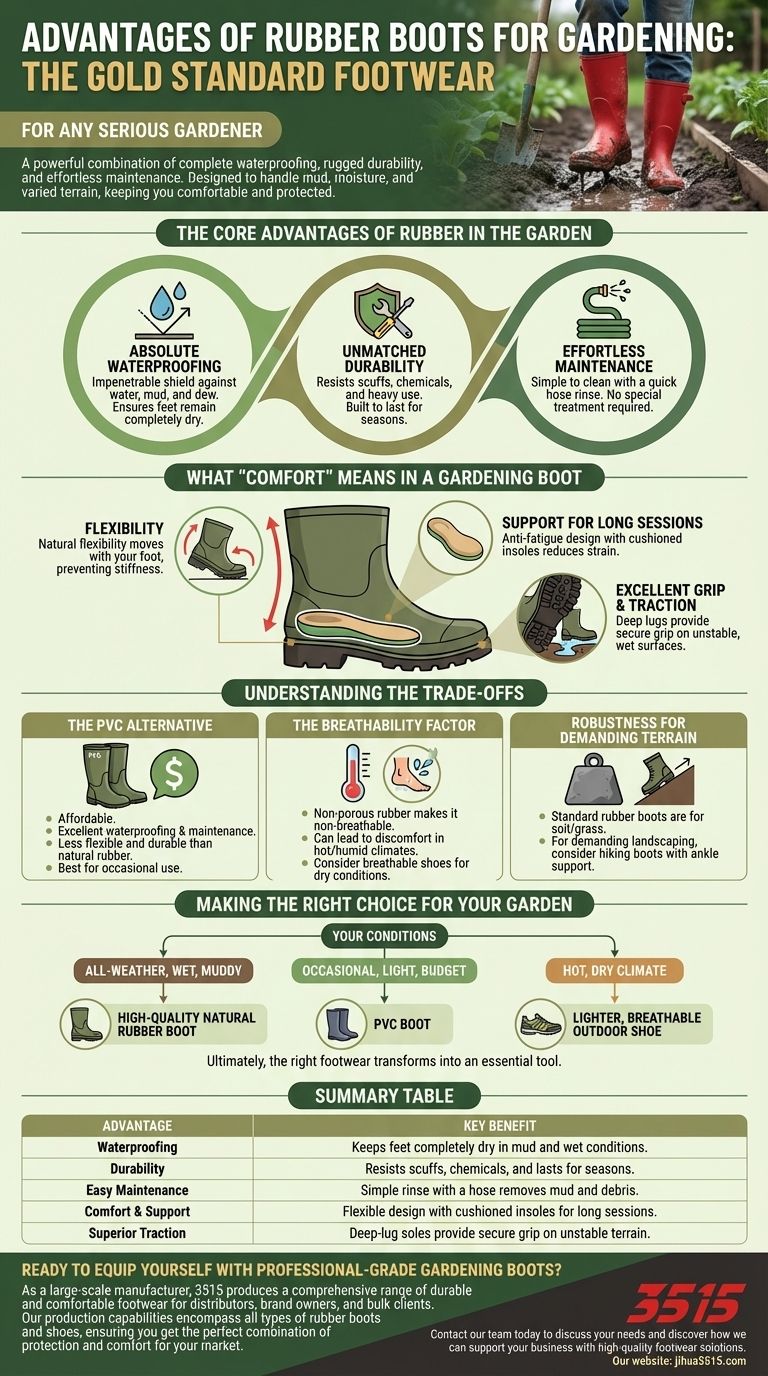
Visual Guide
Related Products
- Durable Rubber Sole Outdoor Shoes Wholesale & Custom Manufacturing
- Factory Direct Wholesale Rain Boots Durable Waterproof & Fully Customizable
- Wholesale Durable Camouflage Canvas Shoes with High-Traction Cleated Rubber Sole
- Wholesale Waterproof Tactical Boots Custom Suede & High-Traction Soles
- Durable Leather Tactical Boots Wholesale & Custom Manufacturing for Brands
People Also Ask
- What is the function of the sole in outdoor shoes? Find the Perfect Grip and Support
- What role do outdoor shoes and sneakers play in navigating external terrains? Engineered Stability for Every Surface
- How is AI utilized in the design of outdoor and safety footwear? Harnessing Big Data for Market-Driven Shoe Innovation
- Why is durability important when selecting outdoor shoes? A Guide to Safety & Long-Term Value
- What are the key components of outdoor shoes that affect comfort and sturdiness? A Guide to Durable, High-Performance Footwear


















