
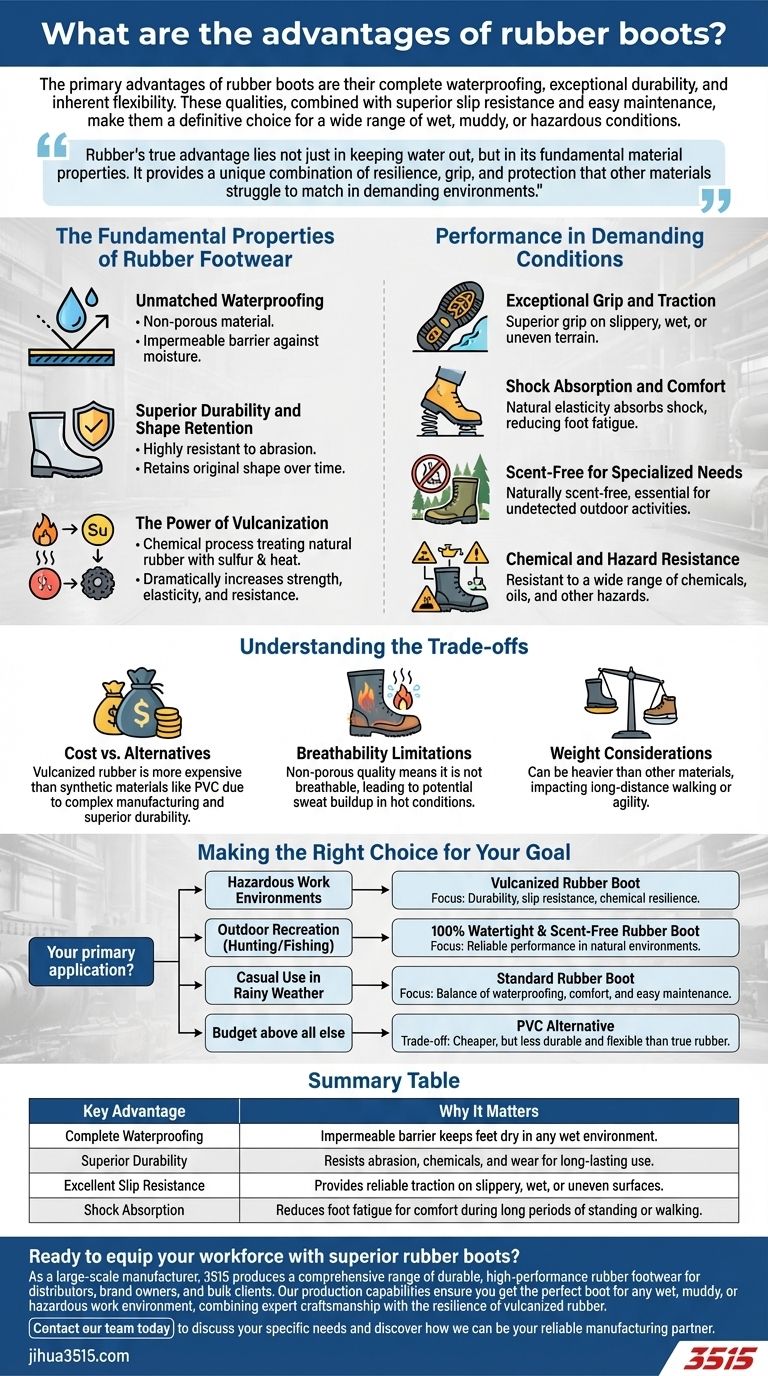
The primary advantages of rubber boots are their complete waterproofing, exceptional durability, and inherent flexibility. These qualities, combined with superior slip resistance and easy maintenance, make them a definitive choice for a wide range of wet, muddy, or hazardous conditions.
Rubber's true advantage lies not just in keeping water out, but in its fundamental material properties. It provides a unique combination of resilience, grip, and protection that other materials struggle to match in demanding environments.
The Fundamental Properties of Rubber Footwear
To understand why rubber boots are so effective, we need to look at the material itself. Its molecular structure gives it a unique set of characteristics that are ideal for protective footwear.
Unmatched Waterproofing
Rubber is a non-porous material, meaning it is inherently and completely watertight. Unlike treated leathers or coated fabrics that can eventually fail, a well-constructed rubber boot provides a reliable, impermeable barrier against moisture.
Superior Durability and Shape Retention
Rubber is highly resistant to abrasion, wear, and tear. It is also known for its ability to retain its original shape over time, preventing the sagging or stretching that can occur with lesser materials after repeated use.
The Power of Vulcanization
Most high-quality rubber boots use vulcanized rubber. This is a chemical process that treats natural rubber with sulfur and heat, dramatically increasing its strength, elasticity, and resistance to environmental degradation. This process is key to the longevity of premium boots.
Performance in Demanding Conditions
The physical properties of rubber translate directly into practical, real-world advantages, especially when conditions are challenging.
Exceptional Grip and Traction
Rubber soles provide superior grip and traction on a wide variety of surfaces. The material's natural friction coefficient makes it ideal for navigating slippery, wet, or uneven terrain, from muddy fields to slick workshop floors.
Shock Absorption and Comfort
The natural elasticity of rubber allows it to absorb shock effectively. This reduces foot fatigue during long days of walking or standing, making the boots surprisingly comfortable despite their rugged construction.
Scent-Free for Specialized Needs
For activities like hunting, rubber offers a critical advantage: it is naturally scent-free. It doesn't absorb and retain external odors, which is essential when trying to remain undetected in the wild.
Chemical and Hazard Resistance
Rubber is resistant to a wide range of chemicals, oils, and other hazards. This makes it an indispensable material for boots used in agricultural, industrial, or general work settings where exposure is a concern.
Understanding the Trade-offs
No material is perfect for every situation. Being an effective advisor means acknowledging the limitations and comparing them objectively.
Cost vs. Alternatives
High-quality, vulcanized rubber boots are typically more expensive than boots made from synthetic materials like PVC. This higher cost reflects the more complex manufacturing process and the superior durability of the natural material.
Breathability Limitations
The same non-porous quality that makes rubber perfectly waterproof also means it is not breathable. In hot and dry conditions, this can lead to sweat and moisture buildup inside the boot, which can be a significant comfort issue.
Weight Considerations
While flexible, rubber boots can be heavier than boots made from other materials. This added weight can be a factor in situations requiring long-distance walking or high levels of agility.
Making the Right Choice for Your Goal
Your ideal boot depends entirely on your primary application. Use these points to guide your decision.
- If your primary focus is protection in hazardous work environments: Choose a vulcanized rubber boot for its superior durability, slip resistance, and chemical resilience.
- If your primary focus is outdoor recreation like hunting or fishing: Prioritize a 100% watertight and scent-free rubber boot for reliable performance in natural environments.
- If your primary focus is casual use in rainy weather: A standard rubber boot offers the perfect balance of waterproofing, comfort, and easy maintenance for daily wear.
- If your primary focus is budget above all else: A PVC alternative may be cheaper, but you will be trading off the superior durability and flexibility of true rubber.
Ultimately, selecting a rubber boot is an investment in uncompromising protection and reliability.
Summary Table:
| Key Advantage | Why It Matters |
|---|---|
| Complete Waterproofing | Impermeable barrier keeps feet dry in any wet environment. |
| Superior Durability | Resists abrasion, chemicals, and wear for long-lasting use. |
| Excellent Slip Resistance | Provides reliable traction on slippery, wet, or uneven surfaces. |
| Shock Absorption | Reduces foot fatigue for comfort during long periods of standing or walking. |
Ready to equip your workforce with superior rubber boots?
As a large-scale manufacturer, 3515 produces a comprehensive range of durable, high-performance rubber footwear for distributors, brand owners, and bulk clients. Our production capabilities ensure you get the perfect boot for any wet, muddy, or hazardous work environment, combining expert craftsmanship with the resilience of vulcanized rubber.
Contact our team today to discuss your specific needs and discover how we can be your reliable manufacturing partner.
Visual Guide
Related Products
- Factory Direct Wholesale Rain Boots Durable Waterproof & Fully Customizable
- Durable Rubber Sole Outdoor Shoes Wholesale & Custom Manufacturing
- Wholesale Durable Camouflage Canvas Shoes with High-Traction Cleated Rubber Sole
- Wholesale Durable Leather Work Boots | 8-Inch Goodyear Welt Manufacturer
- Durable Goodyear Welt Leather Work Boots for Wholesale & Private Label
People Also Ask
- What are the characteristics of rain boots? A Guide to Waterproof Footwear for Every Need
- What factors should be considered when choosing rain boots? Find the Perfect Boot for Your Needs
- What are the main differences between rain boots and snow boots? Choose the Right Boot for Your Climate
- How should one decide between PVC and rubber for rain boots? A Guide to Choosing the Right Material
- Why are rain boots more flexible and comfortable than snow boots? The Key Differences Explained















