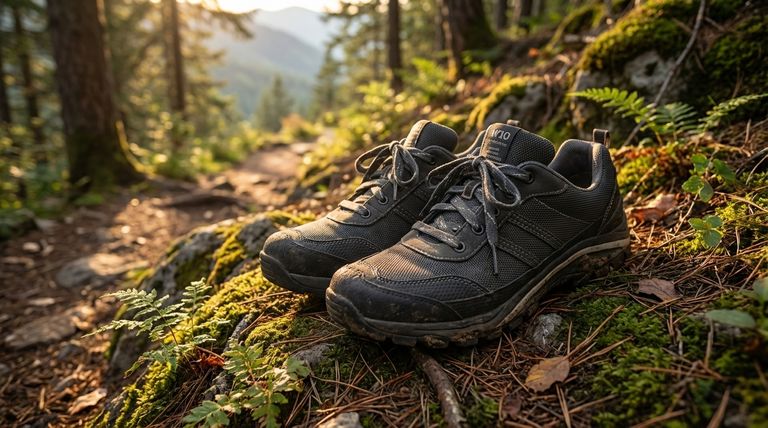
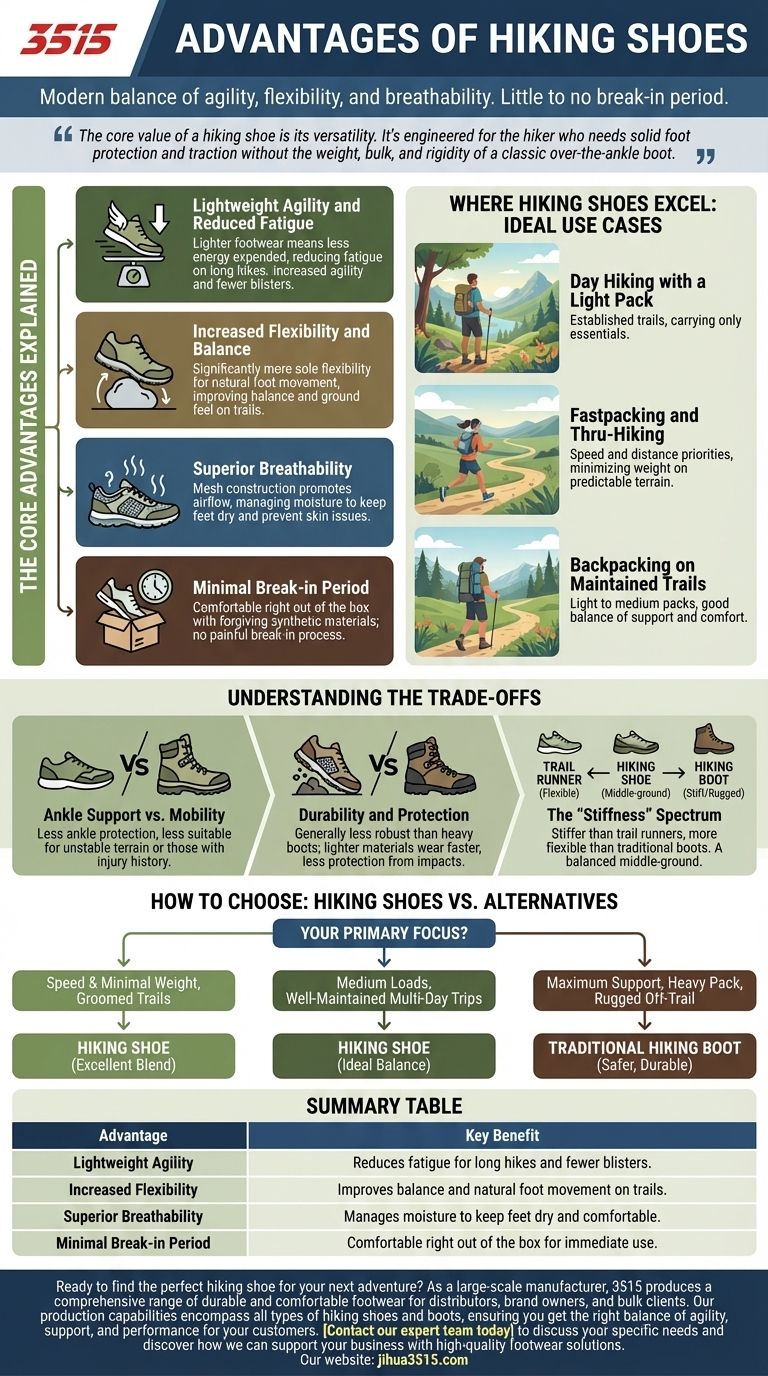
In short, the primary advantages of hiking shoes are their lightweight design, flexibility, and breathability. They offer a modern balance between the agility of a trail running shoe and the protective features of a traditional hiking boot, requiring little to no break-in period for immediate comfort on the trail.
The core value of a hiking shoe is its versatility. It's engineered for the hiker who needs solid foot protection and traction without the weight, bulk, and rigidity of a classic over-the-ankle boot.
The Core Advantages Explained
To understand if a hiking shoe is right for you, it's essential to look at how each of its key features translates to performance on the trail.
Lightweight Agility and Reduced Fatigue
A hiking shoe's lower weight is its most significant advantage. Lighter footwear means less energy expended with every step, which reduces overall fatigue on long hikes.
This agility makes it easier to move quickly and confidently, and the reduced bulk often leads to fewer blisters compared to heavier, stiffer boots.
Increased Flexibility and Balance
Compared to rigid boots, hiking shoes offer significantly more flexibility through the sole.
This allows your foot to move more naturally, improving your balance and ground feel on well-maintained or moderately uneven trails.
Superior Breathability
Most hiking shoes are constructed with mesh panels and other breathable materials. This design promotes airflow, which helps manage moisture and keep your feet dry.
Dry feet are critical for comfort and preventing skin issues like blisters or rashes, especially during long hikes in warmer conditions.
Minimal Break-in Period
Unlike heavy leather boots that can take weeks to mold to your feet, modern hiking shoes are typically comfortable right out of the box.
Their construction with more forgiving synthetic materials means you can often hit the trail immediately without a painful break-in process.
Where Hiking Shoes Excel: Ideal Use Cases
Hiking shoes are not the solution for every situation. They are a specialized tool that performs best under specific conditions.
Day Hiking with a Light Pack
For day hikes on established trails where you are only carrying essentials like water and snacks, a hiking shoe is the ideal choice. It provides all the necessary traction and protection without unnecessary weight.
Fastpacking and Thru-Hiking
When speed and distance are priorities, every ounce matters. Fastpackers and many thru-hikers choose hiking shoes to minimize weight and maximize agility over long distances on predictable terrain.
Backpacking on Maintained Trails
If you are backpacking with a light to medium-weight pack on well-groomed trails like those found in many national parks, hiking shoes offer a great balance of support and comfort.
Understanding the Trade-offs
To make an informed decision, you must also understand what you are giving up when you choose a hiking shoe over a traditional boot.
Ankle Support vs. Mobility
The most obvious trade-off is ankle support. Because hiking shoes have a low-cut design, they do not provide the same protection against rolled ankles as an over-the-ankle boot.
This makes them less suitable for hikers with a history of ankle injuries or those navigating highly unstable, rocky, or off-trail terrain.
Durability and Protection
While durable for their intended use (around 800 miles), hiking shoes are generally less robust than heavy-duty boots. Their lighter materials may wear faster under heavy loads or on abrasive terrain.
They also offer less protection from sharp rocks or impacts due to their more flexible soles and uppers.
The "Stiffness" Spectrum
Hiking shoes are stiffer and more rugged than a trail running shoe, providing better protection from rocks underfoot. However, they are far more flexible than a traditional hiking boot. This middle-ground means they aren't as fast as a runner or as protective as a boot.
How to Choose: Hiking Shoes vs. The Alternatives
Your decision should be based entirely on your planned hikes, personal fitness, and pack weight.
- If your primary focus is speed and minimal weight on groomed trails: A hiking shoe is an excellent choice, providing a great blend of protection and agility.
- If your primary focus is carrying medium loads on well-maintained multi-day trips: Hiking shoes provide an ideal balance of comfort and support without excessive weight.
- If your primary focus is maximum support for a heavy pack or rugged, off-trail terrain: A traditional, over-the-ankle hiking boot is the safer and more durable option.
Ultimately, choosing the right footwear is about matching the tool to the specific demands of your adventure.
Summary Table:
| Advantage | Key Benefit |
|---|---|
| Lightweight Agility | Reduces fatigue for long hikes and fewer blisters. |
| Increased Flexibility | Improves balance and natural foot movement on trails. |
| Superior Breathability | Manages moisture to keep feet dry and comfortable. |
| Minimal Break-in Period | Comfortable right out of the box for immediate use. |
Ready to find the perfect hiking shoe for your next adventure?
As a large-scale manufacturer, 3515 produces a comprehensive range of durable and comfortable footwear for distributors, brand owners, and bulk clients. Our production capabilities encompass all types of hiking shoes and boots, ensuring you get the right balance of agility, support, and performance for your customers.
Contact our expert team today to discuss your specific needs and discover how we can support your business with high-quality footwear solutions.
Visual Guide
Related Products
- Durable Rubber Sole Outdoor Shoes Wholesale & Custom Manufacturing
- Wholesale High-Traction Camo Boots - Custom Manufacturer for Brands
- Wholesale Durable Camouflage Canvas Shoes with High-Traction Cleated Rubber Sole
- Wholesale Durable Camo Canvas Shoes with High-Traction Rubber Soles
- Wholesale Lightweight Tactical Boots Custom Manufacturer for Desert & Combat Use
People Also Ask
- What is the function of the sole in outdoor shoes? Find the Perfect Grip and Support
- What role do outdoor shoes and sneakers play in navigating external terrains? Engineered Stability for Every Surface
- How is AI utilized in the design of outdoor and safety footwear? Harnessing Big Data for Market-Driven Shoe Innovation
- Why is durability important when selecting outdoor shoes? A Guide to Safety & Long-Term Value
- What are the key components of outdoor shoes that affect comfort and sturdiness? A Guide to Durable, High-Performance Footwear