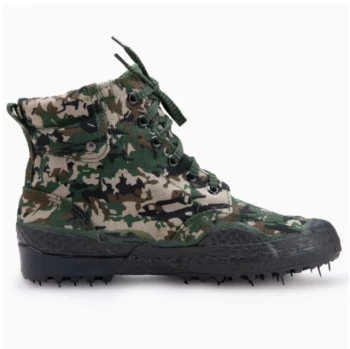
When carrying a heavy backpack, hiking boots provide a combination of structural support, stability, and protection that lighter footwear simply cannot replicate. Their stiff soles, durable materials, and high cuffs work as a system to reduce stress on your joints, prevent injury, and increase comfort over long, demanding treks.
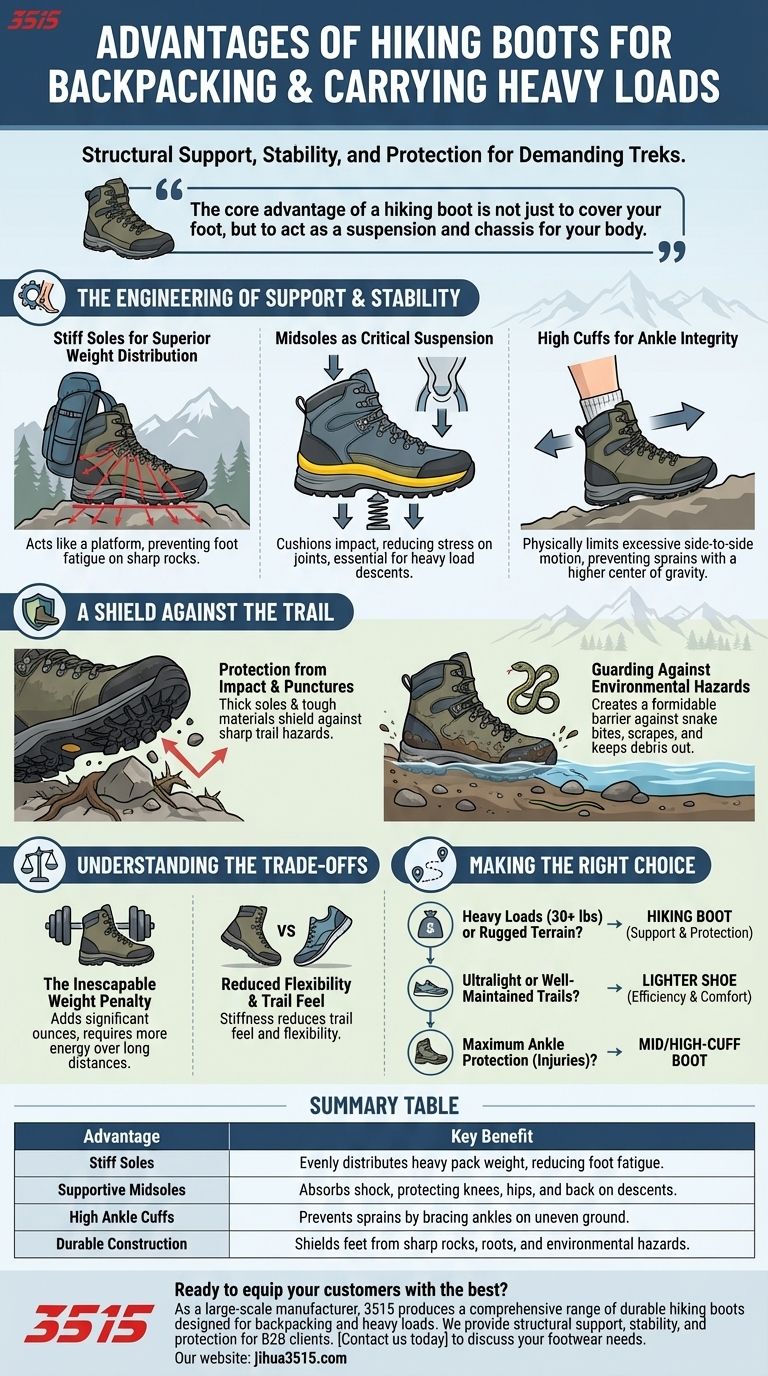
The core advantage of a hiking boot is not just to cover your foot, but to act as a suspension and chassis for your body. It is engineered to transfer the significant load of a heavy pack safely and efficiently across uneven and unpredictable terrain.
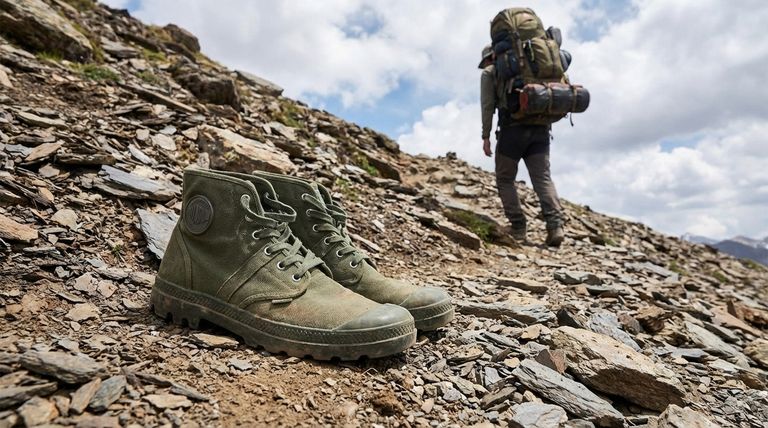
The Engineering of Support and Stability
When you add 30, 40, or even 50 pounds to your back, the forces acting on your feet and ankles increase dramatically. Hiking boots are designed specifically to manage these forces.
Stiff Soles for Superior Weight Distribution
A boot's rigid sole acts like a platform, distributing the combined weight of you and your pack evenly across your entire foot.
This prevents your foot from flexing unnaturally over sharp rocks or roots, which is a primary cause of foot fatigue and soreness on multi-day trips.
Midsoles as Critical Suspension
The midsole is the shock-absorbing layer between the rugged outsole and your foot. In a quality hiking boot, this layer is substantial.
It cushions the impact of each step, reducing the cumulative stress on your knees, hips, and back. This function is essential when carrying the momentum of a heavy pack downhill.
High Cuffs for Ankle Integrity
The high, often padded, cuff of a hiking boot is its most visible feature, and it serves a critical purpose: preventing ankle sprains.
With a heavy pack, your center of gravity is higher and less stable. A simple misstep can easily lead to a rolled ankle. The boot’s cuff physically limits excessive side-to-side ankle motion, providing a crucial brace on uneven ground.
A Shield Against the Trail
Backpacking often takes you through challenging and unkempt environments. A hiking boot is built to serve as armor for your feet.
Protection from Impact and Punctures
The thick soles and tough upper materials, often leather or robust synthetics, shield your feet from trail hazards.
This includes sharp rocks, protruding roots, and thorns that could easily puncture the softer material of a trail shoe and cause injury.
Guarding Against Environmental Hazards
The sturdy construction and high-top design create a formidable barrier. They protect against everything from venomous snake bites to scrapes and impacts from trail debris.
Furthermore, they help keep stones, dirt, and water from getting inside your footwear, which is a key factor in preventing blisters and maintaining comfort.
Understanding the Trade-offs
While indispensable for heavy-load backpacking, hiking boots are not the perfect tool for every situation. Objectivity requires acknowledging their limitations.
The Inescapable Weight Penalty
The primary trade-off is weight. The same features that provide support and protection—thick soles, durable uppers, and ankle cuffs—add significant ounces.
Lifting that extra weight with every step requires more energy, which can add up to substantial fatigue over thousands of steps.
Reduced Flexibility and Trail Feel
The stiffness that provides support also means less flexibility. Boots can feel cumbersome or "clunky" compared to lighter, more nimble footwear.
This rigidity reduces your ability to feel the nuances of the trail beneath your feet, which some hikers prefer.
Making the Right Choice for Your Goal
Your footwear choice should be a direct reflection of your pack weight and the terrain you plan to cover.
- If your primary focus is backpacking with heavy loads (30+ lbs) or on rugged, off-trail terrain: The structural support and protection of a true hiking boot are non-negotiable for safety and long-term joint health.
- If your primary focus is ultralight backpacking or hiking on well-maintained trails: The weight penalty of a boot may be unnecessary, and a lighter hiking shoe or trail runner will likely be more efficient and comfortable.
- If your primary focus is maximum ankle protection due to past injuries or weak ankles: A mid- or high-cuff boot provides the best insurance against sprains, even with a lighter pack.
Ultimately, choosing the right footwear means matching the tool to the specific demands of your journey.
Summary Table:
| Advantage | Key Benefit |
|---|---|
| Stiff Soles | Evenly distributes heavy pack weight, reducing foot fatigue. |
| Supportive Midsoles | Absorbs shock, protecting knees, hips, and back on descents. |
| High Ankle Cuffs | Prevents sprains by bracing ankles on uneven ground. |
| Durable Construction | Shields feet from sharp rocks, roots, and environmental hazards. |
Ready to equip your customers with the best?
As a large-scale manufacturer, 3515 produces a comprehensive range of durable hiking boots designed for the demands of backpacking and heavy loads. We provide the structural support, stability, and protection that distributors, brand owners, and bulk clients require for their customers. Our production capabilities encompass all types of outdoor footwear, ensuring quality and reliability for every order.
Contact us today to discuss your footwear needs and discover how we can support your business.
Visual Guide
Related Products
- Wholesale High-Traction Camo Boots - Custom Manufacturer for Brands
- Durable Rubber Sole Outdoor Shoes Wholesale & Custom Manufacturing
- Durable Spiked Camouflage Boots Wholesale & Factory Production
- Wholesale Lightweight Tactical Boots Custom Manufacturer for Desert & Combat Use
- Wholesale Waterproof Tactical Boots Custom Suede & High-Traction Soles
People Also Ask
- What are the key features of the new line of camo boots? Built for Extreme Cold & Rugged Terrain
- Are camo boots necessary for hunting success? Prioritize Performance Over Pattern
- What is the technical logic behind using closed-eye testing for tactical boots? Unlocking Peak Footwear Stability
- How does the Rank Score Test identify the primary causes of premature failure in tactical and work boots? Key Insights
- What shoes to wear for a security job? Durable, Protective Footwear for Long Shifts