
The primary advantages of alloy toe work shoes are a significant weight reduction and a less bulky toe box compared to traditional steel toes. This is achieved by using modern, lightweight metals like aluminum or titanium, which provide the same level of impact and compression resistance required by safety standards but in a more comfortable and ergonomic package.
The central takeaway is that alloy toes represent a modern compromise in safety footwear. They deliver the robust protection of metal without the heavy weight of steel, making them ideal for workers who value all-day comfort and mobility but do not work in environments where electrical conductivity or metal detectors are a primary concern.
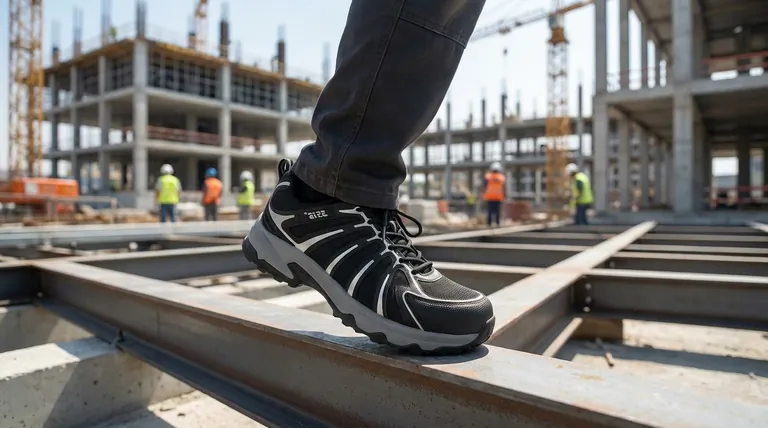
The Core Benefit: Protection Without the Weight
Alloy safety toes directly address the most common complaint about traditional steel toe boots: their weight. By leveraging lighter metals, they offer a distinct improvement in user comfort over a long shift.
A Modern, Lightweight Composition
Alloy toes are crafted from a blend of metals, most commonly aluminum and titanium. These materials are significantly lighter than steel while maintaining incredible strength and durability.
This advanced composition is the key to their performance, allowing them to meet or exceed the same stringent safety standards as their heavier steel counterparts.
Impact on All-Day Comfort
The most noticeable advantage is the reduction in weight. Lighter shoes lead to less leg and foot fatigue, which is a critical factor for anyone who spends their entire day standing, walking, or climbing.
This reduced strain can improve overall energy levels and reduce the risk of discomfort and fatigue-related injuries over time.
A Thinner, More Natural Fit
Because alloy metals are strong, the protective toe cap can be made thinner than a steel cap. This results in a less bulky and bulbous toe box.
For the wearer, this means more room for your toes to move naturally, reducing rubbing and improving the overall fit and feel of the shoe, making it feel less like a specialized work boot and more like a regular shoe.
Meeting and Exceeding Safety Standards
Despite being lighter and thinner, quality alloy toe shoes are not a compromise on safety. They are engineered to provide exceptional protection in hazardous environments.
ASTM F2413-18 Compliance
Reputable alloy toe footwear is rated to meet ASTM F2413-18 standards. This is the official standard for protective footwear in the United States.
This certification ensures the toe cap has passed rigorous testing for both impact (from falling objects) and compression (from rolling objects), offering the same level of protection you would expect from steel.
A Component of a Larger System
It is important to remember the toe cap is just one part of the shoe. Many alloy toe shoes also carry an EH (Electrical Hazard) rating, which comes from the non-conductive properties of the shoe's sole, not the toe material itself.
Understanding the Trade-offs
No material is perfect for every situation. While alloy toes offer clear advantages in comfort, they share some of the same limitations as steel and introduce a new one.
Thermal and Electrical Conductivity
Like any metal, alloys will conduct heat, cold, and electricity. This makes them less suitable for working in extreme temperatures or in environments with a high risk of contact with live electrical circuits.
The Metal Detector Issue
Because they are metallic, alloy toe shoes will trigger metal detectors. This can be a significant inconvenience for individuals working in high-security facilities, airports, or nuclear plants.
Cost and Availability
Alloy toe shoes often sit at a higher price point than their steel or composite counterparts. The advanced materials and manufacturing process contribute to a higher cost, and they can sometimes be less common on the market.
Making the Right Choice for Your Work
Selecting the correct safety toe material requires balancing your need for comfort, protection, and job-specific environmental factors.
- If your primary focus is maximum comfort and mobility: Alloy toes are an excellent choice, providing certified protection with significantly less weight and a more spacious fit than steel.
- If you work in high-security areas or around live electricity: You should choose non-metallic composite toes, as alloy toes will trigger metal detectors and conduct electricity.
- If your primary focus is budget or extreme durability: Traditional steel toes often provide the best value and are exceptionally durable, though you will be carrying extra weight throughout the day.
Ultimately, choosing the right safety toe is about matching the material's properties to the specific demands of your workday.
Summary Table:
| Advantage | Description |
|---|---|
| Lighter Weight | Made from aluminum/titanium alloys, significantly reducing foot fatigue. |
| Thinner Toe Box | Provides a more natural, comfortable fit compared to bulkier steel toes. |
| Full Safety Compliance | Meets ASTM F2413-18 standards for impact and compression resistance. |
| Improved Mobility | Less weight and better fit enhance movement and reduce strain over long shifts. |
Ready to upgrade your team's safety and comfort with high-performance alloy toe footwear?
As a large-scale manufacturer, 3515 produces a comprehensive range of safety footwear for distributors, brand owners, and bulk clients. We can deliver the perfect alloy toe work shoes that combine certified protection with all-day comfort for your workforce.
Contact our experts today to discuss your requirements and get a quote!
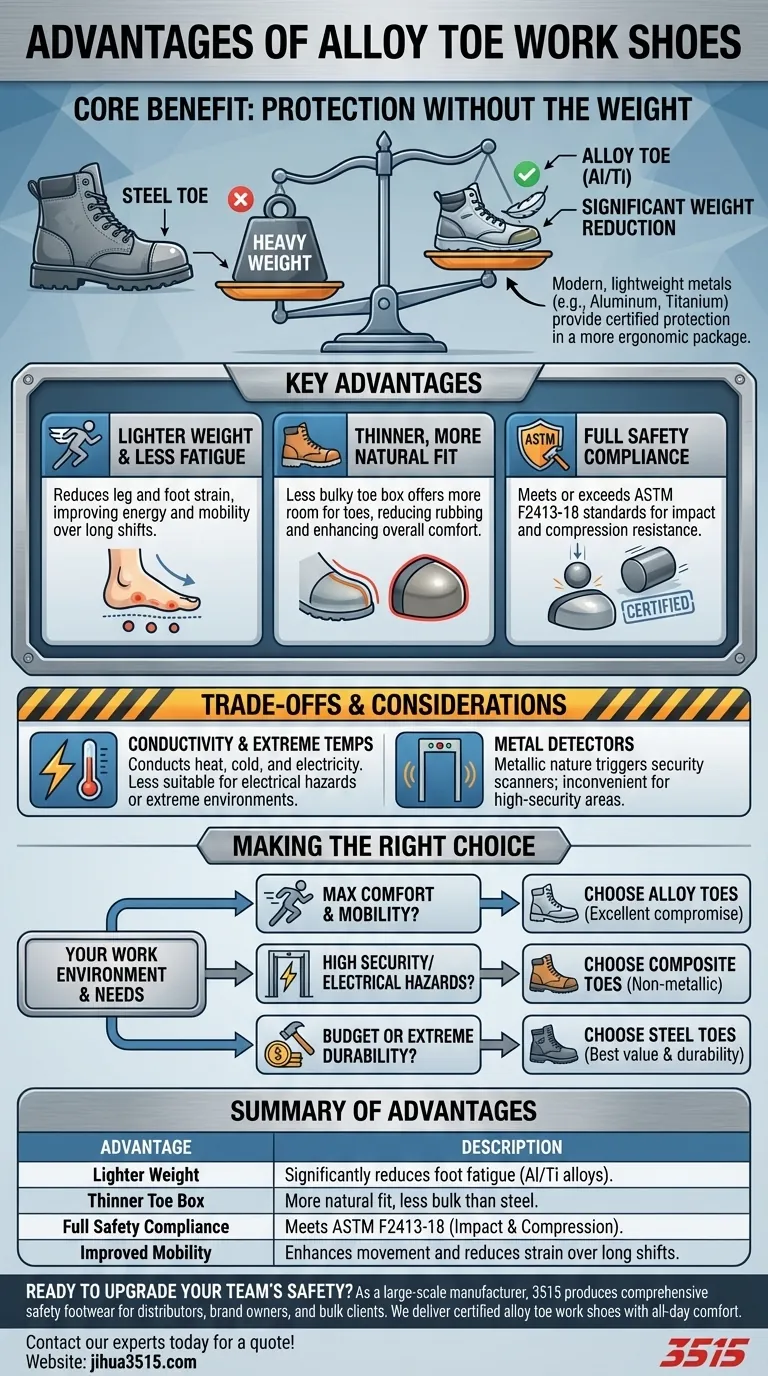
Visual Guide
Related Products
- Wholesale Mesh Steel Toe Safety Shoes with Dial Closure Factory Production
- Durable Leather Safety Boots for Wholesale & Custom OEM Manufacturing
- Durable Steel Toe Safety Boots Wholesale & Custom Manufacturing
- Wholesale Durable Safety Boots Manufacturer Customizable Steel Toe Work Boots
- Wholesale Durable 6-Inch Work Boots | Custom & Private Label Manufacturer
People Also Ask
- What type of safety shoe is recommended for workers exposed to heavy machinery? Steel Toe Boots for Ultimate Protection
- Why is it mandatory to wear safety shoes with steel toe protection during metal loading? Prevent Crushing Injuries
- What are the main materials used in steel toe safety shoes? A Guide to Protective Footwear Construction
- What are the recommended uses for steel toe safety shoes? Essential Protection for High-Risk Industries
- Is the myth about steel toe shoes cutting off toes true? Debunking the Safety Footwear Myth













