
First, I need to acknowledge the user's intent: they want a clear, unbiased explanation, not a sales pitch. My goal is to empower them with knowledge, not simply tell them what the shoes are "for."
Here's how I'll approach this:
-
Deconstruct the Request: This is about more than just a definition. The user is asking about the purpose behind tactical shoes. They want to understand the features, the trade-offs, and when these shoes are truly the best choice. They're intelligent professionals, so I'll need to answer their questions clearly and concisely.
-
Analyze the References: I'll use the provided sources as a starting point, but I won't just copy and paste. I'll synthesize the information, connect the dots, and ensure everything is grounded in the material, without making up any facts. This means I'll use what the references say about materials, applications, and user types to build a comprehensive picture.
-
Structure the Article:
- I'll open by directly answering the user's surface question. Tactical shoes are designed for performance, protection, and versatility in demanding environments.
- The core of the article will address the "deep need." I'll use a clear box highlighting the key insight: these shoes are all about the balance between mobility, support, and resilience, especially when compared to specialized safety footwear.
- I'll break the main body into sections that address the core function, who relies on this footwear, and, crucially, the trade-offs. I'll spend a lot of time contrasting tactical shoes with safety shoes (which are NOT the same!) and dedicated hiking boots to make sure that the user gets the best understanding of their intended use.
- Then, I'll deconstruct the key components, looking at the uppers and shoe type choices to help the user understand the 'how' behind their construction.
- Finally, I'll close with actionable advice that speaks directly to the user's potential goals, giving them clear guidance on making the right choice.
-
Tone: I'll maintain an objective tone throughout the article. I'll use short paragraphs, clear headings, and bolding to make the information scannable.
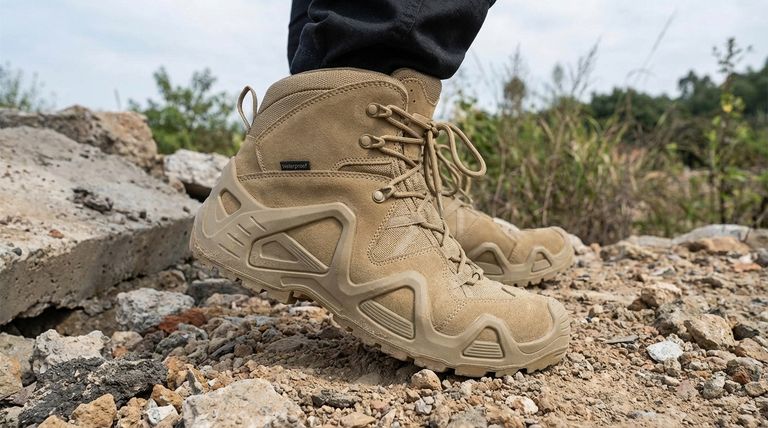
By following this plan, I'll create a truly valuable resource for the user, answering their questions and equipping them with the knowledge to make an informed decision. At their core, tactical shoes are specialized footwear engineered to deliver a balanced blend of performance, protection, and versatility for demanding environments. Originally designed for the rigorous needs of military and law enforcement personnel, their core function is to provide reliable support and durability across varied and unpredictable conditions, from urban landscapes to rugged terrain.
The critical distinction to understand is that tactical footwear is not about maximizing one specific feature. Instead, it prioritizes a versatile combination of agility, durability, and support, setting it apart from single-purpose footwear like certified safety boots or dedicated hiking shoes.
The Design Philosophy: A Hybrid Approach
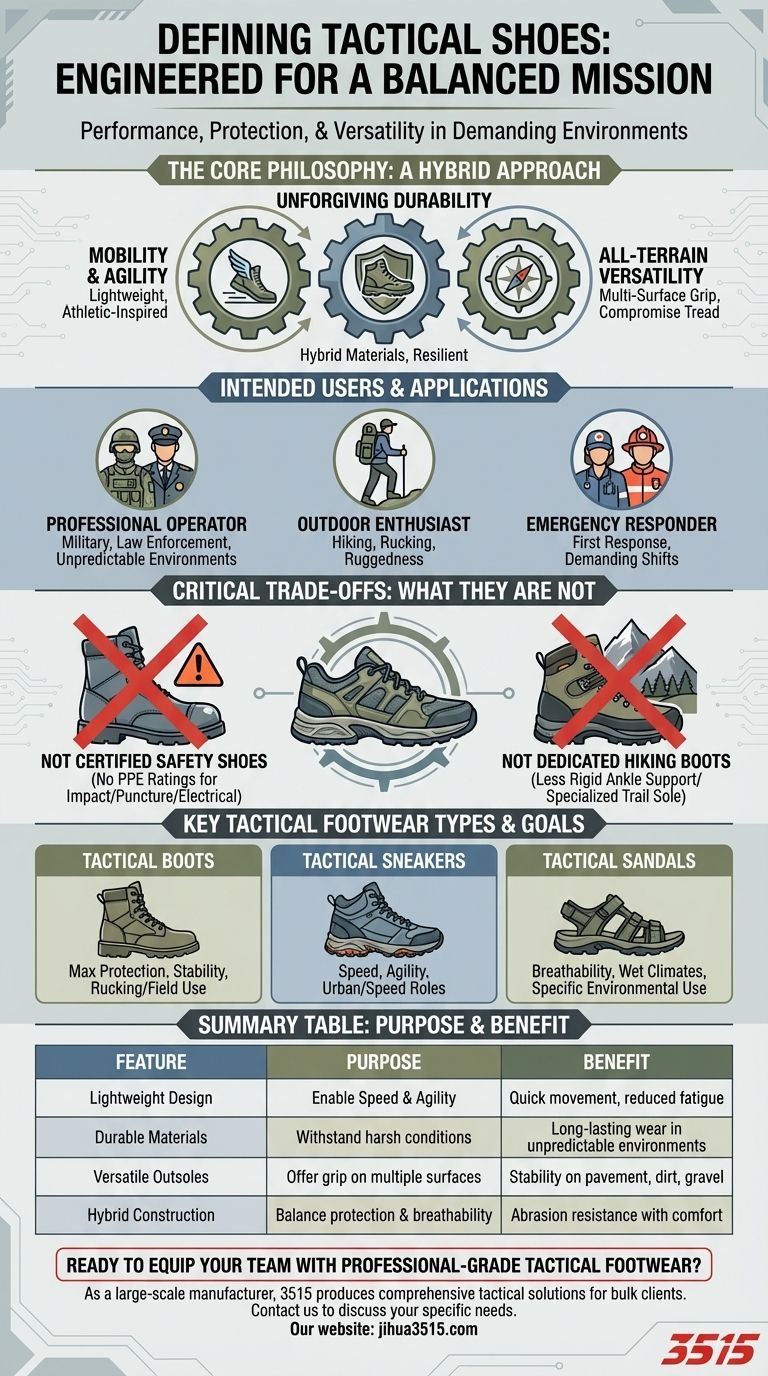
Tactical footwear occupies a unique space. It's built on the principle that the user must be prepared for anything, meaning the shoe must perform well in multiple scenarios rather than perfectly in just one.
Engineered for Mobility and Agility
Unlike heavy, rigid work boots, a primary goal of tactical footwear is to allow the wearer to move quickly and quietly. This is achieved through the use of lightweight synthetic materials and designs inspired by athletic shoes, ensuring the user isn't weighed down.
Built for Unforgiving Durability
The secondary goal is resilience. Uppers often combine durable leather for abrasion resistance with breathable mesh or synthetic panels. This hybrid construction is designed to withstand harsh use without the extreme weight and break-in period of traditional all-leather boots.
Prioritizing All-Terrain Versatility
Tactical outsoles are engineered for grip on a wide array of surfaces, including pavement, dirt, and gravel. The tread patterns are typically a compromise, designed to prevent slips and provide traction without being overly specialized for one type of environment, like mud or rock climbing.
Who Is the Intended User?
While the design originates from professional use, the applications have expanded significantly. Understanding the intended user clarifies the shoe's purpose.
The Professional Operator
Military personnel and law enforcement officers are the primary users. They require footwear that can handle long periods of standing, sudden sprints, and traversing unpredictable urban or field environments without failure.
The Outdoor Enthusiast
Civilians involved in activities like hiking, camping, and rucking benefit from the professional-grade durability. For these users, tactical shoes offer a ruggedness that often surpasses standard consumer outdoor gear.
The Emergency Responder
First responders often face the same unpredictable conditions as law enforcement. Tactical footwear provides the necessary support and protection for long, demanding shifts where conditions can change in an instant.
Understanding the Trade-offs: Tactical vs. Specialized Footwear
Choosing the right footwear means understanding what tactical shoes are not designed for. Their versatility is their greatest strength but also their key limitation.
Tactical Shoes are Not Safety Shoes
This is the most critical distinction. Safety shoes are a form of Personal Protective Equipment (PPE) with specific ratings for impact (steel toe), puncture resistance, and electrical hazards. Tactical shoes are built for performance and do not offer these certified safety features. They are the wrong tool for an industrial or construction worksite.
Tactical Shoes vs. Dedicated Hiking Boots
While there is significant overlap, dedicated hiking boots often feature more rigid ankle support and highly specialized outsoles designed exclusively for natural trails. Tactical boots may offer more flexibility for running or use on flat surfaces, making them a more "all-around" option at the cost of peak trail performance.
Key Types of Tactical Footwear
The "tactical" category includes several styles, each balancing support and agility differently.
Tactical Boots
These offer the most protection, with higher ankle support to prevent injuries on uneven ground. They are the go-to choice for load-bearing activities like rucking or for maximum stability in the field.
Tactical Sneakers
This style blends the features of a traditional boot—like a durable sole and rugged materials—with the lightweight, agile design of an athletic shoe. They are ideal for urban environments or roles requiring speed over heavy protection.
Tactical Sandals
Designed for hot or wet climates, these provide the breathability of a sandal with enhanced foot protection and a more secure strapping system than casual footwear. They are a highly specialized tool for specific environmental conditions.
Making the Right Choice for Your Goal
To select the correct footwear, you must first define your primary mission.
- If your primary focus is professional field use (military/LE): The blend of durability, agility, and support is engineered precisely for your varied and unpredictable needs.
- If your primary focus is demanding outdoor recreation: Tactical boots provide robust durability and reliable performance that can be an excellent choice for serious hiking and camping.
- If your primary focus is workplace safety: You must choose certified safety footwear; tactical shoes lack the required PPE ratings and will not protect you from industrial hazards.
- If your primary focus is everyday wear: A tactical sneaker can offer superior durability compared to standard footwear, but a full boot is likely unnecessary.
Ultimately, selecting the right shoe means matching its specific design philosophy to the demands of your environment.
Summary Table:
| Feature | Purpose | Benefit |
|---|---|---|
| Lightweight Design | Enable speed and agility | Allows for quick movement and reduces fatigue |
| Durable Materials | Withstand harsh conditions | Provides long-lasting wear in unpredictable environments |
| Versatile Outsoles | Offer grip on multiple surfaces | Ensures stability on pavement, dirt, and gravel |
| Hybrid Construction | Balance protection and breathability | Combines abrasion resistance with comfort for extended use |
Ready to equip your team with professional-grade tactical footwear?
As a large-scale manufacturer, 3515 produces a comprehensive range of tactical boots and shoes for distributors, brand owners, and bulk clients. Our production capabilities ensure you receive durable, versatile footwear designed for performance in any environment.
Contact us today to discuss your specific needs and discover how 3515 can be your trusted partner in tactical footwear supply.
Visual Guide
Related Products
- Durable Leather Tactical Boots Wholesale & Custom Manufacturing for Brands
- Durable High-Ankle Tactical Boots Wholesale Manufacturer for Custom & Bulk Orders
- Durable Leather High-Ankle Tactical Boots for Wholesale & Custom Manufacturing
- Wholesale Waterproof Tactical Boots Custom Suede & High-Traction Soles
- Wholesale Lightweight Tactical Boots with Dial Closure OEM & Bulk Orders
People Also Ask
- What specialized protections do tactical boots offer? Maximize Endurance with High-Performance Footwear
- What features should law enforcement officers look for in tactical boots? Essential Guide for Safety & Performance
- Importance of Professional Tactical Boots in Loess Gully Regions: Ensure Safety and Precision for Field Monitoring
- What is rucking, and why are tactical boots suitable for it? Discover the Ultimate Footwear for Heavy Loads
- What makes the traction of tactical boots superior? Unlock the Science of Unbeatable Grip



















