
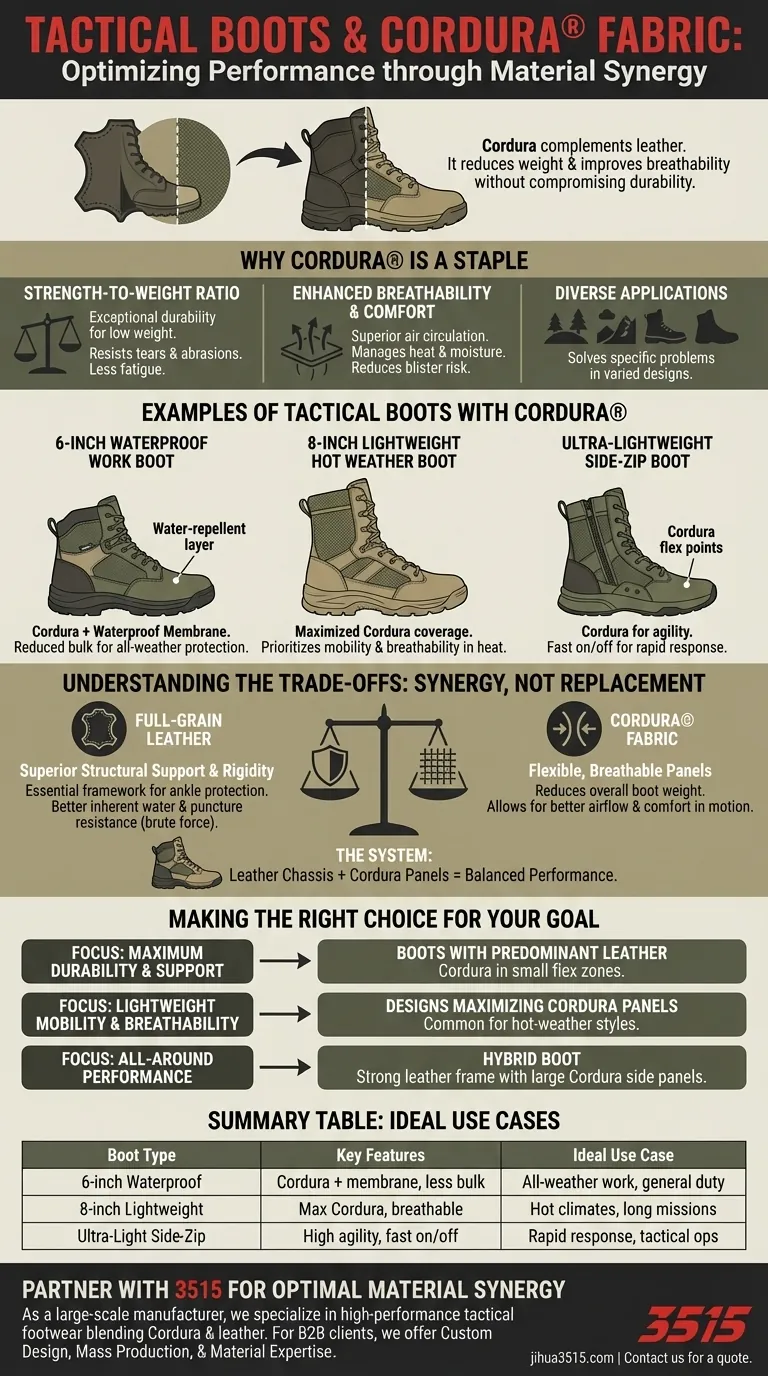
Specific examples of tactical boots that use Cordura fabric often depend on the boot's intended function. You will typically find it in designs like 6-inch waterproof work boots, 8-inch lightweight military boots for hot weather, and ultra-lightweight side-zip boots designed for rapid response.
The core reason Cordura is used in tactical footwear is not to replace leather, but to strategically complement it. It is integrated into designs to significantly reduce weight and improve breathability in key areas without compromising the durability required for demanding environments.
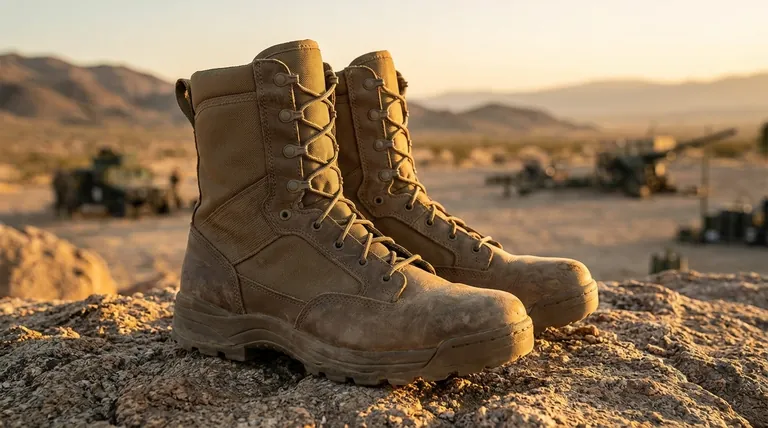
Why Cordura is a Staple in Tactical Footwear
The inclusion of Cordura fabric panels in a tactical boot is a deliberate engineering choice. It addresses the inherent limitations of traditional all-leather boot construction by offering a superior balance of modern material properties.
The Core Benefit: Strength-to-Weight Ratio
Cordura's primary advantage is its exceptional durability relative to its low weight. This nylon-based fabric provides excellent resistance to tears, scuffs, and abrasions.
By replacing sections of heavy leather with lighter Cordura panels, manufacturers can dramatically reduce the overall weight of the boot. This directly translates to less fatigue for the wearer over long distances or extended hours of wear.
Enhancing Breathability and Comfort
Thick leather, while protective, does not breathe well. Cordura fabric allows for significantly better air circulation.
This enhanced breathability helps manage heat and moisture, keeping the foot drier and reducing the risk of blisters during high-exertion activities. It's a critical feature for boots intended for use in warm or arid climates.
Application in Diverse Boot Designs
The examples of boots that use Cordura highlight its versatility in solving specific problems.
A 6-inch waterproof boot might use Cordura panels laminated with a waterproof membrane to provide protection without the bulk of all-leather construction.
An 8-inch lightweight boot will maximize Cordura coverage on the upper to shed every possible ounce, prioritizing mobility and reducing user fatigue.
An ultra-lightweight side-zip boot uses Cordura to support the goal of speed and agility, creating a boot that is fast to put on and feels less cumbersome.
Understanding the Trade-offs: Cordura vs. Full-Grain Leather
While highly effective, Cordura is part of a system. Choosing a boot with Cordura involves understanding its trade-offs compared to a boot made entirely of full-grain leather.
Structural Support and Rigidity
Leather provides superior structural support and ankle rigidity. This is why most hybrid boots use a leather "chassis" around the heel, ankle, and toe cap.
Cordura provides the flexible, breathable panels, while leather provides the essential framework that protects the foot from torsion and impact.
Water Resistance
Untreated Cordura is not naturally waterproof. While it can be coated or paired with an internal waterproof bootie, a well-maintained, thick full-grain leather hide offers more inherent water resistance.
Extreme Puncture Resistance
For brute-force protection against sharp objects like jagged rocks or rebar, high-quality leather often has a slight edge in puncture resistance. This is why you see leather prioritized in the most vulnerable areas of the boot.
Making the Right Choice for Your Goal
The ideal boot depends entirely on your specific needs and operating environment. By understanding the role of each material, you can select the right tool for the job.
- If your primary focus is maximum durability and ankle support: Seek out boots with a predominantly leather construction, using Cordura only in small, targeted areas like the tongue or ankle flex points.
- If your primary focus is lightweight mobility and breathability: Choose a design that maximizes the use of Cordura panels across the upper, which is common in hot-weather or "jungle" boot styles.
- If your primary focus is all-around performance: The most common and versatile choice is a hybrid boot that combines a strong leather frame with large Cordura side panels for a balance of support, weight, and comfort.
Ultimately, selecting the right footwear means choosing a design where these materials work in synergy to meet the demands of your mission.
Summary Table:
| Boot Type | Key Features | Ideal Use Case |
|---|---|---|
| 6-inch Waterproof Boot | Cordura panels with waterproof membrane, reduced bulk | All-weather work environments, general duty |
| 8-inch Lightweight Boot | Maximum Cordura coverage, enhanced breathability | Hot climates, long-distance missions, reduced fatigue |
| Ultra-Lightweight Side-Zip Boot | High agility, fast on/off, minimal weight | Rapid response, tactical operations, high mobility |
Need Tactical Boots with Optimal Material Synergy? Partner with 3515.
As a large-scale manufacturer, we specialize in producing high-performance tactical footwear that expertly blends materials like Cordura and leather. For distributors, brand owners, and bulk clients, we offer:
- Custom Design & Engineering: We tailor boot construction (6-inch, 8-inch, side-zip, etc.) to your specific durability, weight, and breathability requirements.
- Mass Production Capability: From hybrid designs for all-around performance to lightweight models for hot climates, we handle large orders with consistent quality.
- Material Expertise: We ensure Cordura and leather work in synergy to meet the exact demands of your target market's mission.
Let's discuss your tactical boot project. Contact our team today for a quote and see how we can bring your footwear vision to life.
Visual Guide
Related Products
- High-Traction Suede Tactical Boots Wholesale & Custom Manufacturing
- Durable Leather Tactical Boots Wholesale & Custom Manufacturing for Brands
- Durable Leather High-Ankle Tactical Boots for Wholesale & Custom Manufacturing
- Wholesale Waterproof Tactical Boots Custom Suede & High-Traction Soles
- Premium Wholesale Tactical Style Safety Shoes Boots with Quick Lacing
People Also Ask
- Why is sequential analysis utilized to evaluate tactical boots? Master Dynamic Boot Development and Ergonomic Performance
- How does the material of tactical boots affect their performance? Choose the Right Material for Your Mission
- How do tactical boots differ from regular boots? Performance, Durability & Design Explained
- How do military uniforms and tactical boots impact the prediction of thermal risk? Essential Safety Insights
- What are the benefits of integrating FES and sEMG into tactical boots? Safety, Reliability & Field-Ready Performance

















