
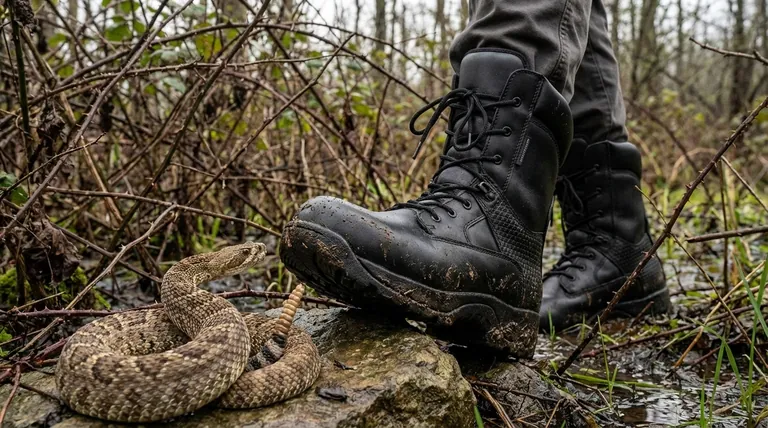
At their core, snake boots are a specialized form of personal protective equipment designed to protect your feet and lower legs from the fangs of venomous snakes. They are constructed from tough, puncture-resistant materials like leather, rubber, and dense synthetic weaves that extend from the foot to just below the knee, covering the most common strike zone.
While their primary function is to prevent snakebite injuries, their true value lies in providing comprehensive lower-leg protection against a range of outdoor hazards—from sharp briars to ticks—in a single, integrated piece of footwear.
The Anatomy of Protection
Snake boots are not simply tall boots; they are engineered systems designed to physically stop a snake's fangs from penetrating to your skin. This is achieved through a combination of material science and structural design.
Puncture-Resistant Materials
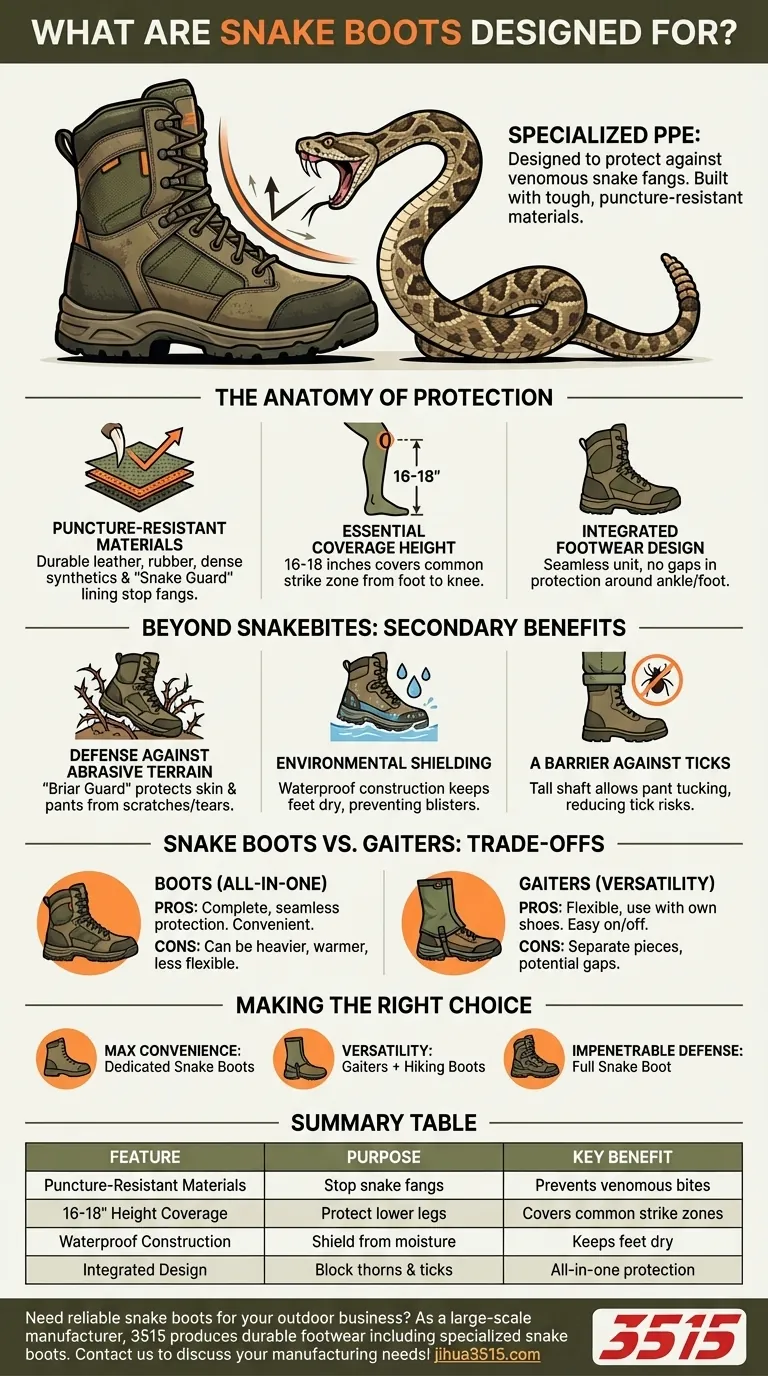
The most critical feature is the material itself. Manufacturers use durable uppers made of thick leather, dense rubber, or advanced synthetic fabrics like Cordura. Many feature a specialized lining, often called a "Snake Guard," which is a highly flexible yet tightly woven layer that is extremely difficult for fangs to pierce.
Essential Coverage Height
Most snake boots provide between 16 and 18 inches of protection. This height is not arbitrary; it is specifically chosen to cover the lower leg up to the knee, which is the area most vulnerable to bites from common North American venomous snakes like rattlesnakes, copperheads, and cottonmouths.
Integrated Footwear Design
Unlike add-on accessories, a snake boot is a complete, seamless unit. This integrated design ensures there are no gaps in protection around the ankle or foot, which can be a potential weak point with other solutions.
Beyond Snakebites: The Secondary Benefits
While snakebite prevention is the main selling point, the rugged construction of these boots provides several other significant advantages for anyone navigating challenging terrain.
Defense Against Abrasive Terrain
The same materials that stop fangs are also highly effective at shielding you from dense brush, sharp thorns, and briars. This "Briar Guard" effect protects both your skin from scratches and your pants from rips and tears.
Environmental Shielding
Many snake boots are built to be waterproof. This feature is critical for keeping your feet dry when crossing streams or walking through wet grass, preventing blisters and maintaining comfort on long treks.
A Barrier Against Ticks
The tall, continuous shaft of a snake boot allows you to securely tuck in your pants. This creates a formidable physical barrier against ticks, significantly reducing your risk of tick-borne illnesses.
Understanding the Trade-offs: Snake Boots vs. Gaiters
Snake boots are an excellent all-in-one solution, but they are not the only option. It's important to understand how they compare to snake gaiters to make an informed decision.
The All-in-One Convenience of Boots
A snake boot is a single piece of gear. You put it on, and you have complete protection for your foot and lower leg. There are no extra straps to adjust or pieces of equipment to remember.
The Versatility of Gaiters
Snake gaiters are separate protective coverings that wrap around your lower leg and are worn over your existing footwear. Their primary advantage is flexibility. You can pair them with your favorite, broken-in hiking boots, and you can easily take them off when you're no longer in a high-risk area.
Potential Downsides of Boots
Because of their robust construction, snake boots can sometimes be heavier, warmer, and less flexible than a standard hiking boot. The trade-off for integrated protection is a potential reduction in the specific comfort or performance you might get from your preferred hiking footwear.
Making the Right Choice for Your Activity
The decision between snake boots and an alternative like gaiters depends entirely on your specific needs and the environment you'll be in.
- If your primary focus is maximum convenience for frequent use in hazardous areas: A dedicated pair of snake boots is the most straightforward and reliable solution.
- If your primary focus is versatility across different terrains: Snake gaiters paired with your favorite hiking boots provide the flexibility to adapt to changing conditions.
- If your primary focus is impenetrable defense against dense undergrowth: The seamless design of a full snake boot often provides superior protection against thorns and brush.
Ultimately, the right choice is the one that provides proven protection without preventing you from confidently and comfortably navigating your environment.
Summary Table:
| Feature | Purpose | Key Benefit |
|---|---|---|
| Puncture-Resistant Materials | Stop snake fangs | Prevents venomous bites |
| 16-18" Height Coverage | Protect lower legs | Covers common strike zones |
| Waterproof Construction | Shield from moisture | Keeps feet dry in wet conditions |
| Integrated Design | Block thorns & ticks | All-in-one lower-leg protection |
Need reliable snake boots for your outdoor business or retail line?
As a large-scale manufacturer, 3515 produces a comprehensive range of durable footwear for distributors, brand owners, and bulk clients. Our production capabilities include all types of safety and outdoor boots, including specialized snake boots built with puncture-resistant materials and waterproof designs.
We help you offer proven protection to your customers. Contact us today to discuss your manufacturing needs!
Visual Guide
Related Products
- Wholesale High-Traction Camo Boots - Custom Manufacturer for Brands
- Durable Leather Tactical Boots Wholesale & Custom Manufacturing for Brands
- Durable Leather High-Ankle Tactical Boots for Wholesale & Custom Manufacturing
- High-Traction Suede Tactical Boots Wholesale & Custom Manufacturing
- Durable High-Ankle Tactical Boots Wholesale Manufacturer for Custom & Bulk Orders
People Also Ask
- What are the key features of the new line of camo boots? Built for Extreme Cold & Rugged Terrain
- Are camo boots necessary for hunting success? Prioritize Performance Over Pattern
- How does the Rank Score Test identify the primary causes of premature failure in tactical and work boots? Key Insights
- What is the technical logic behind using closed-eye testing for tactical boots? Unlocking Peak Footwear Stability
- What shoes to wear for a security job? Durable, Protective Footwear for Long Shifts



















