
At their core, polyurethane (PU) boots are used in demanding professional, military, and recreational environments where a unique balance of durability, lightweight comfort, and protection is essential. They are engineered from a versatile synthetic material that provides superior resistance to wear and tear, excellent shock absorption, and thermal insulation, making them ideal for challenging conditions.
The primary advantage of polyurethane is not a single feature, but its ability to combine properties that are often mutually exclusive in other materials. It delivers the durability of a work boot, the comfort of a sneaker, and the protection of an insulated boot in one lightweight package.
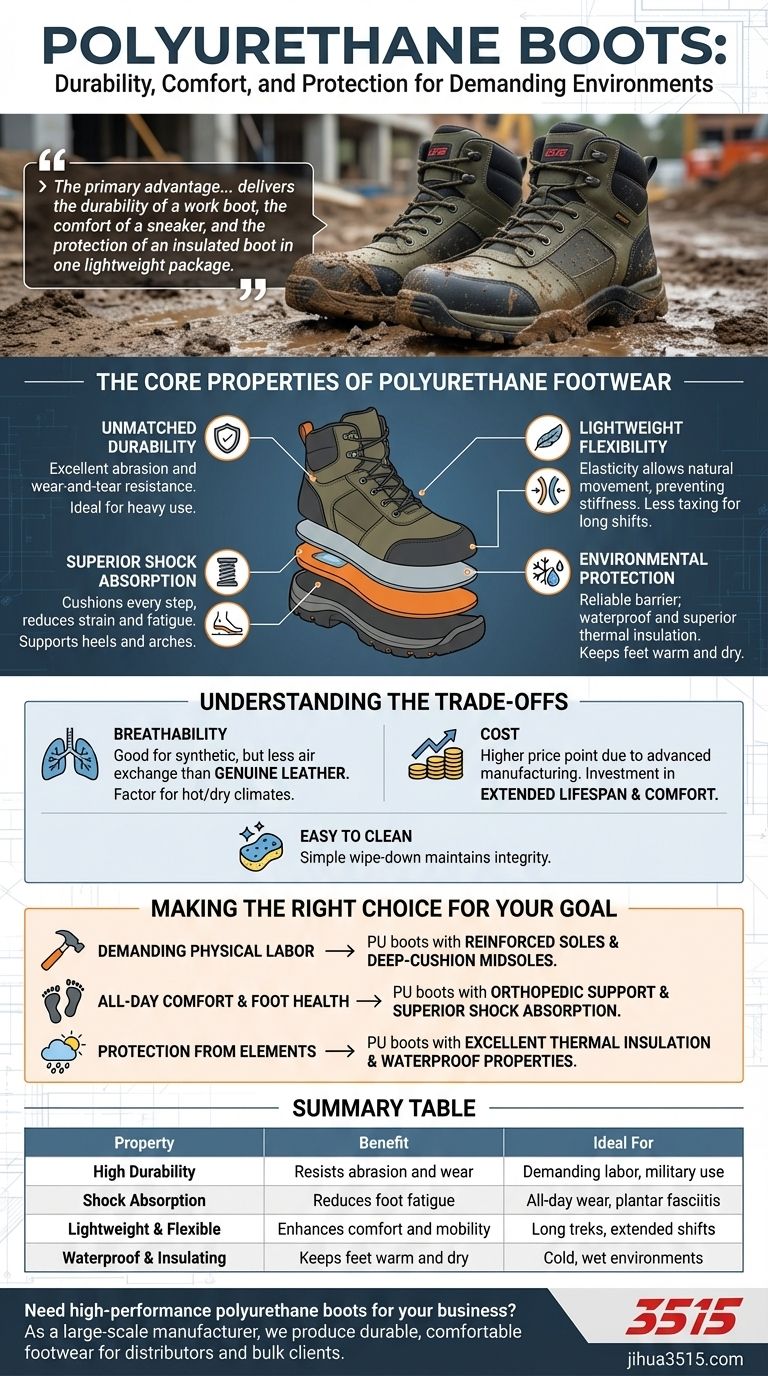
The Core Properties of Polyurethane in Footwear
To understand why PU is chosen for high-performance boots, you must first understand the specific advantages of the material itself. Each property directly translates to a real-world benefit for the wearer.
Unmatched Durability and Resistance
Polyurethane is exceptionally tough. It offers excellent abrasion and wear-and-tear resistance, meaning it can withstand scrapes, scuffs, and harsh contact far better than materials like PVC or rubber.
This durability is why reinforced PU is a standard material for the heels and soles of army combat boots, which must endure extreme use over long periods.
Superior Shock Absorption and Support
One of PU's most significant benefits is its ability to absorb impact. It's frequently used to create shock-absorbing midsoles that cushion the foot with every step.
This quality provides critical support to the heel and arches, reducing strain and fatigue. It makes PU boots particularly suitable for workers on their feet all day or for individuals managing conditions like plantar fasciitis.
Lightweight Flexibility and Comfort
Unlike many heavy-duty materials, polyurethane is remarkably lightweight and flexible. This elasticity allows the boot to move with the foot, preventing the stiff, restrictive feeling common in traditional work boots.
The result is a boot that is comfortable, soft, and less taxing to wear during long treks or shifts, directly reducing wearer fatigue.
Environmental Protection and Insulation
PU provides a reliable barrier against the elements. It has inherent waterproof properties and offers superior thermal insulation compared to neoprene, PVC, or EVA.
This makes PU boots an excellent choice for cold, wet environments where keeping feet warm and dry is a primary concern for both safety and comfort.
Understanding the Trade-offs
While polyurethane offers a powerful combination of benefits, it's important to understand its context relative to other materials. No single material is perfect for every application.
Breathability vs. Natural Materials
PU is engineered to have good breathability for a synthetic material. However, it will generally offer less air exchange than high-quality, genuine leather. For users in hot, dry climates, this can be a factor.
Cost vs. Simpler Synthetics
The advanced manufacturing process and balanced performance of polyurethane often place it at a higher price point than basic PVC or rubber boots. The investment is in its extended lifespan and enhanced comfort and protective features.
A Note on Cleaning
PU is known for being easy to clean, which is a significant advantage in muddy or dirty environments. A simple wipe-down is often all that is needed to maintain the boot's appearance and integrity.
Making the Right Choice for Your Goal
Selecting the right boot material depends entirely on your primary needs. Polyurethane excels when performance and protection are the priority.
- If your primary focus is demanding physical labor: Look for PU boots with reinforced soles and deep-cushion midsoles for maximum durability and support.
- If your primary focus is all-day comfort and foot health: Prioritize PU boots specifically designed with orthopedic support to leverage their superior shock absorption.
- If your primary focus is protection from the elements: Choose PU boots for their excellent thermal insulation and waterproof properties, especially in cold or wet conditions.
Ultimately, selecting a polyurethane boot is an investment in long-term comfort, protection, and performance.
Summary Table:
| Property | Benefit | Ideal For |
|---|---|---|
| High Durability | Resists abrasion and wear | Demanding labor, military use |
| Shock Absorption | Reduces foot fatigue | All-day wear, plantar fasciitis |
| Lightweight & Flexible | Enhances comfort and mobility | Long treks, extended shifts |
| Waterproof & Insulating | Keeps feet warm and dry | Cold, wet environments |
Need high-performance polyurethane boots for your business? As a large-scale manufacturer, 3515 produces a comprehensive range of durable, comfortable footwear for distributors, brand owners, and bulk clients. Our advanced production capabilities ensure you get boots that meet the toughest demands. Contact us today to discuss your custom requirements!
Visual Guide
Related Products
- Durable Leather Tactical Boots Wholesale & Custom Manufacturing for Brands
- High-Traction Suede Tactical Boots Wholesale & Custom Manufacturing
- Durable Leather High-Ankle Tactical Boots for Wholesale & Custom Manufacturing
- Durable Leather Work Boots for Wholesale & Custom Manufacturing
- Durable Leather Work Boots for Wholesale & Custom OEM Manufacturing
People Also Ask
- What specialized protections do tactical boots offer? Maximize Endurance with High-Performance Footwear
- What features should law enforcement officers look for in tactical boots? Essential Guide for Safety & Performance
- Importance of Professional Tactical Boots in Loess Gully Regions: Ensure Safety and Precision for Field Monitoring
- What is rucking, and why are tactical boots suitable for it? Discover the Ultimate Footwear for Heavy Loads
- What makes the traction of tactical boots superior? Unlock the Science of Unbeatable Grip

















