Ultimately, the right hunting boot height is a direct function of your specific environment and hunting style. For most hunters in varied conditions, a mid-height boot provides an ideal balance of ankle support and flexibility, while taller boots are reserved for wet, rugged, or hazardous terrain where maximum protection is non-negotiable.
The core decision is a trade-off: Taller boots offer superior protection from water, hazards, and rough terrain at the cost of weight and flexibility. Shorter boots prioritize mobility and comfort but sacrifice that protection.
The Core Principle: Protection vs. Mobility
Understanding the fundamental give-and-take between boot heights is the first step. Every inch of material adds protection but also weight and rigidity.
Taller Boots (10"+): Maximum Protection
Taller boots are specialized tools. Their primary purpose is to create a barrier between your leg and the elements.
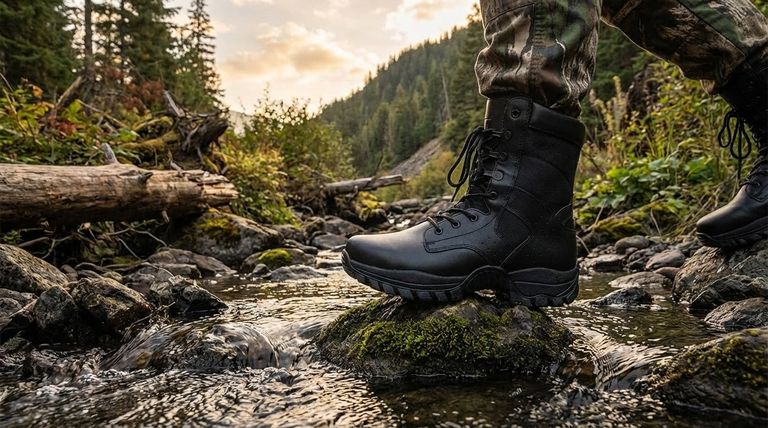
This height is essential for crossing creeks, navigating deep snow, or traversing marshland without water seeping over the top. They also offer crucial protection against snake bites in infested areas.
Mid-Height Boots (around 8"): The Versatile All-Rounder
This is the most common and versatile category for a reason. An 8-inch boot provides excellent ankle support for navigating uneven ground and moderate slopes.
It strikes a near-perfect balance, offering enough height to guard against most water, mud, and debris while retaining good flexibility for stalking and climbing.
Shorter Boots (6" or less): Prioritizing Agility
While less common for rugged backcountry hunting, shorter boots excel in mobility. They feel more like a sturdy hiking boot.
These are best suited for early-season hunts, scouting on established trails, or any situation where the terrain is predictable and hazards are minimal.
Key Factors Influencing Your Choice
Your personal hunting scenario is the only guide that matters. Analyze these factors to determine where you fall on the protection vs. mobility spectrum.
Your Hunting Terrain
Steep, rocky, and off-camber terrain demands significant ankle support to prevent twists and sprains. Taller, more rigid boots are superior here.
For rolling hills or forested flatlands, the robust support of a tall boot is often unnecessary. A mid-height boot provides sufficient stability without hindering movement.
Expected Weather and Water Crossings
If your hunt involves frequent creek crossings, swamps, or a high likelihood of rain or snow, a taller boot is your best defense against wet feet.
A waterproof mid-height boot can handle puddles and damp ground, but it won't stop water from pouring over the cuff during a deeper submersion.
Personal Ankle Support Needs
Consider your own physiology. If you have a history of ankle instability or are carrying a heavy pack, the added support of a mid-to-tall boot can be a critical piece of safety equipment.
Understanding the Trade-offs
Choosing a boot height is not about finding the "best" boot, but the right one for the job. Selecting a boot that is too tall for your needs can be as problematic as one that is too short.
Weight and Fatigue
Every extra inch of leather and rubber adds weight. Over a long day of hiking, those extra ounces on your feet translate to significantly more energy expended.
Flexibility and Stealth
Taller, more rigid boots can make it difficult to feel the ground beneath your feet, which can be a disadvantage when trying to stalk game quietly. A more flexible mid-height boot often allows for a stealthier approach.
Heat and Breathability
More material means less breathability. In warm or early-season conditions, a tall boot can lead to excessive sweating and discomfort, which can paradoxically cause blisters just as easily as a wet boot.
Making the Right Choice for Your Hunt
Once you've analyzed your needs, the decision becomes clear. Before any purchase, however, remember that proper fit—accounting for foot length and sock thickness—is just as crucial as selecting the right height.
- If your primary focus is navigating steep, unstable terrain or snake country: Choose a taller boot (10 inches or more) for maximum ankle support and protection.
- If your primary focus is all-purpose hunting in varied conditions: A mid-height boot (around 8 inches) offers the best possible balance of support, flexibility, and protection.
- If your primary focus is mobility on established trails or in dry, early-season conditions: A shorter, 6- to 8-inch boot will provide sufficient support while maximizing comfort and minimizing weight.
Choosing the right boot height is about matching your gear to your environment, ensuring every step you take is confident, comfortable, and secure.
Summary Table:
| Boot Height | Best For | Key Benefits |
|---|---|---|
| Tall Boots (10"+) | Wet, rugged terrain, snake country | Maximum protection, ankle support, waterproofing |
| Mid-Height Boots (~8") | Varied, all-purpose hunting | Balance of support, flexibility, and protection |
| Shorter Boots (6" or less) | Dry trails, early-season hunts | Lightweight, maximum mobility, comfort |
Ready to equip yourself with the perfect hunting boots?
As a large-scale manufacturer, 3515 produces a comprehensive range of hunting footwear for distributors, brand owners, and bulk clients. Our production capabilities encompass all types of hunting boots and shoes, ensuring you get the right height, protection, and durability for any terrain.
Contact us today to discuss your specific needs and let us help you step confidently into your next hunt.
Get Your Custom Hunting Boot Solution Now!
Visual Guide

Related Products
- Wholesale Lightweight Tactical Boots Custom Manufacturer for Desert & Combat Use
- Durable Leather Tactical Boots Wholesale & Custom Manufacturing for Brands
- High-Traction Suede Tactical Boots Wholesale & Custom Manufacturing
- Wholesale Waterproof Tactical Boots Custom Suede & High-Traction Soles
- Durable Spiked Camouflage Boots Wholesale & Factory Production
People Also Ask
- What are the common types of combat boots? Find the Right Boot for Your Mission
- What specialized protections do tactical boots offer? Maximize Endurance with High-Performance Footwear
- What are the different types of tactical boots available? Find the Right Boot for Your Mission
- How does additive manufacturing equipment reduce environmental risks? Sustainable Tactics for Modern Footwear Production
- How is the compatibility of polymer materials demonstrated in smart footwear? Enhancing Tactical & Training Performance