
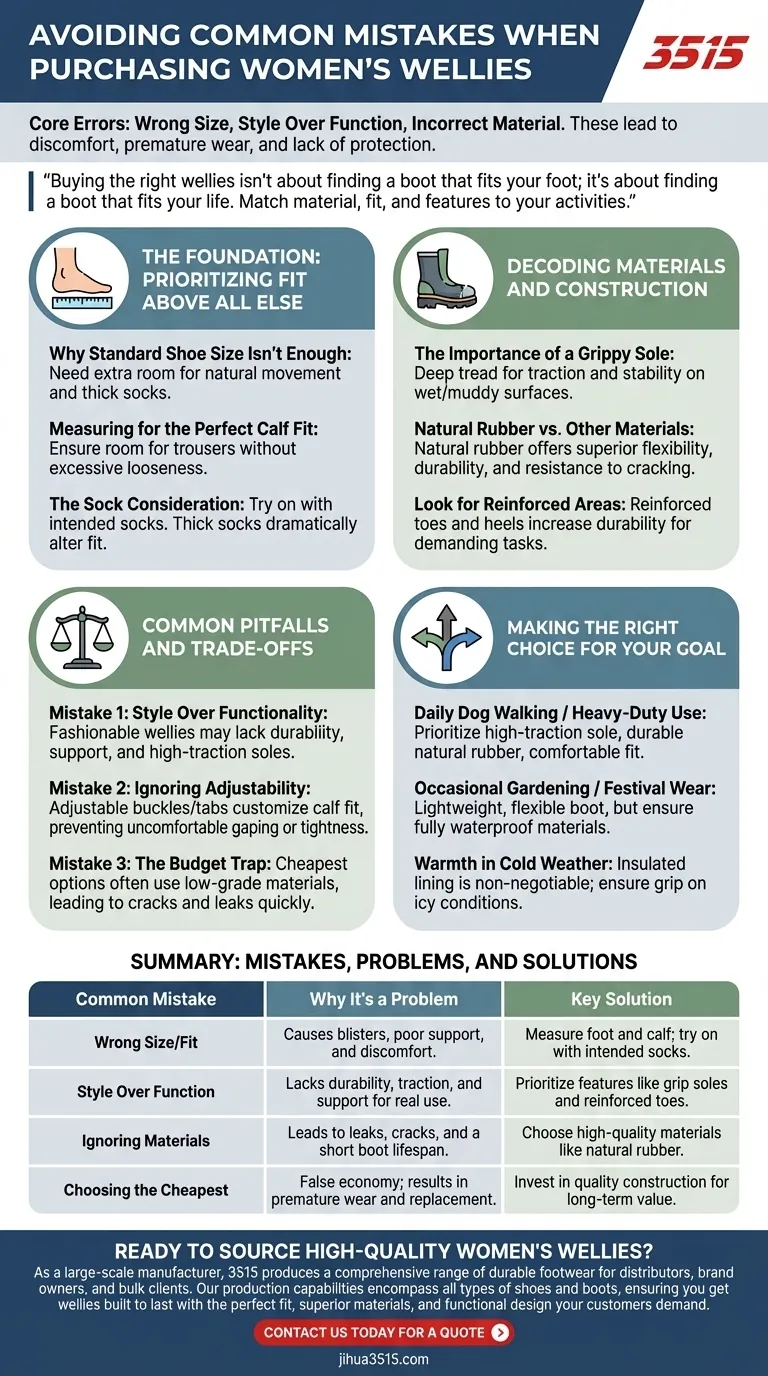
The most common mistakes when purchasing women's wellies are choosing the wrong size, prioritizing appearance over functional design, and selecting a material that doesn't suit your intended use. These errors lead to discomfort, premature wear, and boots that fail to provide adequate protection when you need it most.
Buying the right wellies isn't about finding a boot that fits your foot; it's about finding a boot that fits your life. The most critical mistake is failing to match the boot's material, fit, and features to the specific activities you'll be doing.

The Foundation: Prioritizing Fit Above All Else
Getting the fit wrong is the fastest way to regret a purchase. A boot that is too tight will cause blisters and restrict circulation, while one that is too loose will lack support and create friction.
Why Standard Shoe Size Isn't Enough
Wellies have a unique fit profile. You need a little extra room between your longest toe and the front of the boot to allow for natural foot movement and thicker socks.
Measuring for the Perfect Calf Fit
A proper fit isn't just about your foot length. Ensure there is enough room around the top of the boot to comfortably tuck in trousers or jeans without being excessively loose.
The Sock Consideration
Always try on wellies with the type of socks you intend to wear with them. A thick winter sock can dramatically alter how a boot fits compared to a thin summer one.
Decoding Materials and Construction
The quality of a welly is defined by what it's made of and how it's put together. Ignoring this leads to leaks and a short lifespan for your boots.
The Importance of a Grippy Sole
Look closely at the outsole. A deep, defined tread or "grip sole" is essential for providing traction and stability on wet, muddy, or uneven surfaces. A flat, smooth sole is a significant safety hazard.
Natural Rubber vs. Other Materials
While many materials are waterproof, natural rubber is often considered the gold standard for its superior flexibility, durability, and resistance to cracking over time.
Look for Reinforced Areas
High-quality wellies often feature reinforced toes and heel sections. This small detail dramatically increases the boot's durability, especially if you use them for demanding tasks like gardening or farm work.
Understanding the Trade-offs and Common Pitfalls
Making a smart purchase means understanding the compromises involved and avoiding common traps.
Mistake 1: Style Over Functionality
Many fashionable wellies are designed for appearance, not performance. They may lack the durable construction, supportive footbed, or high-traction sole needed for anything more than a short walk on a paved path.
Mistake 2: Ignoring Adjustability
Features like adjustable buckles or pull tabs are not just for decoration. They allow you to customize the fit around your calf, preventing uncomfortable gaping or a fit that is too constrictive.
Mistake 3: The Budget Trap
The cheapest option is rarely the best value. Inexpensive wellies are often made from lower-grade materials that will crack and leak quickly, forcing you to buy a replacement pair much sooner.
Making the Right Choice for Your Goal
Select your wellies based on their primary purpose to ensure satisfaction and longevity.
- If your primary focus is daily dog walking or heavy-duty use: Prioritize a boot with a high-traction sole, durable natural rubber construction, and a comfortable, supportive fit.
- If your primary focus is occasional gardening or festival wear: A more lightweight, flexible boot is suitable, but do not compromise on fully waterproof materials and a comfortable footbed.
- If your primary focus is warmth in cold weather: An insulated lining is non-negotiable, and you should ensure the boot's sole is designed to provide grip in icy conditions.
Investing a few minutes to match the boot's features to your needs will ensure your wellies serve you well for years to come.
Summary Table:
| Common Mistake | Why It's a Problem | Key Solution |
|---|---|---|
| Wrong Size/Fit | Causes blisters, poor support, and discomfort. | Measure foot and calf; try on with intended socks. |
| Style Over Function | Lacks durability, traction, and support for real use. | Prioritize features like grip soles and reinforced toes. |
| Ignoring Materials | Leads to leaks, cracks, and a short boot lifespan. | Choose high-quality materials like natural rubber. |
| Choosing the Cheapest | False economy; results in premature wear and replacement. | Invest in quality construction for long-term value. |
Ready to Source High-Quality Women's Wellies?
As a large-scale manufacturer, 3515 produces a comprehensive range of durable footwear for distributors, brand owners, and bulk clients. Our production capabilities encompass all types of shoes and boots, ensuring you get wellies that are built to last with the perfect fit, superior materials, and functional design your customers demand.
Contact us today to discuss your production needs and get a quote!
Visual Guide
Related Products
- Wholesale Classic Leather Lace-Up Ankle Boots for Brand Manufacturing
- Wholesale Women's Leather Derby Shoes Custom Factory Production
- Durable Waterproof Rain Boots | Custom Manufacturer for Wholesale & Brands
- Wholesale Durable Leather Work Boots | 8-Inch Goodyear Welt Manufacturer
People Also Ask
- How are oils used to waterproof leather boots? A Guide to Deep Conditioning & Protection
- Why is regular maintenance necessary for the performance of leather boots? Boost Durability & Brand Reputation
- Why might it be beneficial to pre-heat the boots before applying wax? Achieve Deeper, Longer-Lasting Protection
- How can leather boots maintain their water resistance? A Guide to Lasting Protection
- What is the biggest enemy of leather boots? Protect Your Investment from Water Damage



