
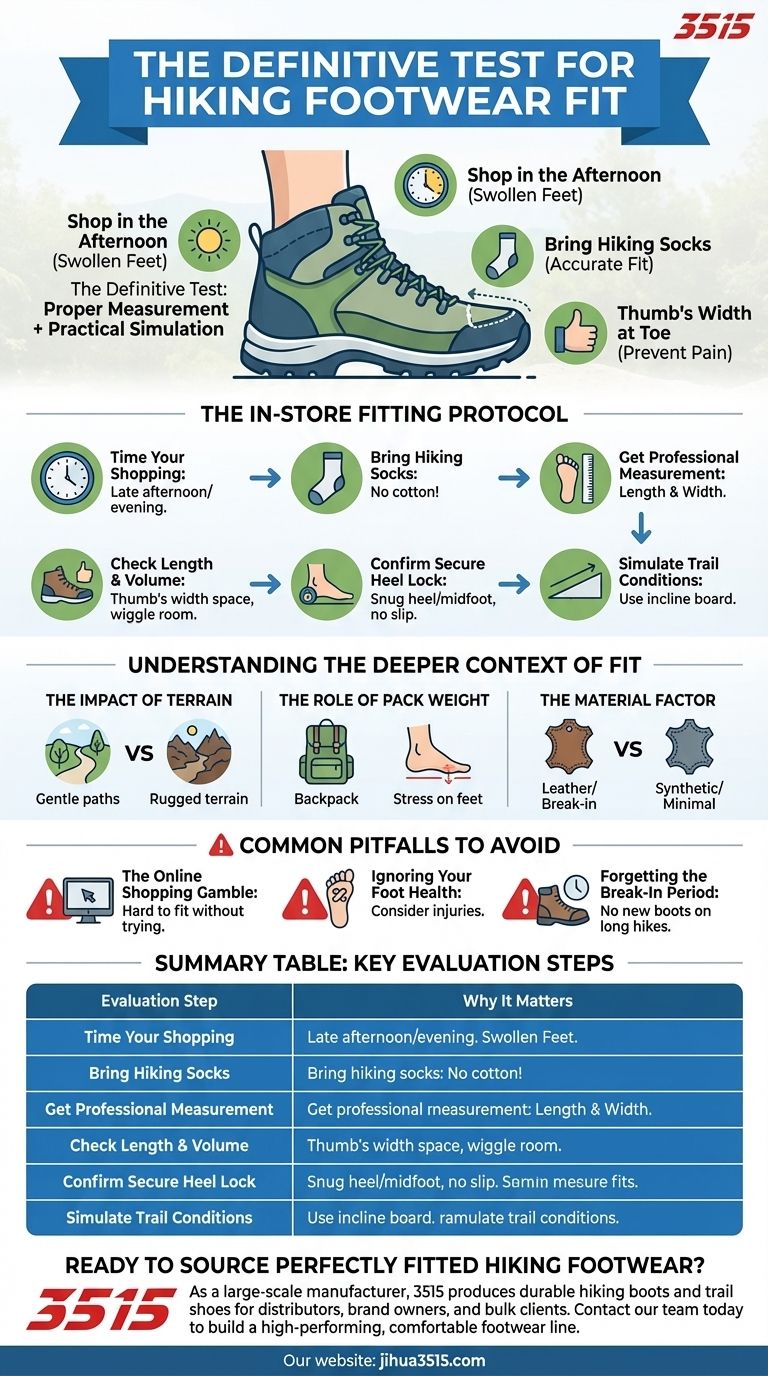
The definitive test for hiking footwear fit is a combination of proper measurement and practical simulation. To evaluate a boot or shoe correctly, you must shop in the afternoon with your intended hiking socks, ensure there is a thumb's width of space between your longest toe and the end of the shoe, and confirm your heel and midfoot are securely locked in place to prevent movement.
The search for the right hiking shoe is not about finding a comfortable slipper; it is a technical process to prevent injury. A perfect fit is achieved by simulating trail conditions in-store and ensuring the footwear provides the specific support your hike demands.
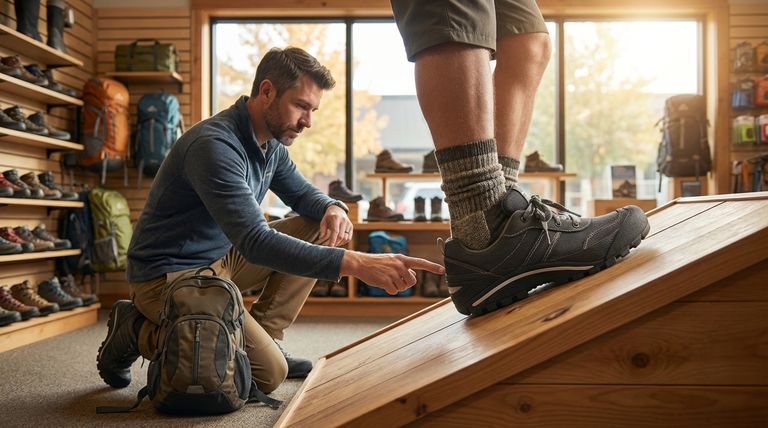
The In-Store Fitting Protocol
A successful fit begins before you even put on the shoe. Following a clear protocol removes guesswork and ensures you are testing the footwear under realistic conditions.
Time Your Shopping Correctly
Your feet naturally swell throughout the day, reaching their largest size in the late afternoon or evening. Always try on new footwear during this time to avoid buying a pair that will become too tight during a hike.
Bring Your Hiking Socks
The thickness of your socks significantly impacts fit. Always bring the specific pair of moisture-wicking hiking socks you plan to wear on the trail. Never use cotton socks, as they retain moisture and cause blisters.
Get a Professional Measurement
Shoe sizes vary between brands and even models. Get your feet professionally measured for both length and width at an outdoor specialty store. This provides a crucial starting point.
Check the Length and Volume
With the footwear on and laced up, you should have about a thumb’s width of space between your longest toe and the front of the shoe. This prevents your toes from slamming into the front on descents, which can cause pain and bruising (hematomas). You should have enough room to wiggle your toes freely.
Confirm a Secure Heel Lock
The most critical part of the fit is ensuring your heel and midfoot are snug. When you walk, your heel should not lift or slip. Excessive movement here is the primary cause of blisters.
Simulate Trail Conditions
Many specialty retailers have an incline board. Use it to walk up and down a simulated slope. This is the best way to check for toe-banging on declines and heel lift on inclines.
Understanding the Deeper Context of Fit
The "perfect fit" is not universal; it is directly related to the demands of your activity. The context of your hike dictates the type of fit and support you require.
The Impact of Terrain
Gentle, well-maintained paths may allow for a more relaxed fit found in a trail runner. Rugged, uneven terrain necessitates a more structured boot with a secure fit to provide ankle support and protection.
The Role of Pack Weight
Carrying a heavy backpack places immense stress on your feet and joints. This requires a more supportive and stiffer boot that can bear the load. A secure fit is critical to prevent your foot from shifting inside the boot under the extra weight.
The Material Factor
Leather boots often require a significant break-in period. They will mold to your feet over time, so an initially very snug fit is often necessary. Synthetic materials, however, typically feel good right out of the box and require minimal breaking in.
Common Pitfalls to Avoid
Achieving the right fit is often about avoiding common mistakes. Being aware of these pitfalls can save you from significant discomfort on the trail.
The Online Shopping Gamble
While convenient, buying online makes proper fitting difficult. If you order online, you must be disciplined about trying them on immediately and returning them if the fit is anything less than perfect. The hassle of a return is minor compared to the misery of a poor fit miles from the trailhead.
Ignoring Your Foot Health
If you are prone to foot injuries like plantar fasciitis, choose footwear with appropriate support. Do not opt for a minimalist shoe if your foot health history suggests you need more structure.
Forgetting the Break-In Period
Never take a brand-new pair of boots on a long hike. Even a perfect fit can cause hot spots initially. Wear your new footwear around the house and on short walks to allow them to conform to your feet and identify any potential issues before you commit to a major trek.
Making the Right Choice for Your Hike
Your intended use is the ultimate guide for selecting and fitting your footwear.
- If your primary focus is day hiking on gentle trails: A snug but comfortable fit with ample toe room in a trail runner or light hiker is likely sufficient.
- If your primary focus is multi-day backpacking with a heavy load: Prioritize a secure, supportive fit in a sturdier boot that locks your heel in place to handle added weight and varied terrain.
- If your primary focus is buying footwear you've never tried before: Visit an outdoor specialty store to get a professional fitting, as this is the most reliable way to ensure comfort and prevent injury.
Investing the time to achieve a precise and appropriate fit is the single most important step you can take towards a safe and successful journey.
Summary Table:
| Key Evaluation Step | Why It Matters |
|---|---|
| Shop in the Afternoon | Feet are naturally swollen, simulating trail conditions. |
| Bring Hiking Socks | Ensures accurate fit with the gear you'll actually use. |
| Thumb's Width at Toe | Prevents painful toe-banging on descents. |
| Secure Heel Lock | The #1 factor in preventing blisters. |
| Test on an Incline Board | Simulates real trail forces for the best assessment. |
Ready to Source Perfectly Fitted Hiking Footwear?
As a large-scale manufacturer, 3515 produces a comprehensive range of durable hiking boots and trail shoes for distributors, brand owners, and bulk clients. Our production capabilities encompass all types of technical footwear, from lightweight hikers to heavy-duty backpacking boots, ensuring your customers get the precise fit and support their adventures demand.
Let's discuss your specific needs: Contact our team today to explore how we can help you build a high-performing, comfortable footwear line that minimizes returns and maximizes customer satisfaction.
Visual Guide
Related Products
- Durable Rubber Sole Outdoor Shoes Wholesale & Custom Manufacturing
- Wholesale High-Traction Camo Boots - Custom Manufacturer for Brands
- Wholesale Durable Camouflage Canvas Shoes with High-Traction Cleated Rubber Sole
- Wholesale Lightweight Tactical Boots Custom Manufacturer for Desert & Combat Use
- Wholesale Waterproof Tactical Boots Custom Suede & High-Traction Soles
People Also Ask
- What is the function of the sole in outdoor shoes? Find the Perfect Grip and Support
- What role do outdoor shoes and sneakers play in navigating external terrains? Engineered Stability for Every Surface
- How is AI utilized in the design of outdoor and safety footwear? Harnessing Big Data for Market-Driven Shoe Innovation
- Why is durability important when selecting outdoor shoes? A Guide to Safety & Long-Term Value
- What are the key components of outdoor shoes that affect comfort and sturdiness? A Guide to Durable, High-Performance Footwear



















