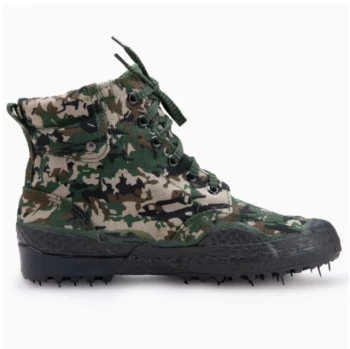
At their core, hiking boots protect you by creating a durable, multi-layered shield around your feet. This system uses robust materials and specific structural features to guard against a wide range of trail hazards, from sharp rocks and punctures to direct impacts and environmental exposure.
The protective power of a hiking boot isn't from a single feature, but from an integrated system. The tough upper, thick sole, reinforced toe, and high collar work in unison to insulate your foot from the unpredictable dangers of the trail.
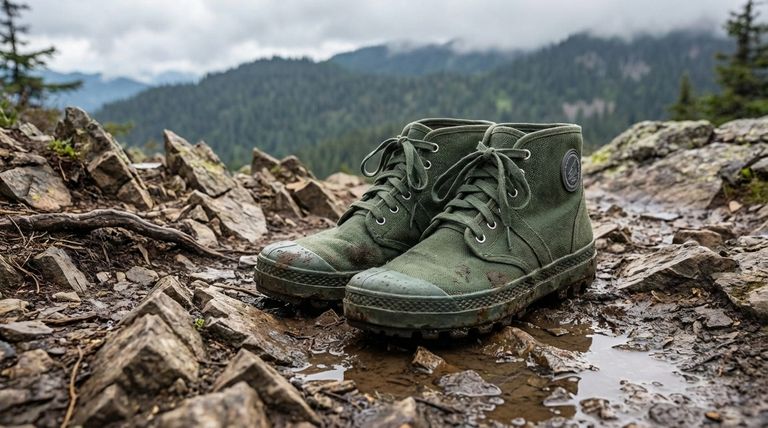
The Anatomy of Protection: How a Boot Shields Your Foot
True protection comes from how the different parts of a hiking boot are designed to handle specific threats. Each component serves a distinct purpose in keeping you safe.
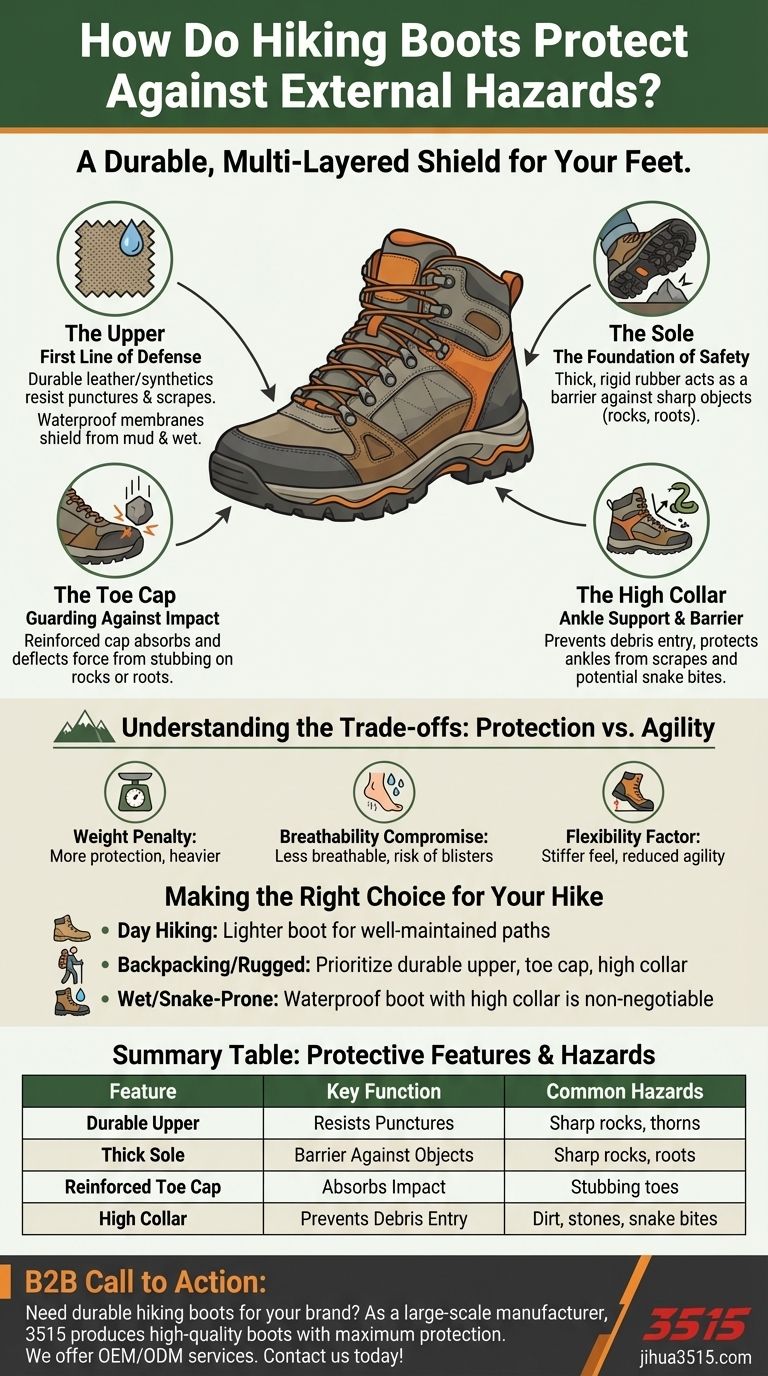
The Upper: Your First Line of Defense
The "upper" is the main body of the boot that covers your foot. It's constructed from durable materials like leather or tough synthetic fabrics.
This robust barrier is designed to resist punctures and scrapes from sharp rocks, thorns, and errant branches.
Many uppers also feature a waterproof or water-resistant membrane, which shields your feet from mud, puddles, and shallow water crossings, preventing discomfort and moisture-related issues.
The Sole: The Foundation of Safety
The outsole of a hiking boot is significantly thicker and more rigid than that of a standard shoe.
This thick layer of rubber acts as a formidable barrier, preventing sharp objects you step on from piercing through to your foot.
The Toe Cap: Guarding Against Direct Impact
Many hiking boots include a reinforced toe cap, often made of rubber or a composite material.
This crucial feature is designed to absorb and deflect the force of direct impacts, protecting your toes from being stubbed or crushed against rocks and roots.
The High Collar: More Than Just Ankle Support
The high-top design of most boots provides a cuff that extends above the ankle.
This collar acts as a physical barrier, effectively preventing debris like stones, twigs, and dirt from falling into your boot. It also shields your ankles from scrapes and can offer a degree of protection from hazards like venomous snake bites.
Understanding the Trade-offs: Protection vs. Agility
While protection is paramount, it's essential to recognize that it often comes with compromises. Choosing the right boot means balancing safety with other performance factors.
The Weight Penalty
More protection almost always means more weight. Boots with thick leather uppers, robust soles, and reinforced caps are heavier, which can contribute to fatigue on long hikes.
The Breathability Compromise
The most durable and waterproof materials are often the least breathable. A highly protective boot can trap heat and sweat, which may lead to blisters if not managed properly with the right socks.
The Flexibility Factor
A stiff, highly protective boot offers maximum shielding but can feel cumbersome and reduce your "feel" for the trail. Lighter, more flexible footwear offers greater agility but sacrifices a significant degree of protection.
Making the Right Choice for Your Hike
Select your level of protection based on the hazards you realistically expect to encounter on your typical trails.
- If your primary focus is day hiking on well-maintained paths: A lighter boot or even a sturdy trail shoe may offer sufficient protection from minor hazards.
- If your primary focus is backpacking or navigating rugged, off-trail terrain: Prioritize a boot with a durable upper, a reinforced toe cap, and a high collar for maximum defense against unpredictable impacts and debris.
- If your primary focus is hiking in wet, muddy, or snake-prone environments: A waterproof boot with a high collar is non-negotiable for comprehensive environmental protection.
Ultimately, choosing the right hiking boot is about matching the tool to the specific challenges of your adventure.
Summary Table:
| Protective Feature | Key Function | Common Hazards Mitigated |
|---|---|---|
| Durable Upper | First line of defense; resists punctures/scrapes | Sharp rocks, thorns, branches |
| Thick Sole | Acts as a barrier against sharp objects | Stepping on sharp rocks/roots |
| Reinforced Toe Cap | Absorbs and deflects direct impacts | Stubbing toes on rocks/roots |
| High Collar | Prevents debris entry; protects ankles | Dirt, stones, scrapes, snake bites |
Need durable hiking boots for your brand or retail business? As a large-scale manufacturer, 3515 produces a comprehensive range of high-quality hiking boots designed for maximum protection. We offer OEM/ODM services for distributors, brand owners, and bulk clients, ensuring your products meet the highest safety and durability standards. Contact us today to discuss your production needs and get a quote!
Visual Guide
Related Products
- Wholesale High-Traction Camo Boots - Custom Manufacturer for Brands
- Durable Rubber Sole Outdoor Shoes Wholesale & Custom Manufacturing
- Durable Spiked Camouflage Boots Wholesale & Factory Production
- Wholesale Lightweight Tactical Boots Custom Manufacturer for Desert & Combat Use
- Wholesale Waterproof Tactical Boots Custom Suede & High-Traction Soles
People Also Ask
- What are the key features of the new line of camo boots? Built for Extreme Cold & Rugged Terrain
- Are camo boots necessary for hunting success? Prioritize Performance Over Pattern
- What is the technical logic behind using closed-eye testing for tactical boots? Unlocking Peak Footwear Stability
- How does the Rank Score Test identify the primary causes of premature failure in tactical and work boots? Key Insights
- What shoes to wear for a security job? Durable, Protective Footwear for Long Shifts