
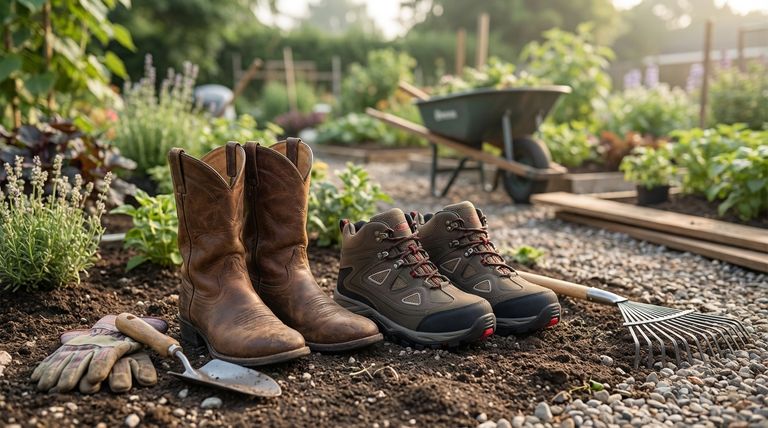
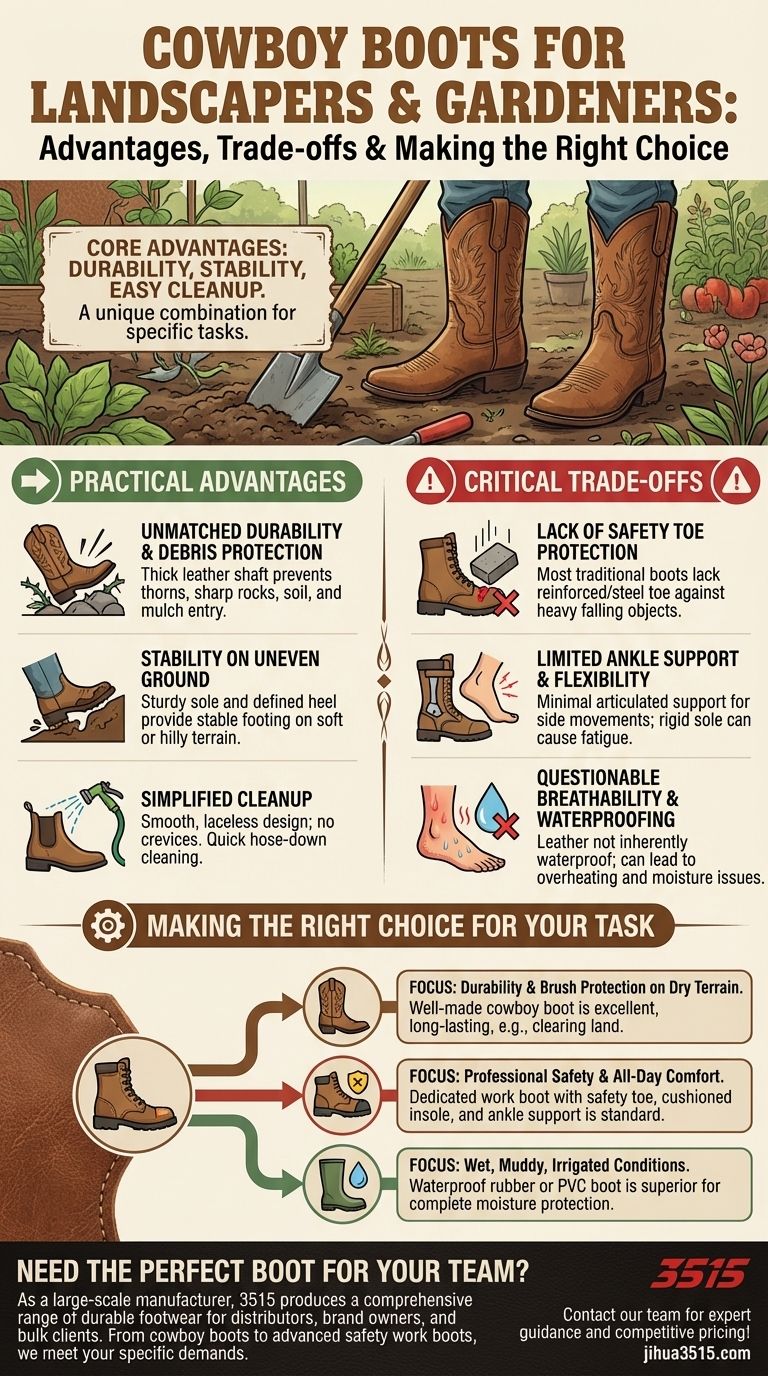
At their core, cowboy boots offer landscapers and gardeners a unique combination of durability, stability, and easy cleanup. Their sturdy leather construction provides excellent protection from thorns and debris, while the traditional sole design offers reliable traction on uneven ground like mud or hillsides. The laceless, smooth upper is also exceptionally easy to hose off after a day's work.
While cowboy boots excel in durability and protection for certain dry-land tasks, they are a specialized tool, not a universal solution. For professional landscaping, they often lack critical safety features and the all-day comfort provided by dedicated work boots.
The Practical Advantages of Cowboy Boots in the Garden
Unmatched Durability and Debris Protection
The primary advantage of a quality cowboy boot is its construction. Typically made from thick leather, the boot shaft provides a formidable barrier against thorns, sharp rocks, and stray tool strikes.
This high shaft also prevents soil, mulch, and other debris from getting inside your boots, a common annoyance with shorter footwear.
Stability on Uneven Ground
The classic cowboy boot design includes a sturdy, often slip-resistant sole and a defined heel. This provides a stable platform when working on challenging terrain.
This construction is particularly effective in soft soil or on muddy hillsides, where a solid footing is critical for both safety and efficiency.
Simplified Cleanup
Perhaps one of the most appreciated daily benefits is how easy cowboy boots are to clean.
Their smooth, laceless design means there are no crevices for mud and dirt to get trapped in. A quick spray from a hose is usually all that's needed to clean them.
Understanding the Critical Trade-offs
Choosing footwear is about balancing benefits with limitations. While cowboy boots have clear strengths, they also have significant drawbacks for landscaping work that must be considered.
The Lack of Safety Toe Protection
The most significant safety concern is the absence of a reinforced or steel toe cap in most traditional cowboy boots.
Dedicated landscaping work boots are designed with this feature to protect against heavy falling objects like pavers, logs, or equipment. This is a non-negotiable feature for many professional environments.
Limited Ankle Support and Flexibility
A cowboy boot's stiff shaft offers excellent debris protection but provides minimal articulated ankle support for the side-to-side movements common in landscaping.
Furthermore, the rigid sole can lack the flexibility needed for comfortable, repeated bending and crouching, potentially leading to foot fatigue over a long day.
Questionable Breathability and Waterproofing
Traditional all-leather boots do not offer much breathability, which can lead to discomfort and overheating during hot weather.
While leather can be treated for water resistance, it is not inherently waterproof. For consistently wet or muddy jobs, dedicated rubber or PVC boots offer far superior protection against moisture.
Making the Right Choice for Your Task
Ultimately, the best boot depends entirely on the specific work you do. You must align the footwear's features with the demands of your job.
- If your primary focus is durability and protection from brush on dry terrain: A well-made cowboy boot can be an excellent and long-lasting choice, especially for tasks like clearing land.
- If your primary focus is professional safety and all-day comfort: A dedicated work boot with a certified safety toe, cushioned insole, and proper ankle support is the correct professional standard.
- If your primary focus is working in wet, muddy, or irrigated conditions: A waterproof rubber boot is the superior option, offering complete moisture protection and the easiest possible maintenance.
Selecting the right footwear is about matching the tool to the specific demands of your environment and task.
Summary Table:
| Advantage | Benefit for Landscapers/Gardeners | Key Consideration |
|---|---|---|
| Durability & Protection | High leather shaft protects from thorns, rocks, and debris. | Lacks a certified safety toe for heavy objects. |
| Stability & Traction | Defined heel and sturdy sole provide grip on uneven, muddy ground. | Rigid sole can lack flexibility for all-day comfort. |
| Easy Cleanup | Smooth, laceless design allows for quick cleaning with a hose. | Not inherently waterproof; less suitable for consistently wet conditions. |
Need the Perfect Boot for Your Team?
As a large-scale manufacturer, 3515 produces a comprehensive range of durable footwear for distributors, brand owners, and bulk clients. Whether you need the specialized protection of cowboy boots or the advanced safety features of dedicated work boots, our production capabilities encompass all types of shoes and boots to meet your specific demands.
Let's discuss how we can equip your workforce with the right footwear for the job. Contact our team today for expert guidance and competitive pricing!
Visual Guide
Related Products
- High-Traction Suede Tactical Boots Wholesale & Custom Manufacturing
- Wholesale High-Traction Camo Boots - Custom Manufacturer for Brands
- Wholesale Lightweight Tactical Boots Custom Manufacturer for Desert & Combat Use
- Durable Leather Tactical Boots Wholesale & Custom Manufacturing for Brands
- Wholesale Durable Mid-Cut Tactical Boots for Custom & Private Label Brands
People Also Ask
- Why is sequential analysis utilized to evaluate tactical boots? Master Dynamic Boot Development and Ergonomic Performance
- How does the material of tactical boots affect their performance? Choose the Right Material for Your Mission
- How do tactical boots differ from regular boots? Performance, Durability & Design Explained
- How do military uniforms and tactical boots impact the prediction of thermal risk? Essential Safety Insights
- What are the benefits of integrating FES and sEMG into tactical boots? Safety, Reliability & Field-Ready Performance


















