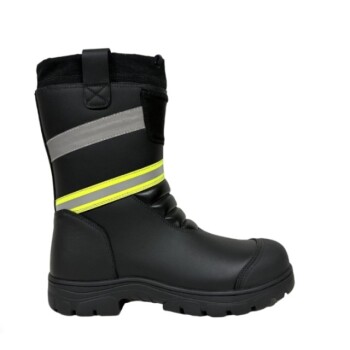
In short, motorcycle boots offer significantly more protection by adding two critical features that riding shoes lack: full shin coverage and robust structural support to prevent unnatural ankle twisting. While both offer basic abrasion and impact resistance, a true boot's rigid, taller design provides a far higher level of safety against the most common and severe lower-leg injuries.
The choice between riding shoes and motorcycle boots is a direct trade-off between off-bike convenience and on-bike protection. The fundamental difference lies not just in coverage, but in the boot's rigid structure designed to prevent the ankle from twisting or bending in ways it was never meant to.
The Critical Difference: Structural Integrity and Coverage
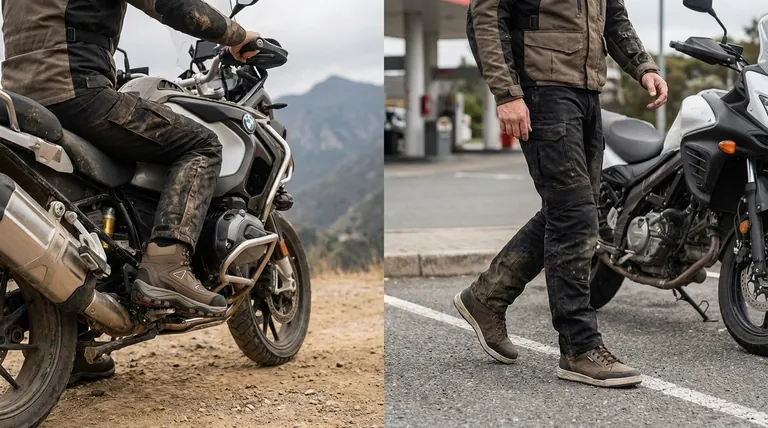
While riding shoes are a vast improvement over standard sneakers, they are structurally different from boots. This difference becomes clear when you analyze how each piece of gear protects you in a crash.
Full Shin Protection
Motorcycle boots, by definition, extend well past the ankle and up the shin. This shields your lower leg from direct impacts with footpegs, road debris, or the motorcycle itself during an accident. Riding shoes stop at or just above the ankle, leaving the entire shin area completely exposed.
Torsional and Lateral Support
This is the single most important protective advantage of a boot.
- Torsional support prevents the twisting forces that can cause severe sprains or breaks.
- Lateral support prevents the ankle from bending sideways or collapsing under impact.
Riding shoes are designed to be flexible for walking, so they offer very little of this structural rigidity. A proper boot acts like an external brace, limiting the joint's movement to its natural forward-and-back motion and protecting the fragile ligaments and bones from destructive forces.
Enhanced Materials and Construction
While both types of footwear use abrasion-resistant materials like leather or technical fabrics, boots are typically built with a heavier and stiffer design. Specialized boots for track or off-road use feature even more robust armor, external hinge systems for controlled movement, and thicker materials designed for extreme scenarios.
Where Riding Shoes Excel: The Convenience Factor
The features that make boots less safe are precisely what make them more convenient for daily use.
Superior Walkability
Riding shoes are built on more flexible soles, making them vastly more comfortable for walking around. Their lack of a rigid ankle structure allows for a natural gait, making them ideal for riders who commute to work or plan to spend significant time at their destination.
Casual Style and Versatility
Many riding shoes are intentionally designed to look like casual sneakers or high-tops. This allows riders to blend in seamlessly once they are off the bike, eliminating the need to carry a separate pair of shoes for social or professional settings.
Understanding the Trade-offs
Choosing the right footwear is not about which is "better" in a vacuum, but which is appropriate for your specific needs. The decision exists on a spectrum.
The Protection-to-Comfort Spectrum
On one end, you have casual riding shoes offering high comfort and baseline protection. On the other end, you have highly specialized race or off-road boots that provide maximum protection at the cost of being stiff, heavy, and uncomfortable for walking. Touring boots often sit somewhere in the middle.
Assessing Your Real-World Risk
The appropriate level of protection depends entirely on your riding style. A short commute across town at low speeds has a different risk profile than aggressive canyon carving, a track day, or an off-road adventure on rugged terrain. The higher the risk, the more you should lean toward the protection offered by a full boot.
Making the Right Choice for Your Riding Style
Base your decision on your primary type of riding and your personal tolerance for risk.
- If your primary focus is commuting and urban riding: Riding shoes often provide an excellent balance of necessary impact/abrasion protection and crucial off-bike walkability.
- If your primary focus is touring or long-distance travel: Taller, often waterproof touring boots offer the support, weather protection, and durability needed for long hours in the saddle.
- If your primary focus is high-performance track or sport riding: Full-length race boots with advanced ankle bracing and slide protection are the only appropriate choice.
- If your primary focus is off-road or adventure riding: Specialized boots with extreme rigidity and impact absorption are essential for navigating unpredictable and hazardous terrain.
Ultimately, choosing between boots and shoes is a conscious decision about where you need your gear to perform best—on the motorcycle or off of it.
Summary Table:
| Feature | Motorcycle Boots | Riding Shoes |
|---|---|---|
| Shin Protection | Full coverage | None |
| Ankle Support | Rigid, prevents twisting | Flexible, minimal support |
| Best For | Touring, sport, off-road | Commuting, urban riding |
| Walkability | Low | High |
Ready to Gear Up with the Right Protection?
As a large-scale manufacturer, 3515 produces a comprehensive range of footwear for distributors, brand owners, and bulk clients. Our production capabilities encompass all types of motorcycle boots and riding shoes, ensuring you get the perfect blend of safety, comfort, and style for your market.
Let's discuss your needs and find the ideal footwear solution for your customers. Contact our expert team today to get started!
Visual Guide

Related Products
- Wholesale Tactical Boots High-Traction & Reflective for Bulk & Brand Orders
- High Performance Fire-Retardant Waterproof Safety Boots
- Durable Goodyear Welt Leather Work Boots for Wholesale & Private Label
- Wholesale High-Traction Camo Boots - Custom Manufacturer for Brands
- Heavy-Duty Waterproof Nubuck Safety Boots Safety Shoes for Bulk Supply
People Also Ask
- How do tactical boots protect against injuries? Discover the Integrated Safety System
- What is the necessity of high-performance tactical boots in exoskeletons? Enhancing Load Efficiency and Safety
- How do social media interactivity features enhance procurement engagement for tactical and work boots?
- What factors should be considered when choosing between tactical boots and sneakers for daily activities? Find Your Perfect Fit
- How should one choose the right tactical boots? Match Your Mission for Optimal Performance & Safety