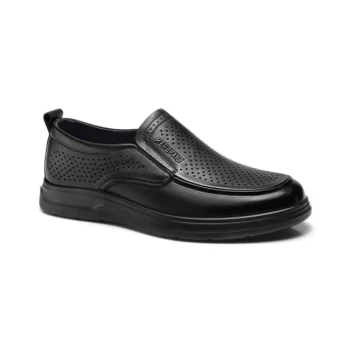
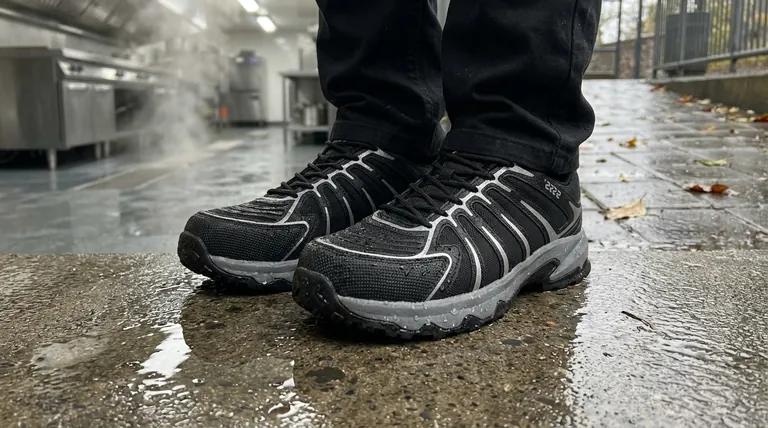
At its core, a non-slip shoe is suitable for any activity where you might encounter a slippery surface. This includes professional settings with wet or oily floors like commercial kitchens and hospitals, outdoor recreation such as hiking on damp trails, and everyday situations like walking on wet pavement.
The decision to wear non-slip shoes is less about the specific activity and more about the environment. They are a safety tool designed to provide critical traction and stability whenever the ground underfoot is compromised by water, oil, or uneven terrain.
The Principle of Non-Slip Design
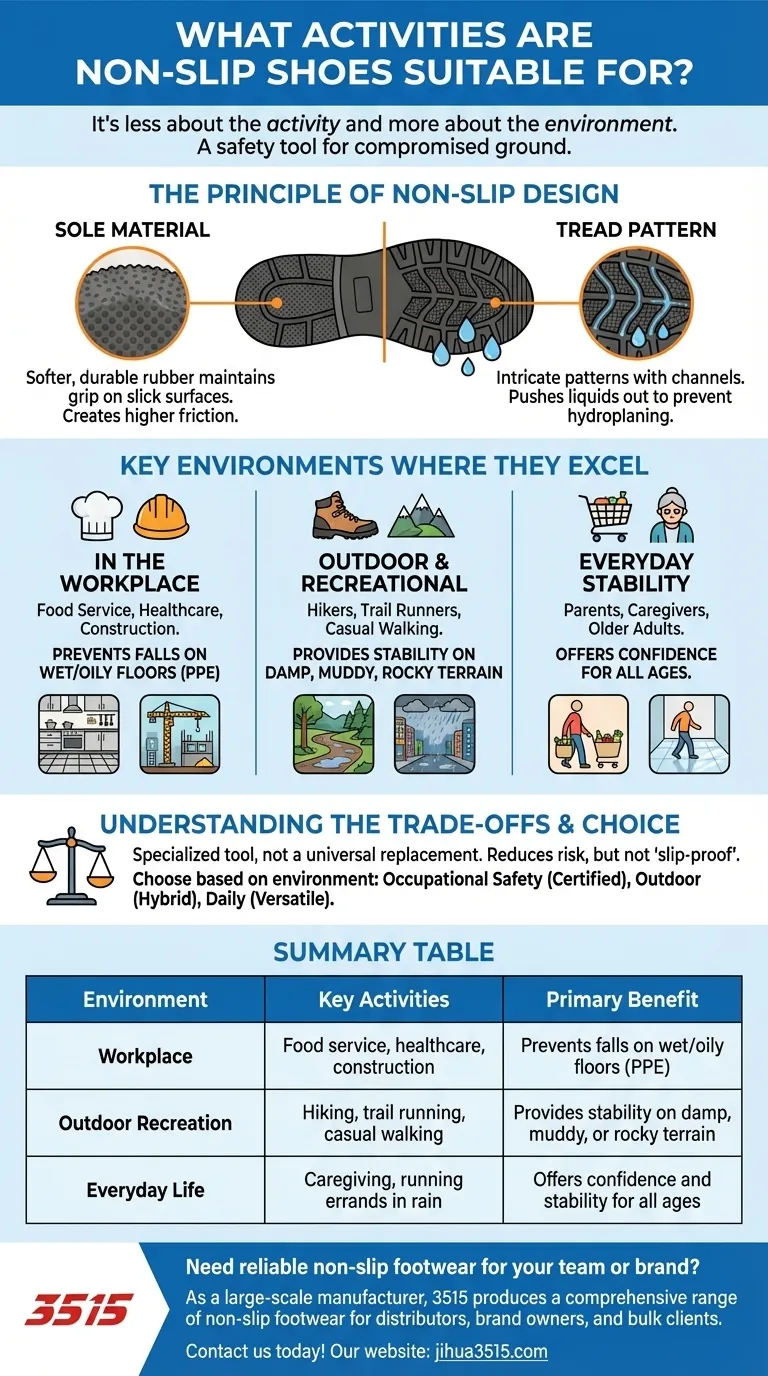
To understand where these shoes excel, you must first understand what makes them effective. Their performance comes down to two key design features working in tandem.
The Role of the Sole Material
A shoe's outsole, the part that contacts the ground, is the foundation of its grip. Non-slip shoes use softer, more durable rubber compounds that maintain their flexibility and grippy texture even on slick surfaces.
This material is specifically engineered to create a higher coefficient of friction against common hazards like water and grease.
The Importance of the Tread Pattern
The pattern on the bottom of the shoe is just as critical as the material. Non-slip shoes feature intricate, patterned treads with small channels.
These designs serve a vital function: they push liquids out from under the shoe. This allows the sole to make direct contact with the surface, dramatically reducing the risk of hydroplaning and slipping.
Key Environments Where Non-Slip Shoes Excel
While the principle is universal, the application is most critical in specific, high-risk environments.
In the Workplace
This is the most common and critical use case. Industries like food service, healthcare, and construction have floors that are frequently wet, oily, or covered in debris.
For workers in these fields, non-slip shoes are not just a benefit; they are often a mandatory piece of personal protective equipment (PPE) to prevent falls, trips, and serious injury.
For Outdoor and Recreational Activities
Anytime you engage with the outdoors, you face unpredictable terrain. Hikers and trail runners benefit immensely from non-slip soles on damp ground, wet rocks, or muddy paths.
Even for casual walking or running in a city, these shoes provide essential stability on rainy days when sidewalks and roads become slick.
For Everyday Stability
You don't need a hazardous job to benefit from better traction. Parents, caregivers, and older adults often choose non-slip footwear for the added security it provides during daily life.
Tasks like carrying groceries in the rain, navigating polished floors in a school, or simply moving around with more confidence make non-slip shoes a practical choice for anyone.
Understanding the Trade-offs
While highly beneficial, it's important to view non-slip shoes as a specialized tool with a clear purpose.
Not a Universal Replacement
A dedicated non-slip work shoe might be heavier or less breathable than a high-performance athletic sneaker designed for dry conditions. While versatile, they are optimized for safety and traction first.
For highly specific activities, like running a marathon on dry pavement, a shoe designed explicitly for that purpose will likely offer better performance in that narrow context.
The Myth of "Slip-Proof"
Non-slip shoes significantly reduce the risk of a fall, but no shoe can make you "slip-proof."
They are an essential safety measure, but they must be paired with situational awareness. Caution is still required when moving across visibly hazardous surfaces.
Making the Right Choice for Your Goal
Ultimately, the right shoe depends entirely on the environment you anticipate.
- If your primary focus is occupational safety: Prioritize a shoe with a certified slip-resistance rating that meets your industry's standards for durability and protection.
- If your primary focus is outdoor recreation: Look for a hybrid model that combines aggressive non-slip treads with other essential features like waterproofing and ankle support.
- If your primary focus is daily stability: Choose a comfortable and versatile style that integrates non-slip technology without appearing overly industrial, allowing you to move safely from work to social settings.
Choosing to wear non-slip shoes is a proactive decision to control your safety in an unpredictable world.
Summary Table:
| Environment | Key Activities | Primary Benefit |
|---|---|---|
| Workplace | Food service, healthcare, construction | Prevents falls on wet/oily floors (PPE) |
| Outdoor Recreation | Hiking, trail running, casual walking | Provides stability on damp, muddy, or rocky terrain |
| Everyday Life | Caregiving, running errands in rain | Offers confidence and stability for all ages |
Need reliable non-slip footwear for your team or brand?
As a large-scale manufacturer, 3515 produces a comprehensive range of non-slip footwear for distributors, brand owners, and bulk clients. Our production capabilities encompass all types of safety shoes and boots, designed to meet the highest standards of traction and durability for any environment.
We can help you equip your workforce or develop your own branded line of high-quality, safety-focused footwear. Contact us today to discuss your needs and get a quote!
Visual Guide
Related Products
- Advanced KPU Athletic Safety Shoe with Steel Toe Cap Anti-Slip Rotary Lacing System
- Premium Suede Sport Safety Shoes for Wholesale & Bulk Orders
- Durable High-Traction Canvas Sneakers Wholesale & Custom Manufacturing
- Durable Goodyear Welt Leather Work Boots for Wholesale & Private Label
- Heavy-Duty Waterproof Nubuck Safety Boots Safety Shoes for Bulk Supply
People Also Ask
- What are the key differences between steel toe and composite toe caps? Choose the Right Safety for Your Job
- What impact do steel toe caps have on toe skin health? Prevent Friction and Pressure in Your Safety Shoes
- What are the primary protective functions of safety shoes with steel toes in the automotive repair industry?
- What type of safety shoe is recommended for workers exposed to heavy machinery? Steel Toe Boots for Ultimate Protection
- How does defining specific friction interface models in FEA assist in predicting safety shoe toe cap failure modes?