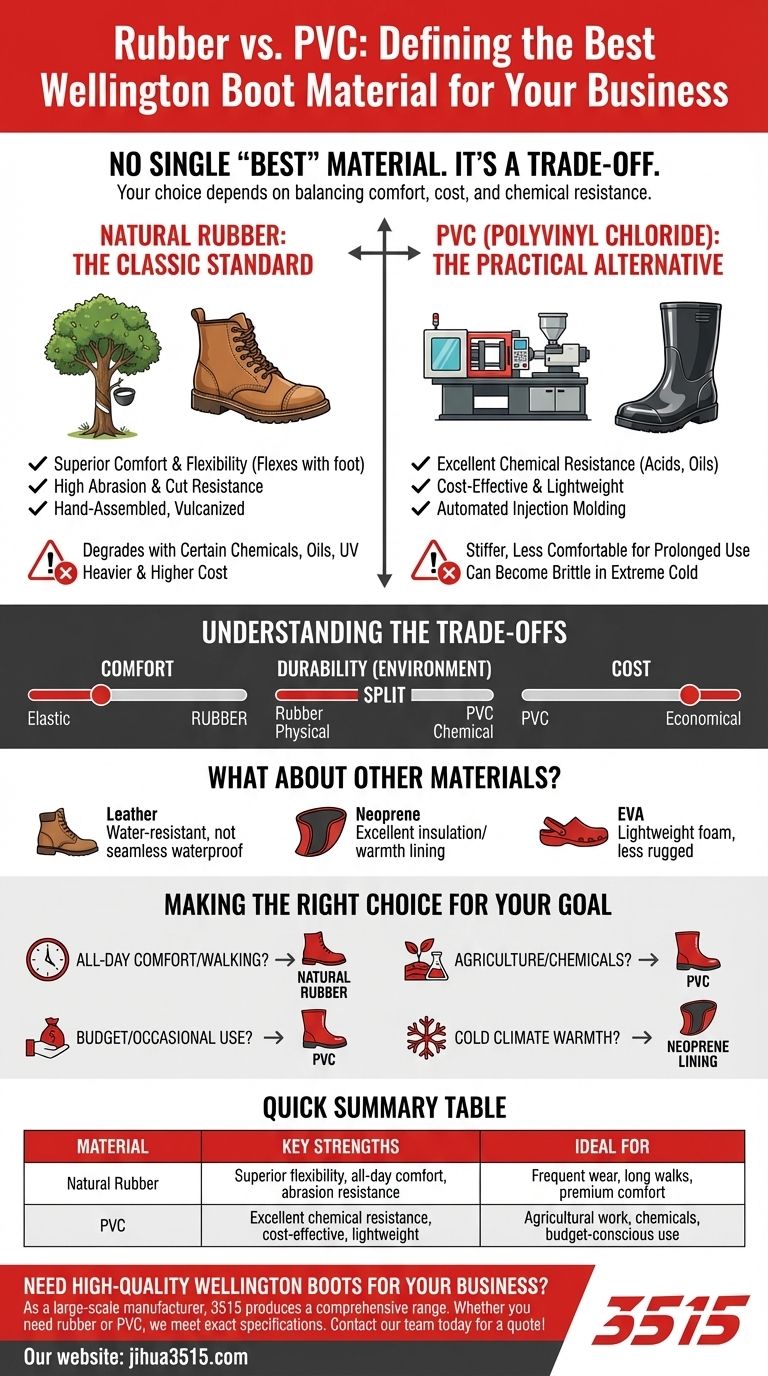
There is no single definitive "best" material for wellington boots. The ideal choice is a direct trade-off between natural rubber and synthetic polymers like PVC. Your decision depends entirely on whether you prioritize long-term comfort and flexibility or cost-effectiveness and chemical resistance.
The core decision is not about finding one superior material, but about understanding the distinct characteristics of each. Natural rubber offers flexibility and comfort, while PVC provides durability against chemicals at a lower cost.
The Two Primary Contenders: Rubber vs. PVC
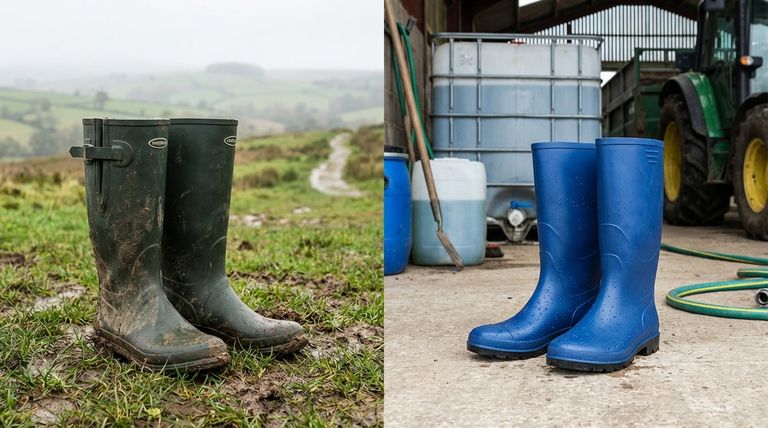
Wellington boots are defined by their seamless, waterproof construction. This requirement means the vast majority are made from one of two core materials: natural rubber or PVC.
Natural Rubber: The Classic Standard
Natural rubber is derived from the latex sap of rubber trees. This material is the traditional choice for high-quality wellingtons.
The process often involves hand-assembly and vulcanization—a heat-curing process that creates a durable, seamless, and fully waterproof boot with excellent elasticity.
PVC (Polyvinyl Chloride): The Practical Alternative
PVC is a synthetic plastic polymer. Boots made from PVC are typically produced through injection molding, where the material is injected into a mold.
This process is highly automated and less expensive, making PVC wellingtons a widely available and affordable option, particularly for industrial or agricultural settings.
Understanding the Trade-offs
Choosing between rubber and PVC involves balancing their inherent strengths and weaknesses against your specific needs.
Comfort and Flexibility
Natural rubber is the clear winner for comfort. Its natural elasticity allows the boot to flex with your foot's movement, making it far better for long walks or extended wear. It tends to conform to your shape over time.
PVC is significantly stiffer and less forgiving. While perfectly functional for shorter tasks, it can feel clunky and less comfortable during prolonged activity.
Durability and Environment
The durability of each material depends on the environment. Natural rubber has high tensile strength, making it very resistant to cuts, punctures, and general abrasion. However, it can degrade when exposed to certain chemicals, oils, and prolonged UV light.
PVC, on the other hand, is almost impervious to farm chemicals, acids, and oils. Its weakness is temperature: it can become brittle and crack in extreme cold.
Weight and Cost
PVC is the more economical and lightweight choice. The automated manufacturing process makes these boots significantly cheaper to produce and purchase.
Natural rubber boots, especially handcrafted ones, are heavier and carry a premium price tag due to the cost of the raw material and the more labor-intensive construction.
What About Other Materials?
While rubber and PVC dominate the wellington market, it's helpful to understand why other common boot materials are not typically used for this style.
Why Not Leather?
Traditional work boots are often made of leather because it is durable, breathable, and molds perfectly to the foot. However, leather is water-resistant, not inherently waterproof.
A true wellington's purpose is seamless waterproof protection, which is difficult and expensive to achieve with stitched leather seams.
The Role of Modern Synthetics
Modern boots often incorporate other materials. Neoprene is frequently used as a lining within rubber boots to provide excellent insulation for cold weather. EVA (ethylene-vinyl acetate) is an extremely lightweight foam material used for garden clogs and some light-duty boots, but it lacks the rugged durability of rubber or PVC.
Making the Right Choice for Your Goal
Select your material by matching its core strengths to your intended activity.
- If your primary focus is all-day comfort for walking or frequent wear: Choose a natural rubber boot for its superior flexibility.
- If your primary focus is agricultural work or handling chemicals: Choose PVC for its unmatched chemical resistance and durability in harsh environments.
- If your primary focus is budget for occasional, light-duty use: A PVC boot offers excellent value and performance for tasks like light gardening or attending a festival.
- If your primary focus is warmth in cold climates: Look for a boot with a neoprene lining, which can be found in both rubber and PVC models.
By aligning the material's properties with your daily demands, you can ensure you get the right boot for the job.
Summary Table:
| Material | Key Strengths | Ideal For |
|---|---|---|
| Natural Rubber | Superior flexibility, all-day comfort, abrasion resistance | Frequent wear, long walks, premium comfort |
| PVC | Excellent chemical resistance, cost-effective, lightweight | Agricultural work, handling chemicals, budget-conscious use |
Need High-Quality Wellington Boots for Your Business?
As a large-scale manufacturer, 3515 produces a comprehensive range of wellington boots for distributors, brand owners, and bulk clients. Whether you require the superior comfort of natural rubber or the durable chemical resistance of PVC, we have the production capabilities to meet your exact specifications.
Let us help you provide the perfect boot for your customers' needs.
Contact our team today for a quote!
Visual Guide
Related Products
- Durable Waterproof Rain Boots | Custom Manufacturer for Wholesale & Brands
- Durable Goodyear Welt Leather Work Boots for Wholesale & Private Label
- Wholesale Durable Leather Work Boots | 8-Inch Goodyear Welt Manufacturer
- High-Traction Suede Tactical Boots Wholesale & Custom Manufacturing
- Premium Wholesale Tactical Style Safety Shoes Boots with Quick Lacing
People Also Ask
- What are the main materials for waterproof rain boots? Choose the Right Material for Durability & Comfort
- What is the overall recommendation for choosing rain boot materials? A Guide to Rubber vs. PVC
- How does boot height affect waterproofing? Choose the Right Height for Ultimate Protection
- Why are rain boots more flexible and comfortable than snow boots? The Key Differences Explained
- What are the best types of shoes for different gardening conditions? Find Your Perfect Match.