
First, I need to get straight to the point. The user needs a quick answer, so I'll start with a bold opening hook directly addressing their question about the environments. Then, I'll dive into the core of the issue, addressing the why – the features that make them suitable. I will focus on the details that make the boots practical, safe, and appropriate for demanding jobs.
I'm thinking I'll structure the response like this:
- Opening Hook: This will be a short, direct answer to the surface question.
- Core Takeaway Box: I'll summarize the key point in a blockquote to really drive it home. This highlights that it's more than just fashion.
- Main Body (Addressing the Deep Need):
- I'll break this down with headers and subheaders for readability.
- I'll discuss the essential features: protection, durability, traction, and comfort.
- I'll highlight the specific environments where these features are most valuable: ranching, construction, and oil and gas, for example.
- Crucially, I'll include a section on trade-offs and limitations. It's essential to be honest and acknowledge that cowboy boots aren't a universal solution. I need to emphasize that safety features are important and that there's a difference between a work boot and a fashion boot.
- I'll break this down with headers and subheaders for readability.
- Concluding Section: I'll provide actionable advice in a bulleted list to help the user make the right decision for their specific situation.
- Final Sentence: I'll end with an empowering statement to reinforce their ability to make an informed choice.
I'll keep a professional, empathetic tone. It's crucial that this answer is clear, logical, and easy to understand. I won't invent facts or overstate the case. I'll maintain an authoritative voice, ensuring it's easily scannable and logically structured to get my point across. The final output needs to be a valuable resource. I'm confident this approach will provide the user with the information they need! In the right context, modern cowboy boots are exceptionally versatile work footwear. They are purpose-built for demanding environments ranging from ranching and farming to construction, manufacturing, and even the oil and gas industry. Their utility stems from a unique combination of durable materials, protective design, and features engineered for stability on varied surfaces.
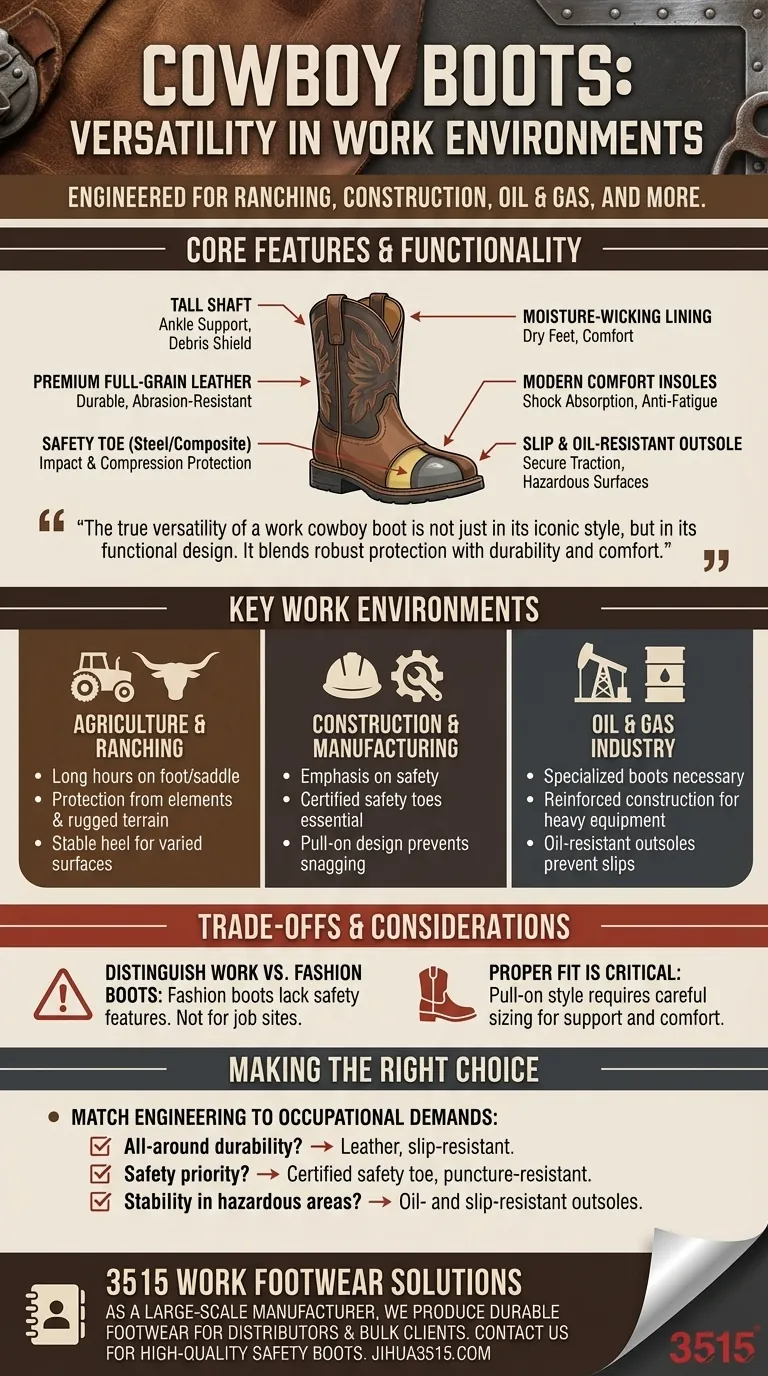
The true versatility of a work cowboy boot is not just in its iconic style, but in its functional design. It blends the robust protection required for hazardous jobs with the durability and comfort needed for long hours of physical labor.
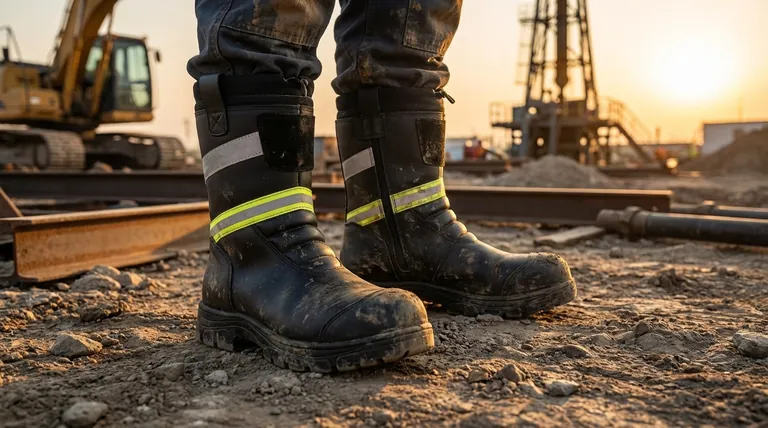
The Core Features That Define Work-Ready Boots
Understanding why these boots are suitable for professional environments requires looking past the aesthetics and focusing on their functional components. True work-grade cowboy boots are engineered with specific occupational hazards in mind.
Protective Design from Top to Bottom
The tall shaft is a primary functional feature, offering excellent ankle support while shielding the lower leg from debris, brush, and potential workplace spills.
Furthermore, many modern work cowboy boots incorporate safety toes (steel, composite, or alloy) to protect the foot from impact and compression, a non-negotiable feature in construction and industrial settings.
Superior Durability and Materials
Work boots are typically constructed from premium, full-grain leather. This material is not chosen for looks alone; it provides a durable, abrasion-resistant barrier that can withstand the rigors of a demanding job site day after day.
Specialized Outsoles for Stability
The outsole is critical for workplace safety. Work-focused cowboy boots feature slip-resistant and often oil-resistant soles designed to provide secure traction on unpredictable surfaces, from uneven terrain to slick workshop floors. This is especially crucial in the oil and gas industry.
Modern Comfort Technologies
To combat fatigue over long shifts, these boots are often equipped with modern comfort features. These include cushioned insoles for shock absorption and moisture-wicking linings to keep feet dry and comfortable.
Key Environments Where Cowboy Boots Excel
While versatile, the design of cowboy boots makes them particularly well-suited for specific types of work where their unique advantages shine.
Agriculture and Ranching
This is the boot's native environment. The tall shaft, durable leather, and stable heel are ideal for long hours on foot or in the saddle, providing protection from the elements and rugged terrain.
Construction and Manufacturing
In these settings, the emphasis is on safety. Cowboy boots with certified safety toes and slip-resistant soles offer essential protection. Their pull-on design also eliminates the risk of laces getting caught in machinery.
Oil and Gas Industry
For the oil and gas sector, specialized boots are a necessity. Their reinforced construction protects feet from heavy equipment, while oil-resistant outsoles are critical for preventing slips and falls on slick surfaces.
Understanding the Trade-offs and Limitations
Objectivity requires acknowledging that even the best work boot is not a universal solution. Understanding the limitations is key to making an informed decision.
Distinguishing Work Boots from Fashion Boots
The most significant pitfall is confusing a fashion cowboy boot with a true work boot. Fashion boots lack safety toes, reinforced construction, and specialized outsoles, making them entirely unsuitable and unsafe for a professional job site.
The Importance of a Proper Fit
The pull-on style, while convenient, can make achieving a perfectly secure fit more challenging than with laced boots. An improper fit can lead to a lack of support or discomfort over a long workday.
Not for Every Specialization
Some jobs require highly specialized footwear that a cowboy boot may not offer. For example, roles requiring extreme ankle flexibility or specific electrical hazard (EH) ratings might be better served by a different style of boot.
Making the Right Choice for Your Job
Selecting the correct boot means aligning its features with the specific demands and hazards of your work environment.
- If your primary focus is all-around durability in outdoor or agricultural work: A traditional leather work boot with a quality slip-resistant sole is an excellent and reliable choice.
- If your primary focus is safety in construction or industrial settings: Prioritize models with certified steel or composite safety toes and puncture-resistant soles.
- If your primary focus is stability in hazardous environments like oil and gas: Insist on boots with certified oil- and slip-resistant outsoles to ensure maximum traction and safety.
By matching the boot's specific engineering to your occupational demands, you can effectively leverage its powerful blend of protection, durability, and function.
Summary Table:
| Environment | Key Boot Features | Primary Benefit |
|---|---|---|
| Ranching & Agriculture | Tall shaft, durable leather, stable heel | Ankle support, protection from debris |
| Construction & Manufacturing | Steel/composite safety toe, slip-resistant sole | Impact protection, hazard prevention |
| Oil & Gas Industry | Oil-resistant sole, reinforced construction | Superior traction, durability in harsh conditions |
Need reliable work boots for your team? As a large-scale manufacturer, 3515 produces a comprehensive range of durable footwear for distributors, brand owners, and bulk clients. Our production capabilities encompass all types of safety-toe and slip-resistant cowboy boots designed for demanding work environments. Let us provide you with high-quality, custom solutions that meet your specific safety and durability requirements. Contact us today to discuss your needs and get a quote!
Visual Guide
Related Products
- High-Traction Suede Tactical Boots Wholesale & Custom Manufacturing
- Wholesale High-Traction Camo Boots - Custom Manufacturer for Brands
- Wholesale Lightweight Tactical Boots Custom Manufacturer for Desert & Combat Use
- Durable Leather Tactical Boots Wholesale & Custom Manufacturing for Brands
- Wholesale Durable Mid-Cut Tactical Boots for Custom & Private Label Brands
People Also Ask
- Why is sequential analysis utilized to evaluate tactical boots? Master Dynamic Boot Development and Ergonomic Performance
- How does the material of tactical boots affect their performance? Choose the Right Material for Your Mission
- How do tactical boots differ from regular boots? Performance, Durability & Design Explained
- How do military uniforms and tactical boots impact the prediction of thermal risk? Essential Safety Insights
- What are the benefits of integrating FES and sEMG into tactical boots? Safety, Reliability & Field-Ready Performance


















