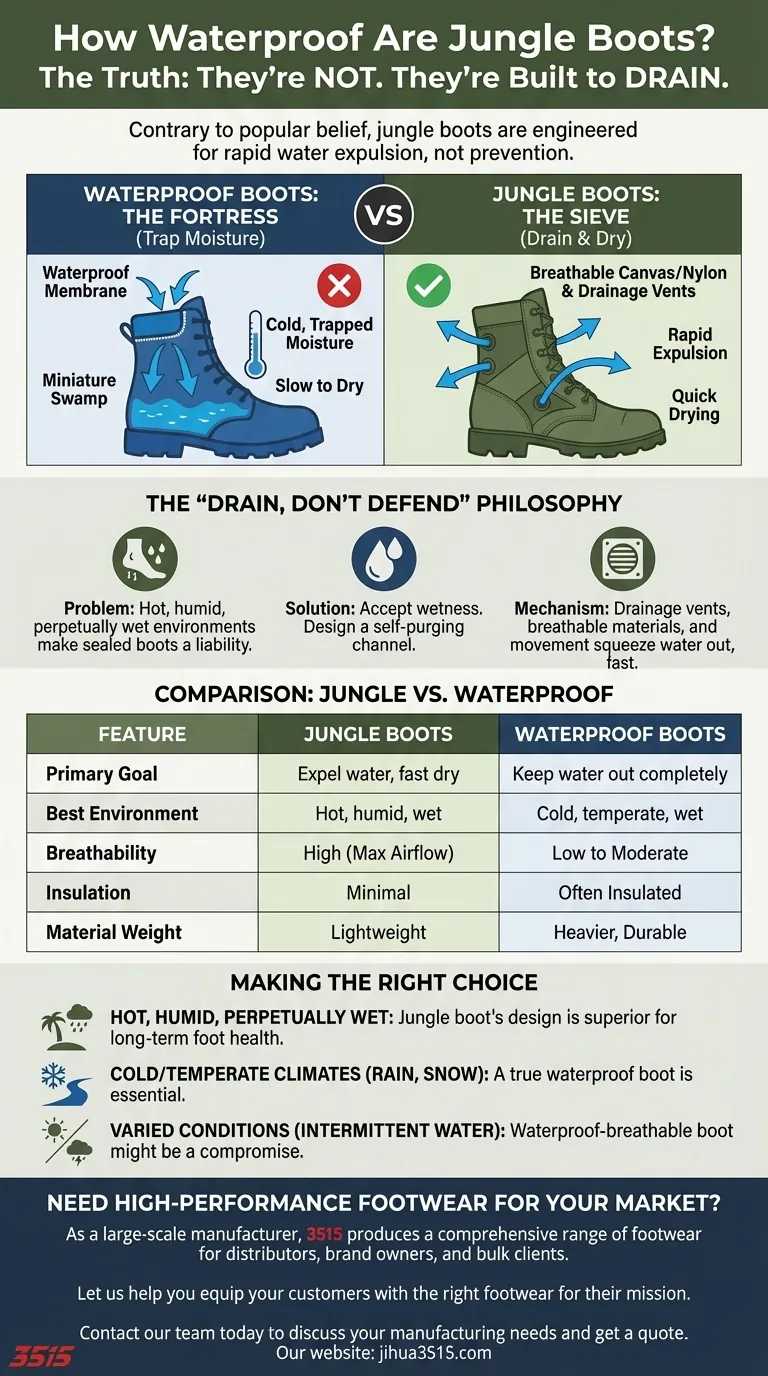
Contrary to a common misconception, jungle boots are not designed to be waterproof. They are intentionally engineered with the opposite philosophy in mind: to be highly breathable and quick-draining, prioritizing the rapid expulsion of water over preventing its entry in the first place.
The core design principle of a jungle boot is not to keep water out, but to let it escape as quickly as possible. This approach values quick drying and breathability in hot, humid environments where feet will inevitably get wet from sweat and immersion.
The "Drain, Don't Defend" Philosophy
To understand the jungle boot, you must first understand the problem it solves. In a perpetually wet and hot environment like a jungle, a truly waterproof boot becomes a liability.
Why Waterproofing Fails in the Jungle
Once water gets inside a waterproof boot—either from sweat or by overtopping the collar during a river crossing—it has nowhere to go. The waterproof membrane that keeps water out also keeps it in, turning the boot into a miniature swamp that can take days to dry.
This trapped moisture leads to severe skin issues and discomfort, which is a critical failure in demanding conditions.
The Jungle Boot's Solution: Rapid Drainage
Jungle boots solve this problem by accepting that feet will get wet. Instead of trying to build an impenetrable fortress, they are designed to be a self-purging channel.
They often feature canvas or nylon uppers and drainage vents (small holes or mesh ports) near the instep. With every step, water is physically squeezed out of the boot, dramatically speeding up the drying process.
Breathability is Paramount
The materials used in jungle boots are chosen for maximum airflow. This high level of breathability ensures that once the bulk of the water is expelled, the foot and the boot's interior can dry quickly from ambient air and body heat.
Jungle Boots vs. Waterproof Boots: A Direct Comparison
The choice between these two types of footwear comes down to the environment and the nature of the water exposure.
Waterproof Boots: The Fortress
A traditional waterproof boot is designed for unparalleled protection in cold or temperate wet conditions.
Its goal is to keep feet completely dry and warm. They can survive temporary submersion, often include insulation, and are built with highly durable, non-porous materials.
Jungle Boots: The Sieve
A jungle boot is designed for managing constant wetness in hot weather.
Its goal is to mitigate the damage caused by wet feet by drying as fast as possible. It is lightweight, extremely breathable, and actively expels any water that enters.
Understanding the Trade-offs
The specialized design of a jungle boot comes with significant limitations that make it unsuitable for other environments.
Limited Protection from the Cold
The very features that make jungle boots excellent in the heat—breathability and drainage—make them a poor choice in the cold. They offer minimal insulation and will not keep your feet warm in cold, wet conditions.
Potential Durability Issues
The lightweight materials that allow jungle boots to breathe and dry quickly may not hold up as well as heavy leather. In extreme, abrasive conditions, issues with sole separation, stitching failure, and dry rot have been noted.
Not for Puddles
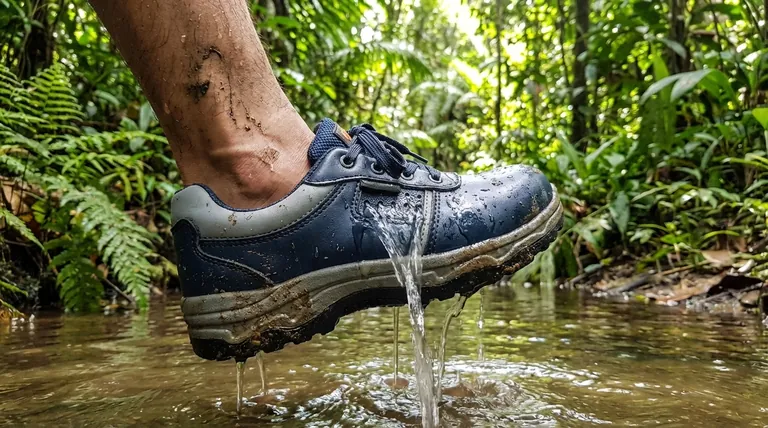
A waterproof boot allows you to stand in a shallow stream or puddle with no issue. A jungle boot will let that water in almost immediately through its drainage ports.
Making the Right Choice for Your Environment
Choosing the correct boot requires matching its design philosophy to your specific environmental challenge.
- If your primary focus is trekking in hot, humid, and perpetually wet conditions: The jungle boot's quick-draining and fast-drying design is superior for long-term foot health.
- If your primary focus is hiking in temperate or cold climates with rain, snow, or river crossings: A true waterproof boot is essential to keep your feet dry, warm, and protected from the elements.
- If your primary focus is working in varied conditions with only intermittent water exposure: A modern waterproof-breathable boot may offer a more versatile compromise.
Ultimately, understanding this core design philosophy empowers you to select the right tool for your specific mission.
Summary Table:
| Feature | Jungle Boots | Waterproof Boots |
|---|---|---|
| Primary Goal | Expel water quickly; fast drying | Keep water out completely |
| Best Environment | Hot, humid, perpetually wet | Cold, temperate, wet |
| Breathability | High | Low to Moderate |
| Insulation | Minimal | Often insulated |
| Material Weight | Lightweight | Heavier, more durable |
Need High-Performance Footwear for Your Market?
As a large-scale manufacturer, 3515 produces a comprehensive range of footwear for distributors, brand owners, and bulk clients. Whether you need specialized jungle boots, durable waterproof boots, or any other type of shoe or boot, our extensive production capabilities ensure quality, reliability, and scalability.
Let us help you equip your customers with the right footwear for their mission.
Contact our team today to discuss your manufacturing needs and get a quote.
Visual Guide
Related Products
- Durable Spiked Camouflage Boots Wholesale & Factory Production
- Wholesale Lightweight Tactical Boots Custom Manufacturer for Desert & Combat Use
- Wholesale High-Traction Camo Boots - Custom Manufacturer for Brands
- Durable Leather High-Ankle Tactical Boots for Wholesale & Custom Manufacturing
- Durable High-Ankle Tactical Boots Wholesale Manufacturer for Custom & Bulk Orders
People Also Ask
- How does boot height affect waterproofing? Choose the Right Height for Ultimate Protection
- What are the best types of shoes for different gardening conditions? Find Your Perfect Match.
- What role does camouflage play in hunting boots? It's More Than Just a Pattern
- What should you look for to ensure boots are fully waterproof? The Essential 2-Part System
- How does boot construction affect waterproofing? The Science Behind Truly Dry Feet