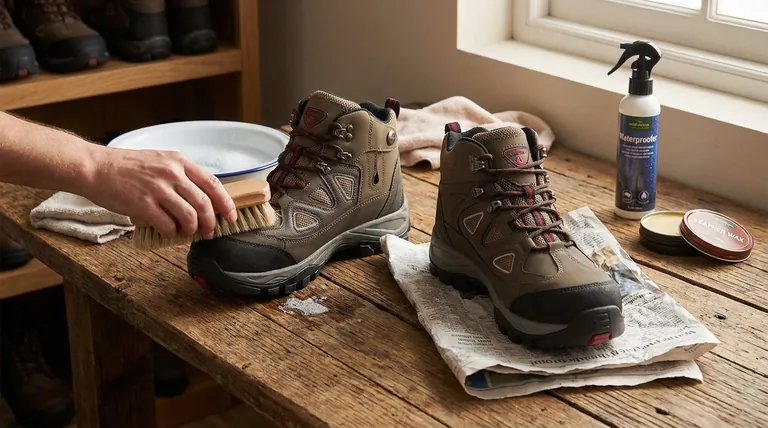
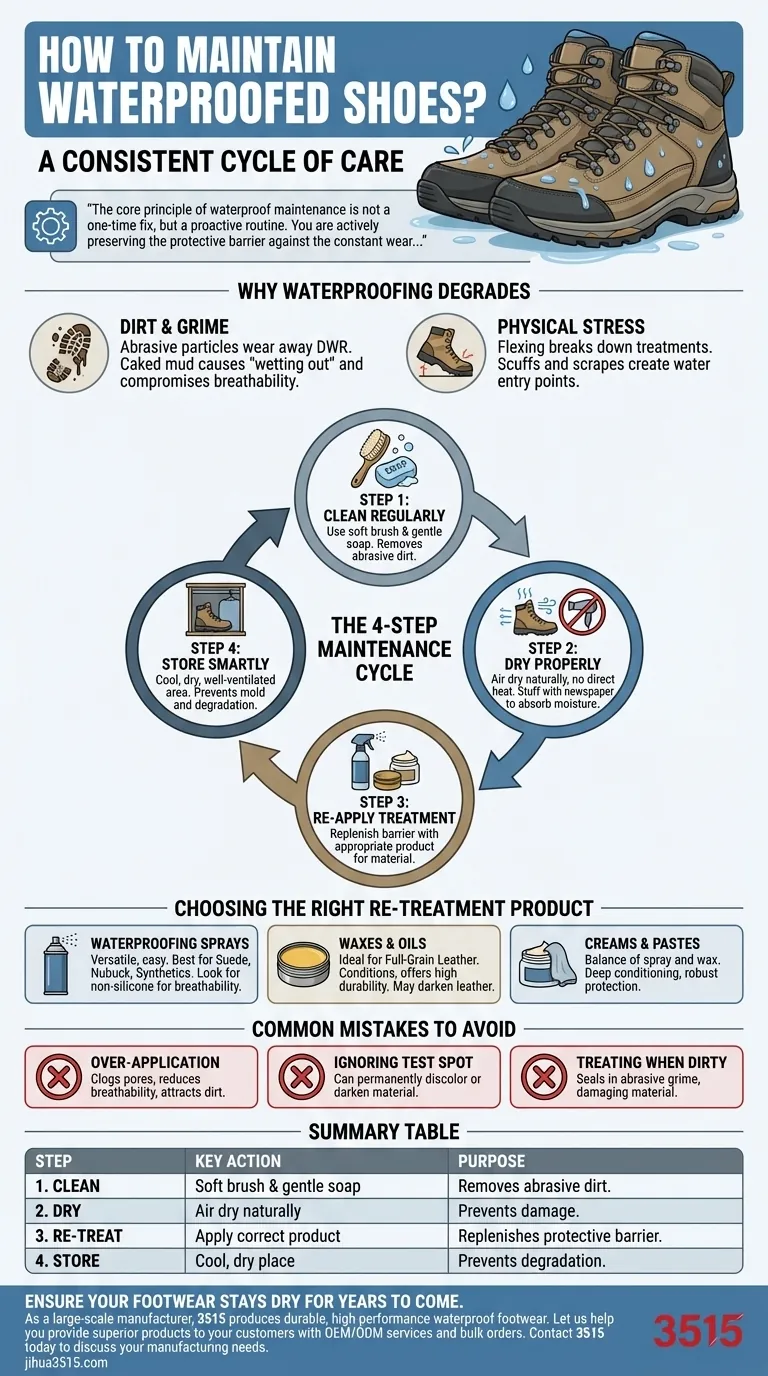
To properly maintain waterproofed shoes, you must follow a consistent cycle of care. This involves regularly cleaning them with a soft brush and gentle soap, allowing them to air dry completely away from direct heat, and periodically reapplying a waterproofing treatment appropriate for the shoe's material. Proper storage in a cool, dry place is the final step to preserve both the material and its water resistance.
The core principle of waterproof maintenance is not a one-time fix, but a proactive routine. You are actively preserving the protective barrier against the constant wear from dirt, abrasion, and moisture that seeks to break it down.
Why Waterproofing Degrades
To maintain your footwear effectively, you must first understand what you're fighting against. Waterproofing isn't a permanent feature; it's a barrier that degrades with use.
The Impact of Dirt and Grime
Dirt and fine grit act like sandpaper on the shoe's surface. These abrasive particles slowly wear away the factory-applied Durable Water Repellent (DWR) coating.
Caked-on mud and grime can also absorb and hold moisture directly against the shoe's surface, a phenomenon known as "wetting out." This compromises breathability and can eventually overwhelm the waterproof barrier.
The Effect of Physical Stress
Every step you take flexes and creases your shoes. This constant movement slowly breaks down the waterproofing treatments, whether they are surface-level sprays or waxes embedded in leather.
Abrasion from scuffs and scrapes physically removes the protective layer, creating entry points for water.
The 4-Step Maintenance Cycle
A simple, repeatable routine is the key to extending the life of your waterproof footwear and ensuring your feet stay dry.
Step 1: Clean Regularly
Cleaning is the most critical and often overlooked step. It removes the abrasive dirt that degrades the waterproof coating.
Use a soft brush to remove loose dirt and a damp cloth with gentle soap for more stubborn grime. Rinse thoroughly with clean water.
Step 2: Dry Properly
Never use direct heat to dry your shoes. A fireplace, radiator, or hairdryer can crack leather, melt adhesives, and damage synthetic materials, permanently ruining the shoe's structure and waterproof integrity.
Always let your shoes air dry naturally at room temperature. You can stuff them with newspaper to help absorb internal moisture and speed up the process.
Step 3: Re-apply a Waterproofing Treatment
Once the shoe is clean and completely dry, it's time to replenish its protective barrier. The original DWR coating wears off with use and must be reapplied.
The type of treatment depends entirely on the shoe's material. A spray might be ideal for suede, while a wax is better suited for traditional leather boots.
Step 4: Store Smartly
When not in use, store your footwear in a cool, dry, and well-ventilated area. This prevents the growth of mold and mildew and stops materials from degrading prematurely due to heat or humidity.
Choosing the Right Re-treatment Product
Using the wrong product can be ineffective at best and damaging at worst. Always test any new product on a small, inconspicuous area first, as some treatments can alter the color or appearance of the material.
Waterproofing Sprays
These are the most versatile and easiest to apply, working well on suede, nubuck, and synthetic fabrics. They provide a quick coating of protection for weeks.
Look for non-silicone sprays for modern footwear with breathable membranes, as silicone can sometimes clog the pores.
Waxes and Oils
These products are ideal for full-grain leather boots. Waxes (like beeswax or specialized polishes) and oils (like mink oil) penetrate the leather, conditioning it while providing a highly durable, water-repellent barrier.
Wax-based treatments often offer superior water protection compared to sprays but may darken the leather's appearance.
Creams and Pastes
These offer a balance between the convenience of a spray and the deep conditioning of a wax. They are applied with a cloth and worked into the material for robust protection.
Understanding the Trade-offs and Common Mistakes
Proper maintenance requires a measured approach. Avoiding common pitfalls is just as important as following the right steps.
Mistake 1: Over-application
More is not better. Applying too much wax or cream can clog the pores of breathable materials, reducing ventilation and making your feet sweat. An overly thick layer can also attract more dirt.
Mistake 2: Ignoring the Test Spot
Different products react differently with various dyes and finishes. Skipping a spot test can lead to permanently discoloring or darkening your favorite pair of shoes.
Mistake 3: Treating When Dirty
Applying a new waterproofing treatment over a dirty shoe is like waxing a dirty car. You are sealing in the abrasive grime, which will continue to damage the material underneath the new coating.
How to Apply This to Your Footwear
Your maintenance strategy should align with your footwear type and how you use it.
- If your primary focus is rugged leather hiking boots: Opt for a robust wax or oil-based treatment after every few demanding trips to condition the leather and provide maximum water repellency.
- If your primary focus is casual suede or fabric shoes: Use a simple waterproofing spray every few weeks or after a deep cleaning to maintain their appearance and shield them from light rain.
- If your primary focus is preserving breathability in high-tech footwear: Choose a modern, non-silicone DWR spray specifically designed for technical fabrics and re-apply it as soon as you notice water is no longer beading on the surface.
Consistent, proactive care is the key to ensuring your waterproof footwear performs when you need it most.
Summary Table:
| Step | Key Action | Purpose |
|---|---|---|
| 1. Clean | Use a soft brush and gentle soap. | Removes abrasive dirt that wears down the waterproof coating. |
| 2. Dry | Air dry naturally, away from direct heat. | Prevents damage to materials and adhesives. |
| 3. Re-treat | Apply the correct product for the material (spray, wax, cream). | Replenishes the protective water-repellent barrier. |
| 4. Store | Keep in a cool, dry, well-ventilated place. | Prevents mold, mildew, and material degradation. |
Ensure Your Footwear Stays Dry for Years to Come
As a large-scale manufacturer, 3515 produces a comprehensive range of durable, high-performance footwear for distributors, brand owners, and bulk clients. Our production capabilities encompass all types of waterproof shoes and boots, built to last with proper care.
Let us help you provide superior products to your customers. Whether you need reliable OEM/ODM services or bulk orders of waterproof footwear, our expertise ensures quality and durability.
Contact 3515 today to discuss your manufacturing needs and discover how we can be your trusted partner in footwear.
Visual Guide
Related Products
- Wholesale Premium Waterproof Nubuck Safety Shoes Boots
- Heavy-Duty Waterproof Nubuck Safety Boots Safety Shoes for Bulk Supply
- Premium Wholesale Waterproof Safety Boots High Performance Protection for Industrial Markets
- Durable Waterproof Rain Boots | Custom Manufacturer for Wholesale & Brands
- Wholesale Waterproof Tactical Boots Custom Suede & High-Traction Soles
People Also Ask
- Why are waterproof safety boots recommended for certain work environments? Essential Protection for Wet & Hazardous Jobs
- What materials are commonly used in waterproof boots? The Complete Guide to Durable, Breathable Protection
- What are the drawbacks of waterproof boots? The Breathability vs. Protection Trade-Off
- What is the advantage of one-piece construction in waterproof boots? Unbeatable Seamless Protection
- What is the difference between waterproof, water-resistant, and water-repellent boots? Choose the Right Protection for Your Feet