
To properly treat your tactical boots, you must follow a precise, three-stage process. First, thoroughly clean the boots to remove all dirt. Second, apply a conditioner to nourish the material and maintain its flexibility. Finally, apply a waterproofing agent specifically suited to your boot’s material to create a protective barrier against moisture.
The core principle is not just to block water, but to preserve the integrity of the boot itself. Conditioning is the critical step that prevents materials like leather from drying out and cracking, while waterproofing provides the external shield, ensuring both durability and performance.
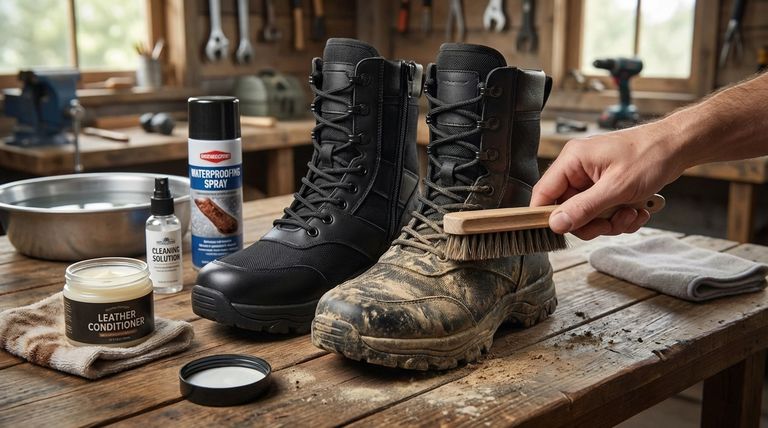
Step 1: The Critical Preparation - Cleaning
You cannot protect a dirty boot. Applying treatments over dirt and grime traps abrasive particles against the material, accelerating wear and preventing the products from penetrating properly.
Remove Surface Debris
First, remove the laces to ensure you can access the entire boot, including the tongue. Use a stiff brush to vigorously remove all caked-on mud, dust, and loose debris.
Perform a Deep Clean
Next, use a rag with a gentle soap and water solution or a specialized boot cleaner. Work the cleaner into the boot’s surface to lift away any remaining grime from the pores of the material.
Dry Properly, Not Quickly
Wipe away any excess soap with a clean, damp cloth. Allow the boots to air-dry naturally in a well-ventilated area away from direct heat sources like vents or sunlight, which can cause leather to crack and synthetic materials to become brittle.
Step 2: Nourish the Material - Conditioning
Conditioning is primarily for leather boots. Think of it as moisturizer for skin; it restores essential oils, keeping the leather supple and preventing it from becoming stiff and prone to cracking.
The Ideal State for Application
For best results, leather should be slightly damp when you apply conditioner. This allows the product to penetrate deep into the material's pores. If your boots have dried completely after cleaning, wrap them in a warm, wet towel for an hour before proceeding.
The Correct Technique
Using a clean rag or your fingers, apply a quality boot conditioner in a thin, even layer across the entire leather surface. Work it in using small, circular motions.
For Non-Leather Boots
Most synthetic materials, like nylon or Cordura fabric, do not require conditioning. This step is specific to full-grain leather and some treated leathers.
Step 3: Create the Barrier - Waterproofing
This final step creates the shield that repels water. The product you use is entirely dependent on your boot's construction. Using the wrong type can ruin the material or render the treatment ineffective.
Match the Product to Your Boot's Material
This is the most important decision in the process.
- For Full-Grain Leather: You can use waxes, creams, or oils. Waxes provide the most durable barrier but can slightly reduce breathability.
- For Suede or Nubuck: You must use a silicone-based waterproofing spray designed specifically for these materials. Waxes or creams will destroy the napped texture.
- For Fabric or Synthetic Uppers: Use a waterproofing spray suitable for synthetic materials. These products coat the fibers without clogging the weave, preserving breathability.
Applying Waxes and Creams (Leather Only)
Gently warming the leather with a hairdryer on a low setting can help the material absorb wax-based products more evenly. Apply the product with a rag, let it sit for a few minutes, then buff away any excess to create a clean finish.
Using Waterproofing Sprays (All Materials)
Hold the can as instructed and apply a light, even coat over the entire boot. Let it dry completely—this can take several hours. For maximum protection, apply a second or even a third coat, allowing the boot to dry fully between each application.
Understanding the Trade-offs
Proper maintenance involves balancing protection with material performance. There is no single "best" method; there is only the best method for your specific boot and its intended use.
Durability vs. Breathability
Heavy waxes and greases offer the most robust and long-lasting water protection. However, they can clog the pores in leather, significantly reducing the boot's breathability. For hot climates or high-exertion activities, a lighter spray that preserves breathability may be a better choice, even if it requires more frequent application.
The Risk of Over-Conditioning
While essential, over-conditioning leather can be detrimental. It can make the leather too soft, causing the boot to lose its supportive structure. Condition your boots only when they begin to look dry or feel stiff, not necessarily after every cleaning.
The Importance of Frequency
Waterproofing is not a one-time task. Plan to re-apply your chosen protectant monthly if the boots see regular use, and always re-apply after a thorough cleaning or after significant exposure to wet, harsh conditions.
Making the Right Choice for Your Goal
Select your maintenance strategy based on your environment and performance needs.
- If your primary focus is maximum water resistance for wet environments: Choose a heavy-duty wax or cream-based waterproofer for your full-grain leather boots.
- If your primary focus is breathability for hot climates or intense activity: Use a high-quality silicone-based spray that protects without sealing the material's pores.
- If your primary focus is preserving the look of suede or nubuck: Use only a specialized spray designed for napped materials to avoid damage.
Protecting your gear is a direct investment in your own readiness and effectiveness.
Summary Table:
| Step | Key Action | Purpose | Key Consideration |
|---|---|---|---|
| 1. Clean | Remove laces, brush debris, wash with soap/water. | Remove dirt for proper product absorption. | Air-dry naturally; avoid direct heat. |
| 2. Condition | Apply conditioner to slightly damp leather. | Nourish leather, prevent cracking. | Primarily for leather; avoid over-conditioning. |
| 3. Waterproof | Apply product specific to boot material (wax, cream, or spray). | Create a protective moisture barrier. | Match product to material (e.g., spray for suede/synthetics). |
Need reliable tactical boots built to last? As a large-scale manufacturer, 3515 produces a comprehensive range of durable footwear for distributors, brand owners, and bulk clients. Our production capabilities encompass all types of tactical boots designed for performance and ease of maintenance. Contact us today to discuss your specific needs and discover how we can provide the durable, high-quality footwear your customers demand.
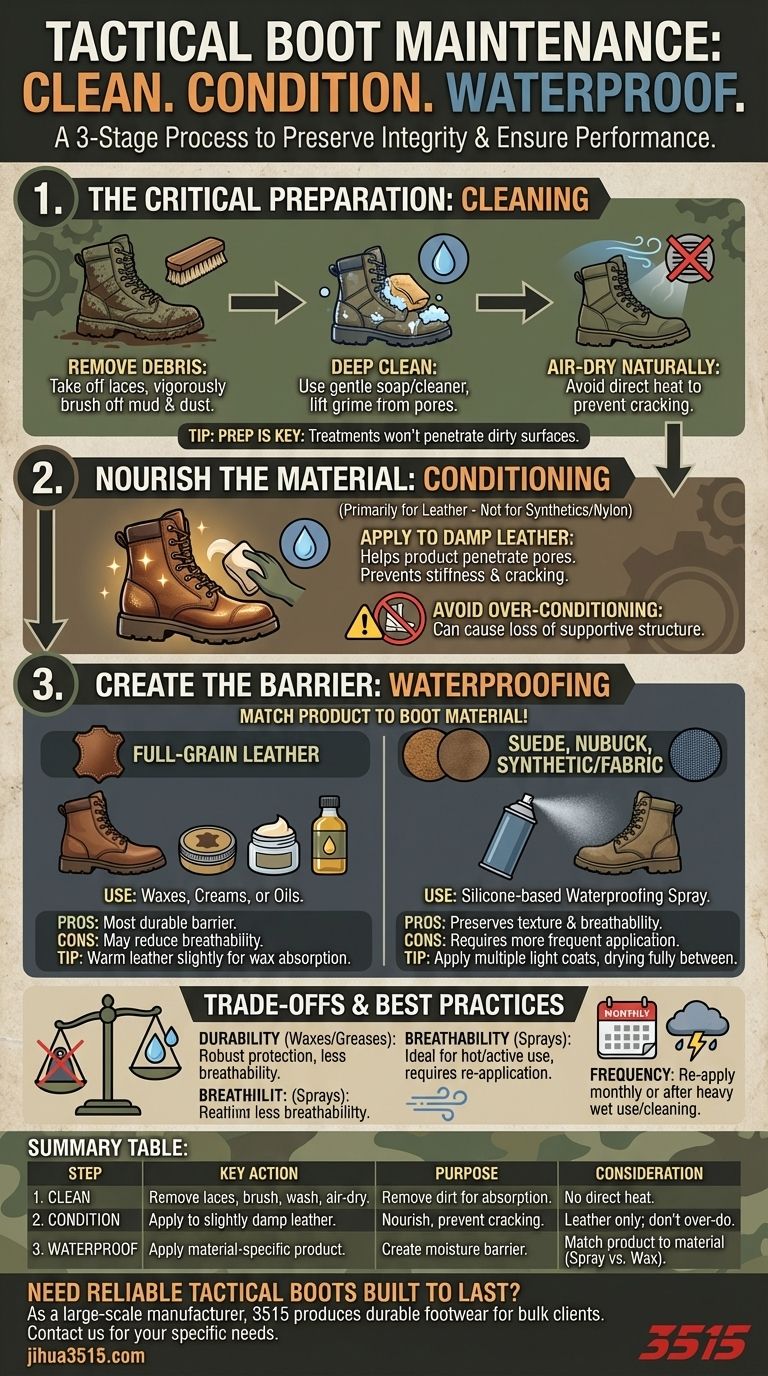
Visual Guide
Related Products
- Durable Leather Tactical Boots Wholesale & Custom Manufacturing for Brands
- High-Traction Suede Tactical Boots Wholesale & Custom Manufacturing
- Durable Leather High-Ankle Tactical Boots for Wholesale & Custom Manufacturing
- Durable Mid-Cut Tactical Boots for Wholesale & Private Label
- Wholesale Waterproof Tactical Boots Custom Suede & High-Traction Soles
People Also Ask
- What specialized protections do tactical boots offer? Maximize Endurance with High-Performance Footwear
- What features should law enforcement officers look for in tactical boots? Essential Guide for Safety & Performance
- Importance of Professional Tactical Boots in Loess Gully Regions: Ensure Safety and Precision for Field Monitoring
- What is rucking, and why are tactical boots suitable for it? Discover the Ultimate Footwear for Heavy Loads
- What makes the traction of tactical boots superior? Unlock the Science of Unbeatable Grip















