Proper trekking shoe maintenance is a cycle of cleaning, treating, and correct storage. Immediately after a hike, you should clean your shoes with a stiff brush and cold water. This is followed by applying a waterproofing treatment and, for leather models, a conditioning wax to prevent the material from drying out and becoming brittle.
The goal of maintenance is not just cleanliness, but the active preservation of your shoe's materials. Consistent care prevents premature degradation, ensuring your boots remain a reliable, comfortable, and safe piece of equipment for years of use.
The Essential Post-Hike Maintenance Routine
Every hike puts stress on your footwear. Dirt, moisture, and flexion break down materials over time. A simple, consistent routine after you return is the single most effective way to maximize their lifespan.
Step 1: Immediate Cleaning
Remove dirt and debris as soon as possible. Caked-on mud can draw moisture out of leather as it dries, and small bits of grit can abrade the fabric and seams.
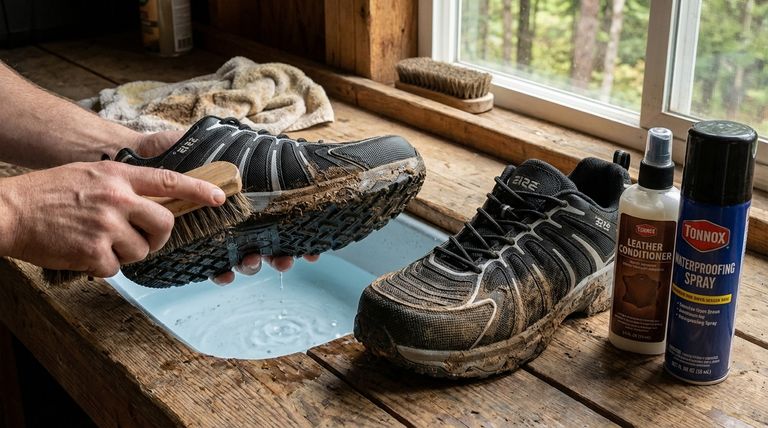
Use a stiff brush and cool water to scrub the outsoles and uppers. Avoid harsh detergents, which can strip away factory-applied water-repellent coatings.
Step 2: Proper Drying
Never dry your trekking shoes with direct heat, such as a campfire, radiator, or hairdryer. Intense heat can weaken adhesives, warp leather, and damage synthetic materials.
Instead, air-dry them in a cool, well-ventilated area. Remove the insoles and loosen the laces to improve air circulation. Stuffing the shoes with newspaper can help absorb excess moisture and speed up the process.
Material-Specific Treatment for Peak Performance
Different boot materials have different needs. Understanding what your shoes are made of is crucial for applying the correct protective treatment.
Caring for Leather Boots
Leather is prized for its durability and ability to mold to your foot, but it requires regular conditioning to stay pliable and water-resistant.
After cleaning and drying, apply a specialized leather wax or conditioner. This nourishes the material, preventing it from drying out, cracking, and losing its natural water resistance.
Maintaining Synthetic and Hybrid Boots
Boots made from synthetic materials like nylon or Gore-Tex are lighter and require less intensive care, but their water-repellent finish needs regular refreshing.
After cleaning, apply a waterproofing spray (often called a DWR, or Durable Water Repellent, treatment). This restores the factory finish, causing water to bead up and roll off the surface rather than soaking in.
Common Pitfalls to Avoid
Mistakes in maintenance can do more harm than good. Avoiding these common errors is just as important as performing the right steps.
The Mistake of Improper Storage
Do not store your boots in a damp basement or a hot attic. Extreme temperatures and humidity accelerate the breakdown of glues and materials.
Store them in a cool, dry place. Using shoe trees or stuffing them with newspaper helps them retain their shape and prevents creasing that can lead to weak spots.
Neglecting the Small Details
Insoles and laces also require attention. Remove and air out your insoles after every hike to prevent the buildup of odor-causing bacteria. Check your laces for fraying or weak spots before you head out.
Making the Right Choice for Your Gear
Your maintenance strategy should be tailored to the materials of your boots and your frequency of use.
- If you own full-grain leather boots: Your primary focus must be on regular cleaning and conditioning to prevent the leather from drying out and cracking.
- If you own synthetic or hybrid boots: Your main goal is to keep them clean and consistently re-apply a waterproofing spray to maintain their water-repellent barrier.
- For all trekking shoes, regardless of material: The non-negotiable habits are cleaning them after use and always drying them slowly, away from direct heat.
Consistent care transforms your trekking shoes from a simple purchase into a long-term partner for your adventures.
Summary Table:
| Maintenance Step | Key Action | Why It's Important |
|---|---|---|
| Immediate Cleaning | Use a stiff brush and cool water. | Removes abrasive dirt and debris that damage materials. |
| Proper Drying | Air-dry away from direct heat; stuff with newspaper. | Prevents damage to adhesives and materials from intense heat. |
| Leather Treatment | Apply a conditioner or wax after drying. | Nourishes leather, preventing cracks and loss of water resistance. |
| Synthetic Treatment | Apply a waterproofing spray (DWR). | Restores the water-repellent finish on fabrics like Gore-Tex. |
| Correct Storage | Store in a cool, dry place with shoe trees. | Maintains shape and prevents material degradation. |
Ready to equip your customers with durable, high-performance footwear?
As a large-scale manufacturer, 3515 produces a comprehensive range of trekking shoes, boots, and outdoor footwear for distributors, brand owners, and bulk clients. Our production capabilities ensure your products are built to last, making maintenance easier for the end-user.
Partner with us to provide reliable gear for every adventure.
Contact our team today to discuss your manufacturing needs and receive a quote.
Visual Guide

Related Products
- Durable Rubber Sole Outdoor Shoes Wholesale & Custom Manufacturing
- Wholesale Durable Camouflage Canvas Shoes with High-Traction Cleated Rubber Sole
- Wholesale Durable Camo Canvas Shoes with High-Traction Rubber Soles
- Wholesale Waterproof Tactical Boots Custom Suede & High-Traction Soles
- Durable Leather High-Ankle Tactical Boots for Wholesale & Custom Manufacturing
People Also Ask
- What is the function of the sole in outdoor shoes? Find the Perfect Grip and Support
- What role do outdoor shoes and sneakers play in navigating external terrains? Engineered Stability for Every Surface
- How is AI utilized in the design of outdoor and safety footwear? Harnessing Big Data for Market-Driven Shoe Innovation
- Why is durability important when selecting outdoor shoes? A Guide to Safety & Long-Term Value
- What are the key components of outdoor shoes that affect comfort and sturdiness? A Guide to Durable, High-Performance Footwear