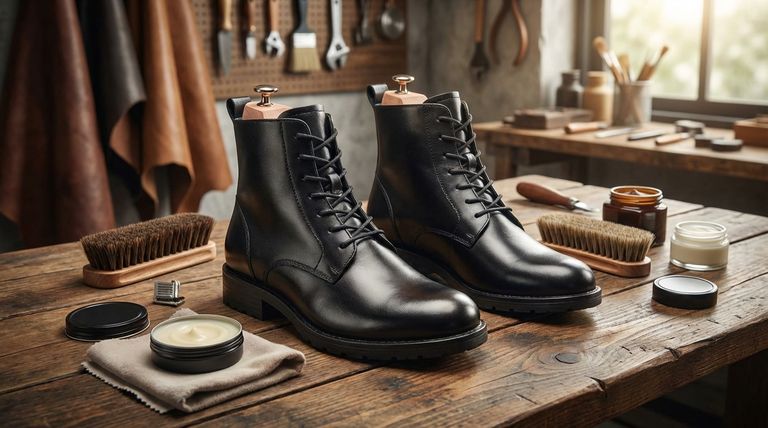
The essential maintenance routine for smooth leather Chukka boots is a simple three-part cycle: clean them regularly, condition them periodically to restore moisture, and store them properly to protect their shape and finish. This consistent care prevents the leather from drying out, cracking, and losing its appearance.
Your goal is not just to clean your boots, but to treat the leather as a skin that needs to be regularly cleansed, moisturized, and protected from the elements to ensure longevity and a graceful aging process.
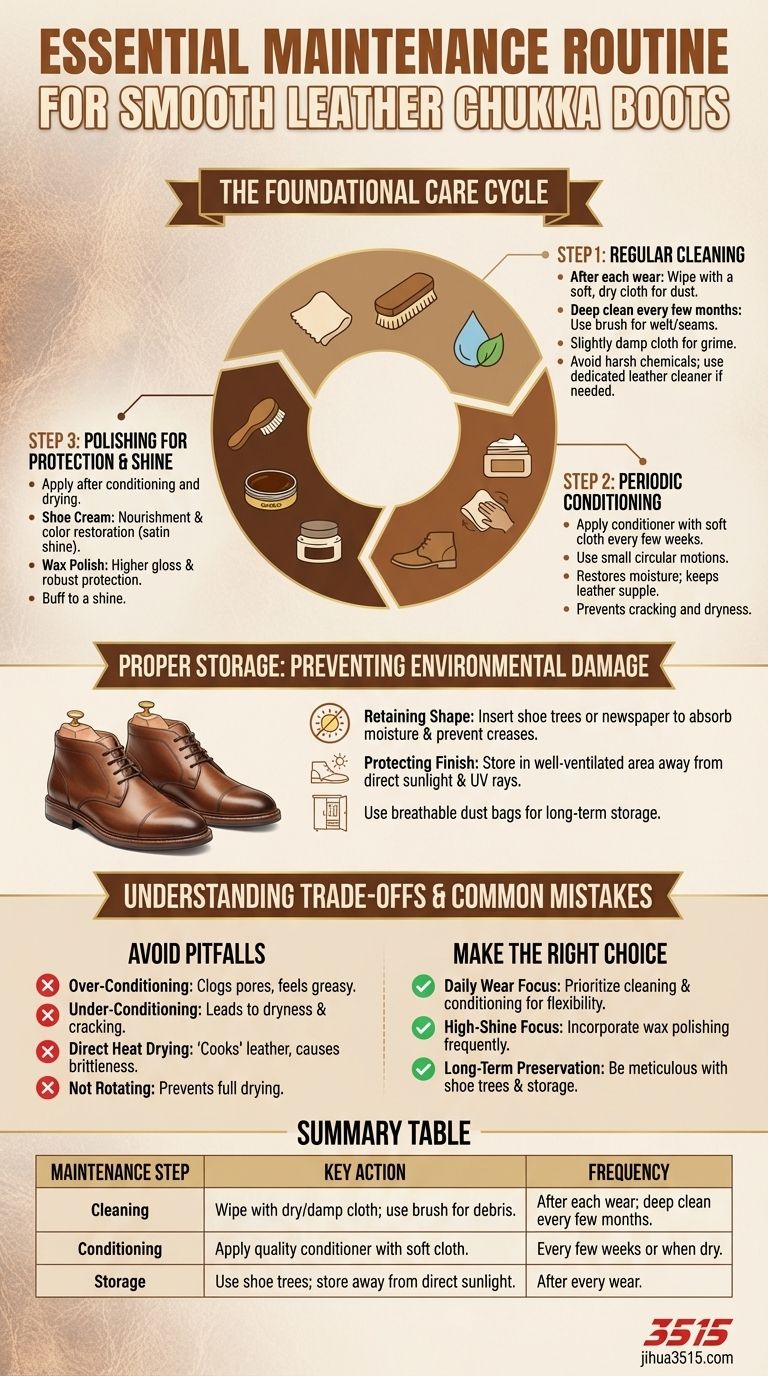
The Foundational Care Cycle
Treating your leather Chukkas correctly involves a rhythm of care. Each step builds on the last, preserving the material's integrity and appearance.
Step 1: Regular Cleaning
After each wear, give your boots a quick wipe with a soft, dry cloth to remove surface dust. For more significant dirt, use a cloth that is slightly damp, not wet.
This simple habit prevents dirt and grime from settling into the leather's pores, which can cause abrasion and degrade the material over time.
For a deeper clean every few months, use a brush to remove debris from the welt and seams. If necessary, a dedicated leather cleaner can be used, but always test it on an inconspicuous area first.
Step 2: Periodic Conditioning
Leather is a natural material that loses its essential oils over time. A quality leather conditioner is crucial for restoring this moisture and keeping the boot supple.
Apply a small amount of conditioner with a soft cloth every few weeks, or whenever the leather starts to look dry. Work it in with small circular motions and let it absorb completely before buffing off any excess.
This is the single most important step for preventing cracks and ensuring the leather remains flexible and strong.
Step 3: Polishing for Protection and Shine
Polishing serves two purposes: it creates a barrier against minor scuffs and moisture, and it restores the color and shine of the boots.
Shoe cream is primarily for nourishment and color restoration, offering a subtle, satin shine. Wax polish provides a higher gloss and a more robust protective layer. Many owners use a combination of both.
Apply polish after conditioning, allow it to dry, and then buff the boots to a shine with a clean cloth or horsehair brush.
Proper Storage: Preventing Environmental Damage
How you store your boots between wears is as important as how you clean them. Improper storage can undo all your hard work.
Retaining the Shape
When not in use, insert shoe trees or stuff crumpled newspaper inside your boots. This helps absorb excess moisture from your feet and, critically, maintains the boot's original shape, preventing deep creases from setting in.
Protecting the Finish
Store your boots in a well-ventilated area away from direct sunlight, as UV rays can cause the leather's color to fade and the material to dry out prematurely.
For long-term storage or travel, place the boots in a breathable dust bag. This protects them from accumulating dust, which can degrade the leather's finish.
Understanding the Trade-offs and Common Mistakes
Achieving the perfect balance in leather care requires avoiding a few common pitfalls.
Over-Conditioning vs. Under-Conditioning
While essential, over-conditioning can clog the leather's pores, making it feel greasy and potentially affecting its breathability. Under-conditioning is more common and leads directly to dryness and cracking. Stick to a schedule of conditioning every few weeks or when the leather appears thirsty.
The Damage of Water and Heat
Never use direct heat, like a hairdryer or radiator, to dry wet leather boots. This "cooks" the leather, causing it to become brittle and crack. Let them air-dry naturally, stuffed with newspaper to absorb moisture.
Forgetting to Rotate
Wearing the same pair of boots every single day doesn't give them a chance to fully dry out from natural foot perspiration. Rotating your Chukkas with another pair of shoes allows them to rest and recover, dramatically extending their lifespan.
Making the Right Choice for Your Goal
Your maintenance routine can be tailored to how you use your boots.
- If your primary focus is daily wear and comfort: Prioritize regular cleaning and conditioning to keep the leather supple and prevent cracks.
- If your primary focus is a professional, high-shine appearance: Incorporate wax polishing into your routine after every few wears to maintain a protective, glossy finish.
- If your primary focus is long-term preservation and investment: Be meticulous about using shoe trees and proper storage to maintain shape and protect the leather from environmental damage.
By understanding these principles, you can easily keep your smooth leather Chukkas looking their best for years to come.
Summary Table:
| Maintenance Step | Key Action | Frequency |
|---|---|---|
| Cleaning | Wipe with a dry/damp cloth; use a brush for debris. | After each wear; deep clean every few months. |
| Conditioning | Apply a quality leather conditioner with a soft cloth. | Every few weeks or when leather looks dry. |
| Storage | Use shoe trees; store away from direct sunlight. | After every wear. |
As a large-scale manufacturer, 3515 produces a comprehensive range of footwear for distributors, brand owners, and bulk clients. Our production capabilities encompass all types of shoes and boots, including premium leather Chukkas built to last with proper care. Let us help you source high-quality, durable footwear for your business. Contact our team today to discuss your manufacturing needs!
Visual Guide
Related Products
- Durable Leather High-Ankle Tactical Boots for Wholesale & Custom Manufacturing
- Wholesale Classic Leather Lace-Up Ankle Boots for Brand Manufacturing
- Durable Leather Work Boots Wholesale Manufacturer & Custom Factory
- Wholesale Leather Work Boots with Customizable Wedge Sole for Brands
- Durable Leather Work Boots for Wholesale & Custom Manufacturing
People Also Ask
- How do military uniforms and tactical boots impact the prediction of thermal risk? Essential Safety Insights
- How does the material of tactical boots affect their performance? Choose the Right Material for Your Mission
- Why is sequential analysis utilized to evaluate tactical boots? Master Dynamic Boot Development and Ergonomic Performance
- How do tactical boots differ from regular boots? Performance, Durability & Design Explained
- What are the primary differences between tactical boots and combat boots? Choose the Right Boot for Your Mission