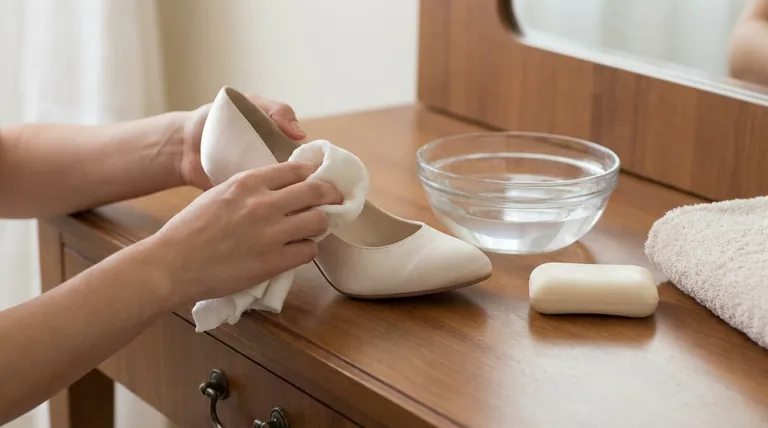
To clean satin shoes safely, you must first remove any loose dirt with a soft, dry cloth. For stains, gently blot the area with a clean cloth lightly dampened with cold water. If the stain persists, use a tiny amount of hand soap on the cloth to create a lather, dab the stain, and then "rinse" by blotting with a new damp cloth, finishing by patting the area completely dry with a towel to prevent watermarks.
The core challenge in cleaning satin is not the dirt itself, but the fabric's extreme sensitivity to moisture and friction. The goal is to use the least amount of water possible and to blot—never rub—to lift the stain without creating permanent water spots or damaging the delicate weave.
The Core Principle: A Gentle, Dry Approach
Satin's signature sheen comes from its long, floating threads. This weave is beautiful but also fragile, making it susceptible to damage from common cleaning methods. Understanding this is key to preserving your shoes.
Why Satin is So Delicate
The smooth surface of satin can be easily snagged or distorted. Aggressive rubbing abrades these fine threads, creating dull spots or streaks that cannot be repaired. The fabric is also highly absorbent.
The True Enemy: Watermarks
When water is left to air-dry on satin, it can leave behind mineral deposits as it evaporates. This results in a distinct, often dark, ring around the wet area, known as a watermark. These are notoriously difficult to remove.
The Step-by-Step Cleaning Process
Follow this precise method to spot-clean stains while minimizing risk. Always work from the outside edge of a stain inward to avoid spreading it.
Step 1: Initial Dry Cleaning
Before introducing any moisture, always wipe the entire shoe with a soft, dry, clean cloth. This removes surface-level dust and debris that could turn into mud when wet, making the problem worse.
Step 2: Spot-Treating with Cold Water
Lightly moisten a clean, light-colored cloth with cold water. Wring it out so it is merely damp, not wet. Gently blot the stained area. Do not scrub or rub. The goal is to lift the stain out of the fabric onto your cloth.
Step 3: Using Mild Soap (If Necessary)
For a more stubborn stain, apply a very small amount of gentle hand soap to your damp cloth and work it into a light lather. Dab the lather onto the stain. This helps break down oils or more persistent dirt.
Step 4: The Critical "Rinse" and Dry
Take a new, clean cloth and dampen it with cold water. Blot the area to remove any soap residue. Immediately afterward, take a dry hand towel and press it firmly onto the damp spot to absorb as much moisture as possible. Continue patting with dry sections of the towel until the area is as dry as you can get it.
Common Pitfalls to Avoid
Success often comes from knowing what not to do. With satin, avoiding these common mistakes is more than half the battle.
The Danger of Rubbing
Rubbing a stain grinds it deeper into the satin's delicate fibers. It also damages the fabric's weave, creating friction marks and permanent streaks that are often more noticeable than the original spot.
The Risk of Over-Saturating
Using too much water is the primary cause of watermarks. A soaking-wet cloth will cause the stain and water to spread, creating a much larger problem area. Always use a cloth that is damp, never dripping.
Why You Must Avoid Air-Drying
Letting a damp spot air-dry is a guaranteed way to create a watermark. The slow evaporation process leaves a residue behind. The final step of blotting with a dry towel to absorb moisture is the most crucial part of the entire process.
Making the Right Choice for Your Situation
Your approach should match the type of cleaning required. Always start with the least aggressive method first.
- If you are dealing with light dust or surface dirt: Stick to a simple and thorough wipe-down with a soft, dry cloth.
- If you have a small, fresh water drop: Immediately blot the area with a dry, absorbent towel to lift the moisture before it has a chance to set.
- If you have a set-in or more stubborn stain: Cautiously follow the full spot-cleaning process with cold water and a dab of soap, but be prepared that some stains may not be fully removable without professional help.
By respecting the delicate nature of the fabric, you can confidently care for your satin shoes and preserve their elegant finish.
Summary Table:
| Step | Action | Key Tip |
|---|---|---|
| 1 | Dry Clean | Remove loose dirt with a soft, dry cloth first. |
| 2 | Spot Treat | Blot stains with a damp cloth—never rub. |
| 3 | Use Mild Soap | Apply a tiny amount of hand soap if needed. |
| 4 | Rinse & Dry | Blot with a damp cloth, then pat dry immediately. |
Need satin shoes in bulk for your brand or store? As a large-scale manufacturer, 3515 produces a comprehensive range of elegant footwear, including delicate satin styles, for distributors, brand owners, and bulk clients. Our expertise ensures high-quality finishes that stand the test of time. Contact us today to discuss your custom or bulk footwear needs!
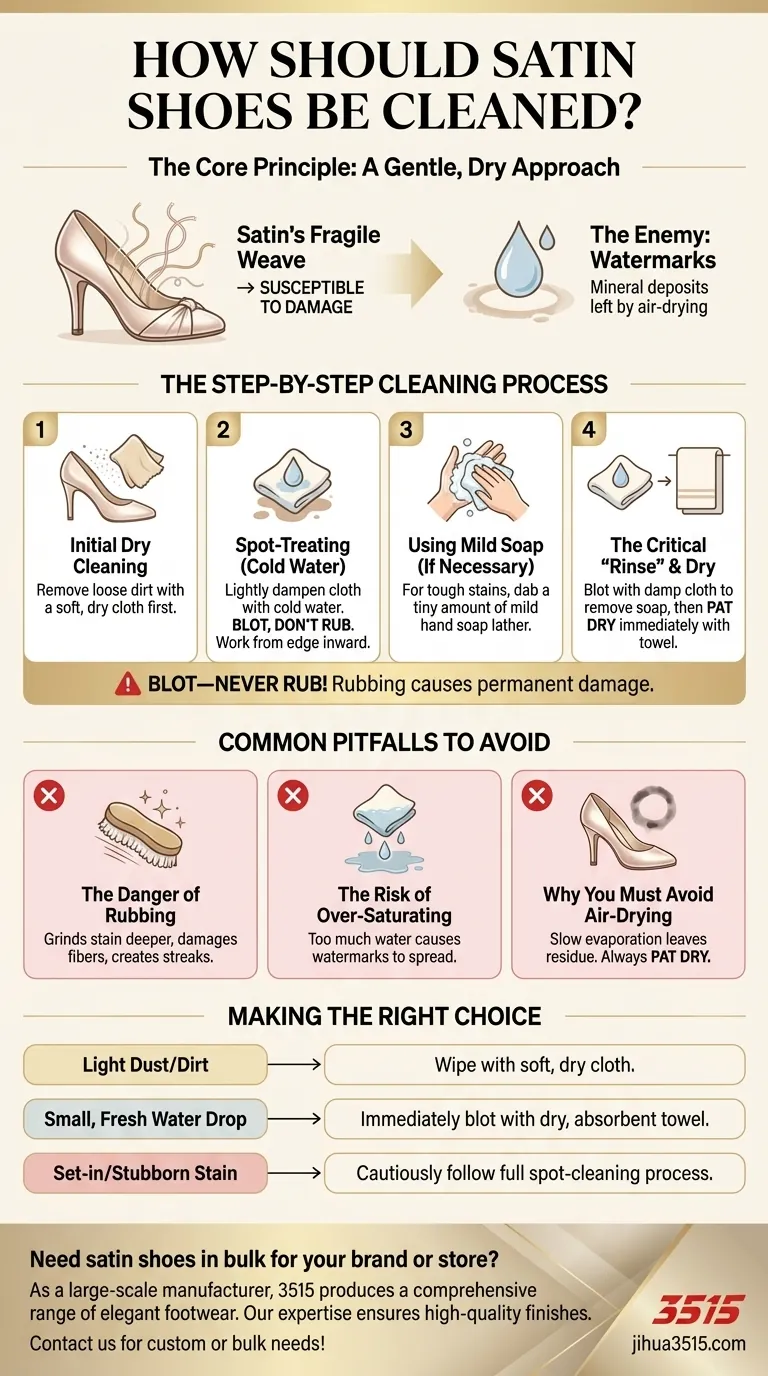
Visual Guide
Related Products
- Dial Closure Leather Business Casual Shoes for Wholesale & Private Label
- Wholesale Leather Apron Toe Derby Shoes Custom Factory Production
- Custom Manufactured Air Cushion Leather Business Shoes for Wholesale
- Wholesale Comfort Leather Business Shoes with Dial Lacing System
- Wholesale Women's Leather Derby Shoes Custom Factory Production
People Also Ask
- What are the top three recommended business casual shoes? Build a Polished, Versatile Wardrobe
- Why is choosing the right shoes important for a business casual look? Elevate Your Professional Image
- What materials are commonly used in business casual shoes? A Guide to Leather, Suede & More
- What factors should be considered when choosing business casual shoes? Find the Perfect Balance of Style & Comfort
- Are black or brown shoes better for business casual? Master the Versatile Choice for Your Wardrobe