
The choice between paddock boots and tall boots is determined by your riding context—specifically, whether you are schooling or competing. Paddock boots, typically paired with half chaps, are the versatile workhorse for daily training, lessons, and barn work. Tall boots are the specialized, traditional standard required for the show ring, offering a cleaner look and closer leg contact with the horse.
Your decision isn't about which boot is "better," but which is the right tool for the job. Paddock boots offer versatility and comfort for everyday riding, while tall boots provide the specific performance and aesthetic required for competition.
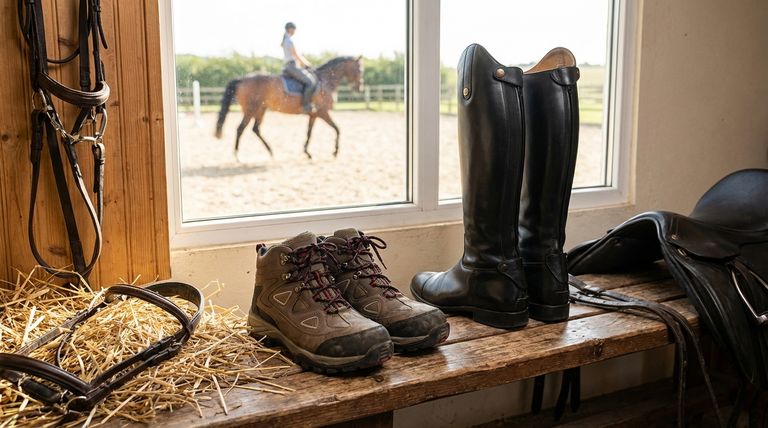
The Functional Divide: Everyday vs. Competition
To make an informed choice, you must understand the distinct purpose each boot serves. They are not interchangeable; they are two different tools for two different jobs.
Paddock Boots: The Foundation for Training
Paddock boots are ankle-height boots, available in both zip-up and lace-up styles. They are the foundational footwear for the vast majority of a rider's time.
When paired with half chaps—leather or synthetic coverings that go from the ankle to just below the knee—they create a two-piece system that mimics the function of a tall boot by providing grip and protecting the leg.
This combination is the standard for lessons, schooling, and pleasure riding due to its comfort, durability, and practicality.
Tall Boots: The Standard for Showing
Tall boots extend from the foot to just below the knee, creating a single, seamless line. This is the traditional and often required look for formal competition in disciplines like dressage, hunters, and jumpers.
Their primary function is to provide a very close contact feel with the horse's side, stabilize the lower leg, and present a polished, professional appearance to the judge.
Key Factors in Your Decision
Your choice should be a direct reflection of your riding goals, discipline, and budget.
Your Riding Discipline
Different disciplines have different conventions. In hunter/jumper and dressage competitions, tall boots are the expected standard.
For pleasure riding, trail riding, or less formal disciplines, paddock boots and half chaps are perfectly acceptable and often more practical.
Schooling vs. Showing
Ideally, a serious rider owns both. Tall boots are a significant investment, and using them for daily schooling causes unnecessary wear and tear.
The common practice is to use durable paddock boots and half chaps for all training and reserve the more expensive tall boots exclusively for shows.
Your Experience Level
Beginners almost universally start with paddock boots and half chaps. They are less expensive, easier to break in, and more forgiving in terms of fit.
Moving to a rider's first pair of tall boots is a milestone, typically occurring when they decide to start competing seriously.
Understanding the Trade-offs
Each boot style comes with a distinct set of advantages and disadvantages related to cost, comfort, and convenience.
Cost and Investment
A quality pair of paddock boots and half chaps is almost always more affordable than a well-fitting pair of tall boots. This makes them the most economical entry point.
Tall boots represent a significant financial commitment, with prices for quality leather boots starting in the mid-hundreds and going well into the thousands.
Comfort and Break-in Period
Paddock boots are generally comfortable right out of the box and are easy to walk around in at the barn.
Tall boots, especially the stiffer dress boots used in dressage, can have a notoriously difficult break-in period. They are designed for performance in the saddle, not for comfort on the ground.
Versatility and Convenience
The paddock boot and half chap system is highly versatile. You can wear the boots alone for barn chores and then easily add the chaps just for riding.
Tall boots are specialized equipment. They can be cumbersome for groundwork and are typically put on just before you mount and taken off shortly after you dismount.
Making the Right Choice for Your Goal
To make a clear decision, align your boot choice directly with your current riding priorities.
- If your primary focus is learning and weekly lessons: Start with a quality pair of paddock boots and half chaps for the best combination of affordability, comfort, and function.
- If your primary focus is preparing for your first shows: Invest in a comfortable, well-fitting pair of tall boots, but continue using paddock boots for daily schooling to preserve your show boots.
- If your primary focus is serious, regular competition: Owning both is not a luxury but a necessity to ensure the longevity of your equipment and the right look for the show ring.
Ultimately, the right equestrian boot is the one that fits you correctly, supports your specific goals, and allows you to focus completely on your horse.
Summary Table:
| Boot Type | Primary Use | Best For | Key Features |
|---|---|---|---|
| Paddock Boots | Daily Training, Lessons, Barn Work | Beginners, Schooling, Pleasure Riding | Ankle-height, Versatile, Often paired with half chaps |
| Tall Boots | Formal Competition, Showing | Hunters, Jumpers, Dressage | Knee-height, Polished look, Close leg contact |
Ready to Equip Yourself with the Perfect Equestrian Boots?
As a large-scale manufacturer, 3515 produces a comprehensive range of footwear for distributors, brand owners, and bulk clients. Whether you need durable paddock boots for daily training or premium tall boots for the show ring, our production capabilities encompass all types of shoes and boots to meet your exact needs and specifications.
Let's discuss how we can support your business with high-quality, reliable footwear. Contact our team today for expert guidance and competitive pricing.
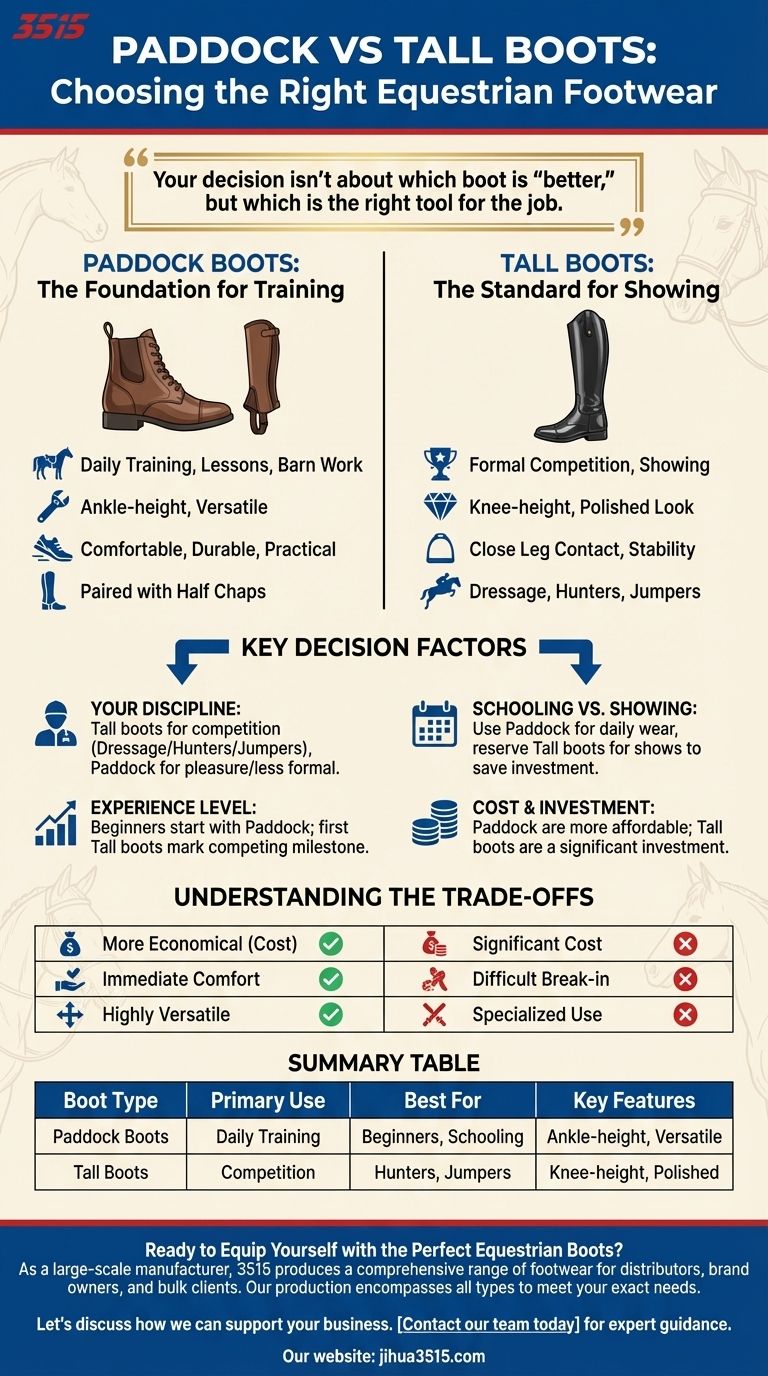
Visual Guide
Related Products
- Wholesale Lightweight Tactical Boots Custom Manufacturer for Desert & Combat Use
- Wholesale Waterproof Tactical Boots Custom Suede & High-Traction Soles
- High-Traction Suede Tactical Boots Wholesale & Custom Manufacturing
- Durable Military Combat Boots with Water Drainage for Wholesale & OEM
- Wholesale High-Traction Camo Boots - Custom Manufacturer for Brands
People Also Ask
- What are the common types of combat boots? Find the Right Boot for Your Mission
- What specialized protections do tactical boots offer? Maximize Endurance with High-Performance Footwear
- What is the role of high-frequency acquisition hardware in technical skill analysis for outdoor and tactical boots?
- How is the compatibility of polymer materials demonstrated in smart footwear? Enhancing Tactical & Training Performance
- What are the main construction similarities between tactical boots and tactical sneakers? Built for Performance & Durability



















