
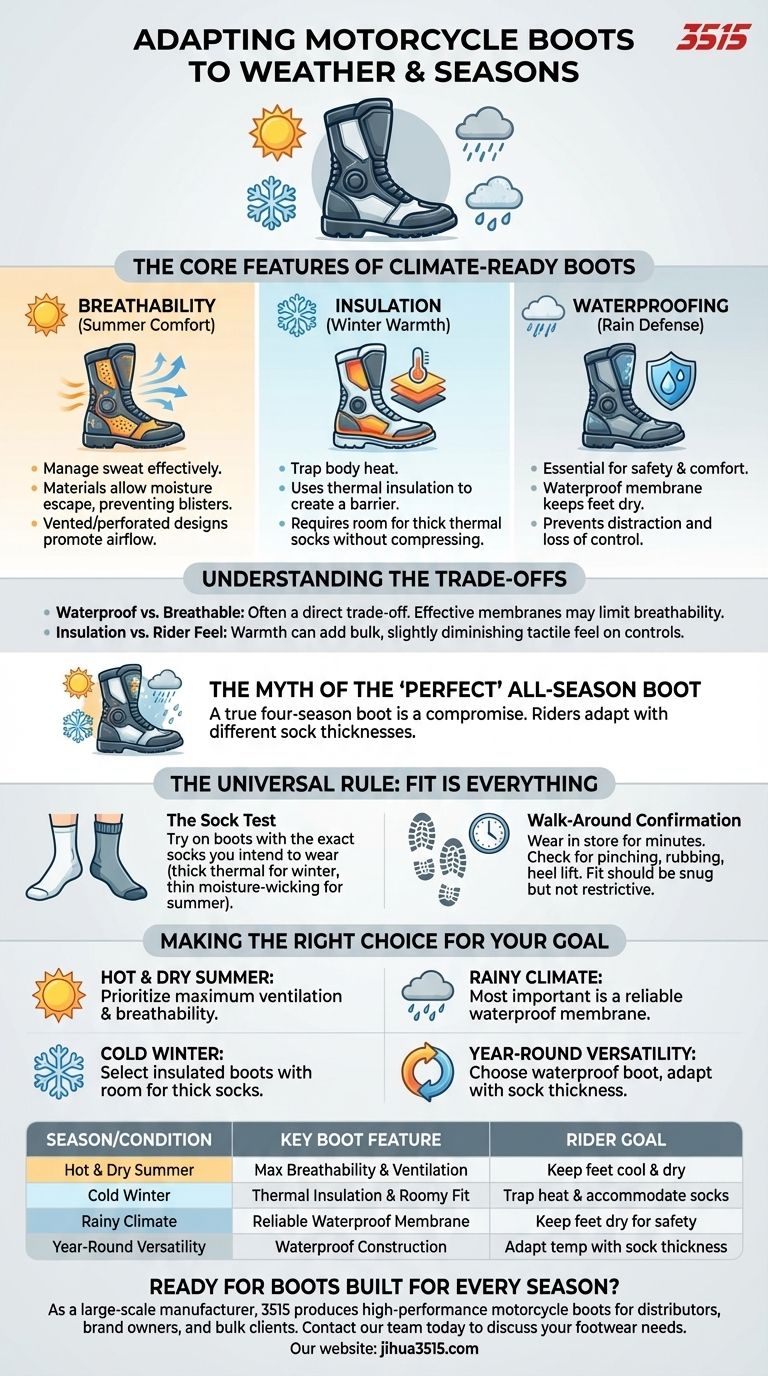
In motorcycle riding, your boot choice is dictated directly by the weather. For hot, dry summer conditions, you need breathable, lightweight boots. For winter, you must switch to insulated boots or a slightly larger size to accommodate thick thermal socks. In any rainy climate, a truly waterproof boot is absolutely essential for both safety and comfort.
The goal is not simply to own a boot for every season, but to understand how core features like waterproofing, insulation, and breathability directly address the demands of different environments. This ensures your gear actively contributes to your control and endurance on the road.
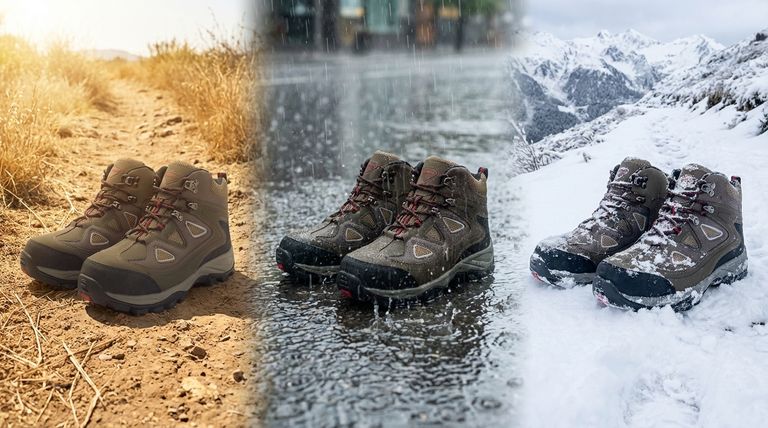
The Core Features of Climate-Ready Boots
To make an informed decision, you must look past marketing terms and evaluate a boot's fundamental construction. The materials and design determine its performance in specific conditions.
Breathability: The Key to Summer Comfort
Hot weather riding demands boots that manage sweat effectively.
Materials that allow moisture vapor to escape are critical. This prevents your feet from becoming soaked, which can lead to blisters and discomfort. Vented or perforated boots actively promote airflow, helping to keep your feet cool and dry on long summer rides.
Insulation: The Foundation of Winter Warmth
Fighting the cold requires trapping your body heat.
Dedicated winter boots use thermal insulation to create a barrier against cold air. Equally important is the fit. You must ensure the boot has enough room for a thick wool or synthetic sock without compressing your foot, which would restrict blood flow and make your feet colder.
Waterproofing: Your Primary Defense Against Rain
Staying dry is a matter of safety, not just comfort.
A boot with a waterproof membrane is non-negotiable for riding in the rain. Wet feet become cold feet very quickly, which can distract you and reduce your ability to operate the controls precisely. Look for boots specifically designated as waterproof, as "water-resistant" will not hold up to a sustained downpour.
Understanding the Trade-offs
No single boot is perfect for all conditions. Understanding the compromises inherent in boot design is key to choosing the right tool for the job.
Waterproof vs. Breathable
There is often a direct trade-off between these two features.
The most effective waterproof membranes can sometimes limit breathability. This means a boot that keeps you perfectly dry in a rainstorm might feel hot and stuffy on a dry 90°F (32°C) day.
Insulation vs. Rider Feel
Warmth can sometimes come at the cost of bulk.
Heavily insulated boots are thicker, which can slightly diminish your tactile feel on the shifter and rear brake pedal. While modern boots are excellent, this is a factor to be aware of when trying on a dedicated winter option.
The Myth of the "Perfect" All-Season Boot
A true four-season boot is a compromise by nature.
It will likely be a waterproof boot that is warmer than a dedicated summer boot but not as insulated as a true winter boot. Riders often manage this by using different sock thicknesses to adapt the boot to a wider range of temperatures.
The Universal Rule: Fit is Everything
An improperly fitting boot is useless, regardless of its features. This principle becomes even more critical when adapting to seasons.
The Sock Test
Always try on boots with the exact type of socks you intend to wear.
Try prospective winter boots with your thickest thermal socks. Test summer boots with the thin, moisture-wicking socks you'd wear in the heat. A boot that fits perfectly with one may be painfully tight or dangerously loose with the other.
Walk-Around Confirmation
A boot must be comfortable for both riding and walking short distances.
Wear the boots in the store for several minutes. Walk around to check for any pinching, rubbing, or excessive heel lift. The fit should be snug and secure around the foot and ankle without restricting necessary movement.
Making the Right Choice for Your Goal
Your local climate and primary riding season should be the final guide for your investment.
- If your primary focus is hot, dry summer riding: Prioritize boots with maximum ventilation and breathability to ensure comfort.
- If your primary focus is cold-weather commuting: Select insulated boots, ensuring they are sized to comfortably accommodate a thick pair of thermal socks.
- If your primary focus is riding in a rainy climate: Your most important feature is a reliable waterproof membrane, accepting the minor trade-off in peak summer breathability.
- If you are a year-round rider seeking versatility: Choose a high-quality waterproof boot and adapt its temperature range by varying the thickness of your socks.
By matching your boot's specific features to the forecast, you ensure every ride is defined by comfort and control, not by the weather.
Summary Table:
| Season/Condition | Key Boot Feature | Rider Goal |
|---|---|---|
| Hot & Dry Summer | Maximum Breathability & Ventilation | Keep feet cool and dry from sweat |
| Cold Winter | Thermal Insulation & Roomy Fit | Trap body heat and accommodate thick socks |
| Rainy Climate | Reliable Waterproof Membrane | Keep feet dry for safety and comfort |
| Year-Round Versatility | Waterproof Construction | Adapt temperature range with sock thickness |
Ready for Boots Built for Every Season?
As a large-scale manufacturer, 3515 produces a comprehensive range of high-performance motorcycle boots for distributors, brand owners, and bulk clients. Our production capabilities encompass all types of riding footwear, engineered with the precise features—like advanced waterproofing, strategic insulation, and superior breathability—that riders need to conquer any weather.
Let us equip your customers for the road ahead. Contact our team today to discuss your footwear needs.
Visual Guide
Related Products
- Wholesale Tactical Boots High-Traction & Reflective for Bulk & Brand Orders
- High Performance Fire-Retardant Waterproof Safety Boots
- Durable Goodyear Welt Leather Work Boots for Wholesale & Private Label
- Wholesale High-Traction Camo Boots - Custom Manufacturer for Brands
- Heavy-Duty Waterproof Nubuck Safety Boots Safety Shoes for Bulk Supply
People Also Ask
- How do tactical boots protect against injuries? Discover the Integrated Safety System
- How should one choose the right tactical boots? Match Your Mission for Optimal Performance & Safety
- What are the consequences of wearing ill-fitting tactical boots? Avoid Injury and Boost Performance
- What are the advantages and disadvantages of tactical boots? Lightweight Comfort vs. Rugged Durability
- What are the key features to look for in the best tactical boots? A Guide to Peak Performance



















