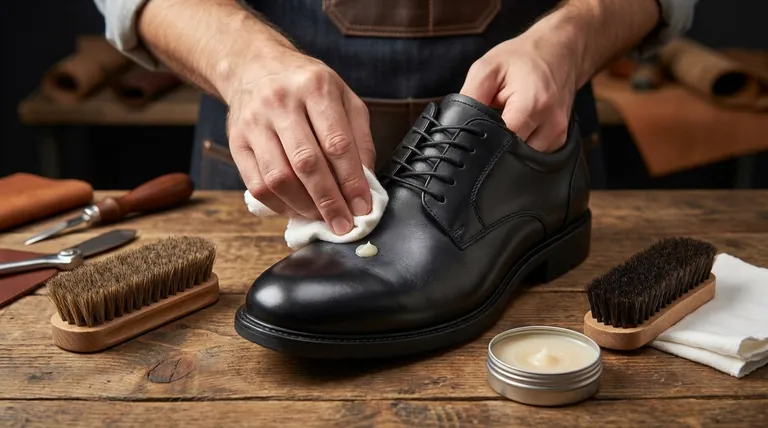
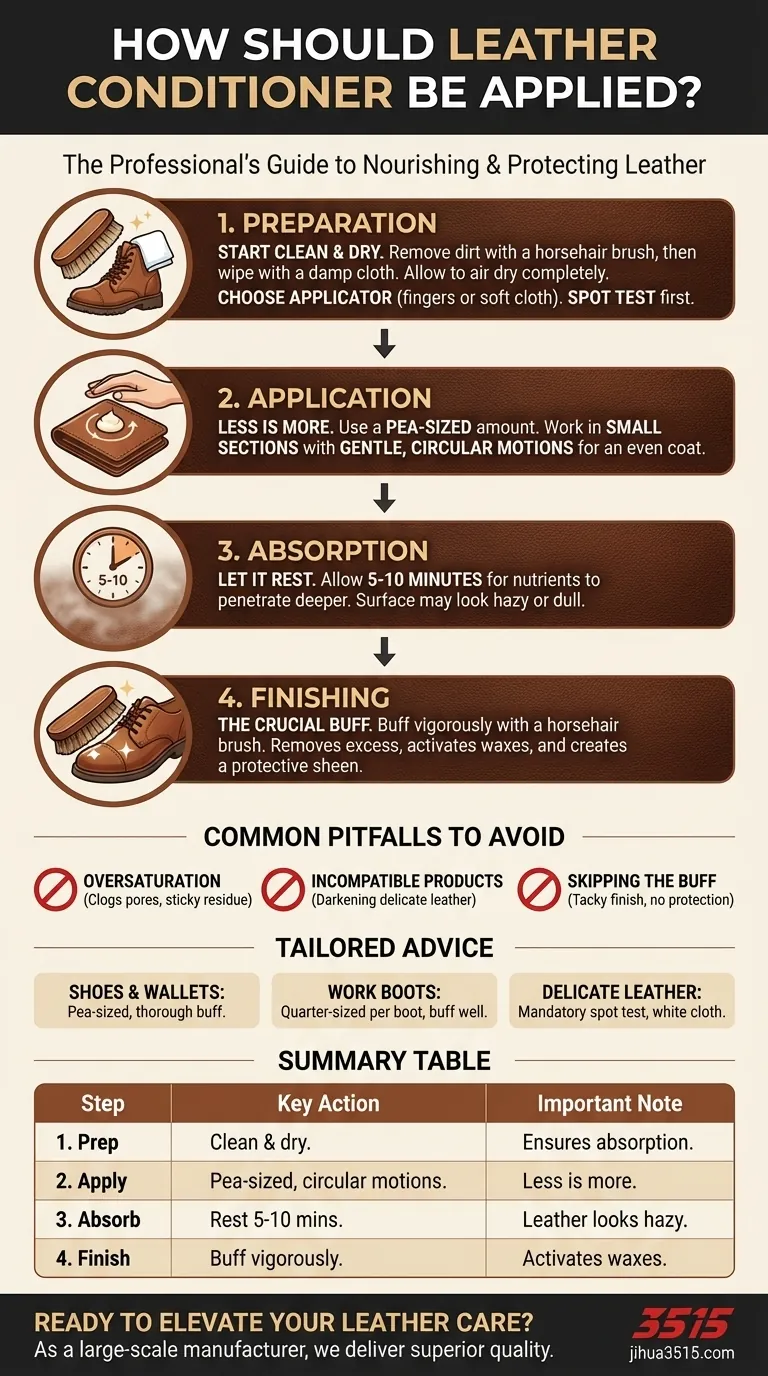
The correct technique for applying leather conditioner involves using a very small amount, working it into the leather in sections with circular motions, letting it absorb briefly, and then buffing off the excess with a horsehair brush. This method ensures the leather is nourished without becoming oversaturated or greasy.
The goal of conditioning is not to coat the leather, but to replenish its natural oils from within. Therefore, the most effective method emphasizes a thin, even application that allows the material to breathe, followed by a buffing that seals in moisture and creates a protective finish.
Preparing the Leather for Conditioning
Before you apply any product, proper preparation is essential to ensure the conditioner can penetrate effectively and deliver the best results.
Start with a Clean Surface
You must first remove any surface dirt, dust, or grime. Use a horsehair brush to sweep away loose debris, followed by a slightly damp, lint-free cloth to wipe the entire item down.
For heavily soiled leather, a dedicated pH-balanced leather cleaner may be necessary. Always allow the leather to air dry completely before proceeding.
Choose Your Applicator
You have two primary options for application. Using your fingers is often recommended, as the warmth from your hands helps the conditioner spread and absorb more easily into the leather's pores.
Alternatively, a clean, soft cloth like a cotton chamois or an old t-shirt works well. This method is useful for maintaining a barrier between your hands and the product.
Perform a Spot Test
Always test the conditioner on a small, inconspicuous area first, such as the inside of a boot tongue or the bottom of a bag. This ensures the product does not cause any unwanted discoloration or darkening on your specific type of leather.
The Core Application Technique
With the leather prepped, you can move on to the main process. The key here is patience and precision.
Less is More: The "Pea-Sized" Rule
Start with a very small, pea-sized amount of conditioner on your fingers or cloth. It is far easier to add another thin layer than it is to remove an excessive amount.
Work in Small, Circular Motions
Apply the conditioner to one section of the item at a time. Use gentle, circular motions to massage the product into the leather, ensuring you achieve a thin, even, and consistent coat.
Allow for Proper Absorption
Once the item is fully coated, let it rest for 5 to 10 minutes. This allows the oils and nutrients in the conditioner to penetrate deep into the leather fibers. The surface may look slightly hazy or dull during this time.
The Crucial Final Buff
After the rest period, take a clean, dry horsehair brush and use quick, light strokes to buff the entire surface. This step is critical for two reasons: it removes any excess conditioner that wasn't absorbed, and it gently heats and activates the waxes in the product, creating a subtle sheen and a protective barrier.
Common Pitfalls to Avoid
Applying conditioner correctly is as much about avoiding mistakes as it is about following the right steps.
The Danger of Oversaturation
Using too much conditioner is the most common mistake. It can clog the leather's pores, prevent it from breathing, and leave a sticky, greasy residue that attracts more dirt and dust.
Incompatible Product Choices
Not all conditioners are suitable for all types of leather. Using a heavy, oil-based conditioner on delicate or untreated leather can cause significant darkening. Always match the product to the material.
Skipping the Final Buff
Forgetting to brush off the excess conditioner will leave the surface feeling tacky. This sticky finish will not protect the leather and can even transfer onto clothing or other surfaces.
Making the Right Choice for Your Item
While the core principles remain the same, you can adjust your approach slightly based on the item you are treating.
- If your primary focus is shoes, wallets, or dress belts: Adhere strictly to the "pea-sized" amount and ensure a thorough buffing to achieve a professional, polished finish.
- If your primary focus is rugged work boots or a large travel bag: You may use a slightly more generous amount (up to a quarter-sized scoop per boot), but the principle of working it in thoroughly and buffing off all excess remains paramount.
- If your primary focus is delicate or light-colored leather goods: The spot test is non-negotiable, and applying with a clean, white cloth is recommended to prevent any potential transfer of oils or dyes from your hands.
Properly conditioning your leather transforms it from a simple chore into a rewarding ritual that will drastically extend the life and beauty of your goods.
Summary Table:
| Step | Key Action | Important Note |
|---|---|---|
| 1. Preparation | Clean leather thoroughly & allow to dry. | A clean surface ensures proper absorption. |
| 2. Application | Use a pea-sized amount, work in with circular motions. | Less is more to avoid a greasy residue. |
| 3. Absorption | Let the conditioner sit for 5-10 minutes. | The leather may look hazy during this time. |
| 4. Finishing | Buff vigorously with a horsehair brush. | Removes excess and activates protective waxes. |
Ready to Elevate Your Leather Care?
As a large-scale manufacturer, 3515 produces a comprehensive range of high-quality footwear and leather goods for distributors, brand owners, and bulk clients. Our expertise in materials ensures your products are built to last.
Let us help you protect your investment. Whether you need durable work boots or elegant dress shoes, proper conditioning is key to longevity.
Contact our team today to discuss your manufacturing needs and discover how we can deliver superior quality and value.
Visual Guide
Related Products
- Dial Closure Leather Business Casual Shoes for Wholesale & Private Label
- Wholesale Comfort Leather Business Shoes with Dial Lacing System
- Wholesale Leather Apron Toe Derby Shoes Custom Factory Production
- Factory Direct Wholesale Leather Comfort Shoes with Dial Closure
- Wholesale Classic Leather Lace-Up Ankle Boots for Brand Manufacturing
People Also Ask
- What are the top three recommended business casual shoes? Build a Polished, Versatile Wardrobe
- Why is choosing the right shoes important for a business casual look? Elevate Your Professional Image
- What materials are commonly used in business casual shoes? A Guide to Leather, Suede & More
- What factors should be considered when choosing business casual shoes? Find the Perfect Balance of Style & Comfort
- Are black or brown shoes better for business casual? Master the Versatile Choice for Your Wardrobe