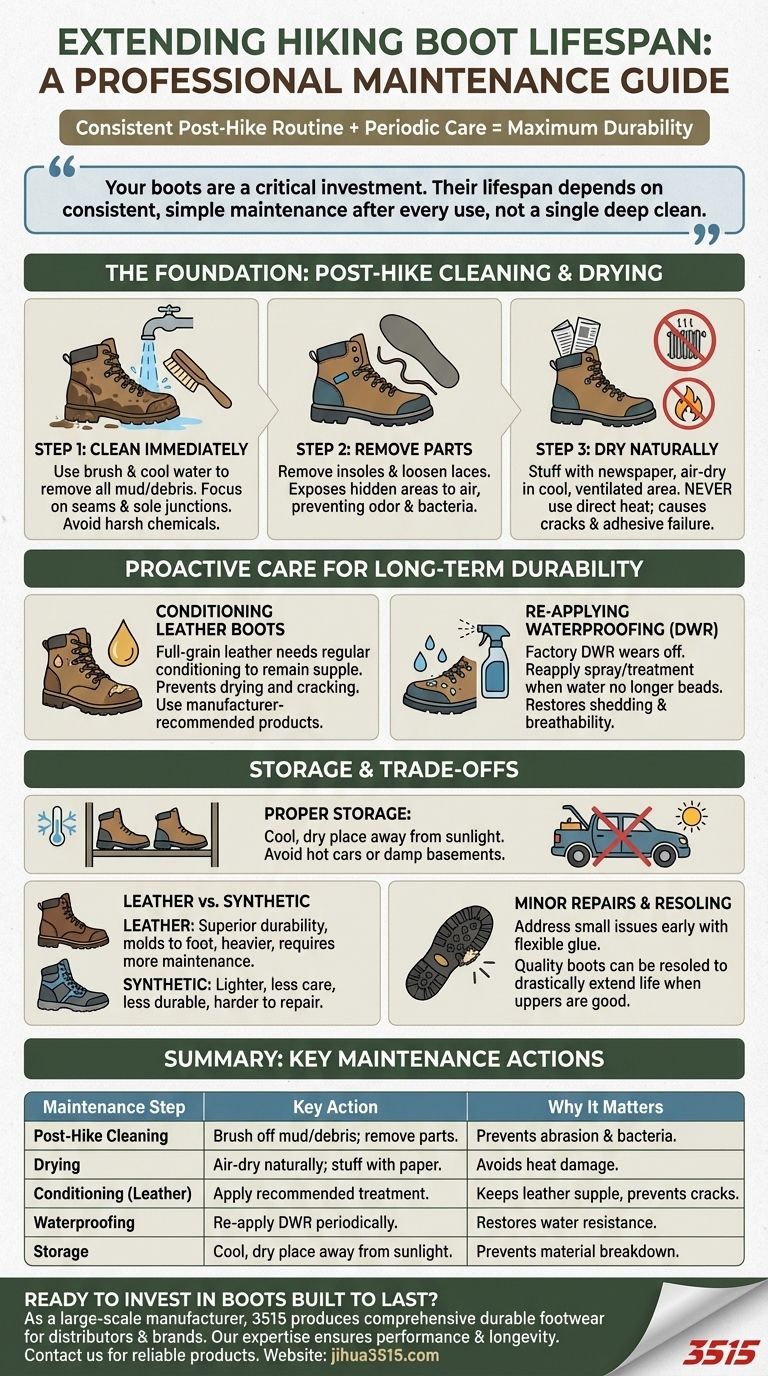
To properly maintain hiking boots, you must implement a routine of cleaning them after every hike, allowing them to air-dry naturally away from direct heat, and periodically re-applying waterproofing treatments. This simple but consistent process prevents the abrasive breakdown of materials and preserves the boot's structural integrity.
Your hiking boots are a critical investment in your comfort and safety on the trail. Their lifespan is not determined by a single intensive cleaning session, but by the consistent, simple maintenance you perform after every single use.
The Foundation: Post-Hike Cleaning and Drying
The most significant damage to hiking boots happens after the hike is over. Caked-on mud, grit, and moisture work to degrade fabrics, leather, and adhesives if left unattended.
Step 1: Clean Immediately
Dirt and grit are highly abrasive. As they dry, they draw essential oils out of leather and grind away at synthetic fibers and seams with every step.
Use a brush and cool water to remove all mud and debris. Pay special attention to the seams and the areas where the sole meets the upper. Avoid using solvents or harsh detergents.
Step 2: Remove Insoles and Laces
For a thorough cleaning and drying, always remove the insoles and loosen the laces. This exposes hidden areas to air, preventing the growth of odor-causing bacteria and mold inside the boot.
Step 3: Dry Boots Naturally
This is the most critical step. Never place your boots near a direct heat source like a campfire, radiator, or furnace vent. Intense heat can crack leather, melt adhesives, and cause the boot to lose its shape.
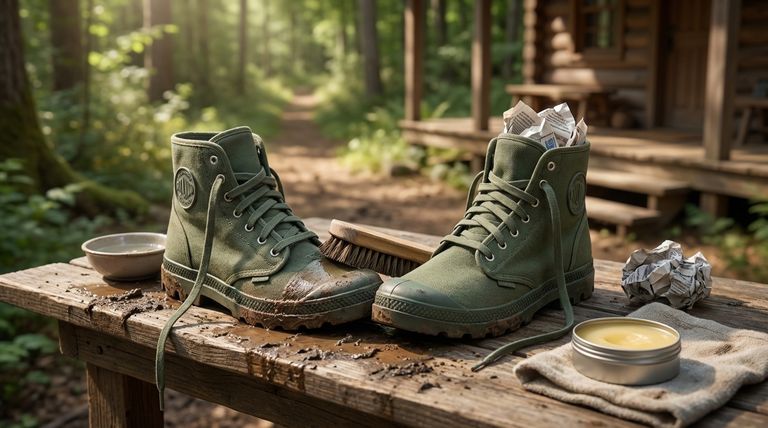
Stuff the boots loosely with newspaper, which will absorb moisture and help them retain their form. Allow them to air-dry completely in a cool, well-ventilated area.
Proactive Care for Long-Term Durability
Beyond the post-hike routine, periodic conditioning and waterproofing are essential for extending the functional life of your boots.
Conditioning Leather Boots
Full-grain leather requires conditioning to remain supple and water-resistant. As leather gets wet and dries repeatedly, it loses its natural oils.
Applying a conditioning or oiling treatment (as recommended by the manufacturer) keeps the leather from drying out and cracking, which is a common point of failure.
Re-Applying Waterproofing
The factory-applied Durable Water Repellent (DWR) finish on all boots—both leather and synthetic—wears off over time. You'll know it's time to reapply when water stops beading up and starts absorbing into the outer material.
Use a waterproofing spray or rub-on treatment appropriate for your boot's material to restore its ability to shed water and breathe effectively.
Proper Storage is Non-Negotiable
When you're not using them, store your boots in a cool, dry place away from direct sunlight. A hot car trunk or a damp basement can cause materials to break down prematurely.
Understanding the Trade-offs and Repairs
Knowing your boot's materials and when to seek professional help is key to maximizing your investment.
Leather vs. Synthetic Materials
Leather offers superior durability and can mold to your foot, but it is heavier and requires more maintenance in the form of regular conditioning.
Synthetic materials are lighter and require less specialized care but are generally less durable and more difficult to repair than a high-quality leather boot.
Minor Repairs and Resoling
Address small issues before they become major problems. Use a flexible shoe glue to re-adhere peeling rands or small sections of the sole.
For high-quality boots, resoling is a cost-effective way to drastically extend their life. When the tread is worn but the uppers are still in good condition, a cobbler can replace the entire outsole.
Making the Right Choice for Your Goal
Your maintenance strategy should be tailored to your specific gear and how you use it.
- If your primary focus is preserving expensive leather boots: Make regular cleaning and periodic conditioning your top priority to prevent the leather from cracking.
- If your primary focus is maintaining the performance of lightweight synthetic boots: Concentrate on keeping them clean and regularly reapplying DWR sprays to maintain water resistance and breathability.
- If your primary focus is hiking in wet, muddy environments: Meticulous, natural drying after every single hike is non-negotiable to prevent moisture from breaking down the boot's materials from the inside out.
Ultimately, consistent care is the single most important factor in getting the most miles out of your hiking boots.
Summary Table:
| Maintenance Step | Key Action | Why It Matters |
|---|---|---|
| Post-Hike Cleaning | Brush off mud/debris; remove insoles & laces. | Prevents abrasive damage and bacterial growth. |
| Drying | Air-dry naturally; stuff with newspaper. | Avoids heat damage that cracks leather and melts glue. |
| Conditioning (Leather) | Apply manufacturer-recommended treatment. | Keeps leather supple and prevents cracking. |
| Waterproofing | Re-apply DWR spray or treatment periodically. | Restores water resistance and breathability. |
| Storage | Keep in a cool, dry place away from sunlight. | Prevents premature material breakdown. |
Ready to invest in boots built to last? As a large-scale manufacturer, 3515 produces a comprehensive range of durable hiking and work footwear for distributors, brand owners, and bulk clients. Our expertise ensures every pair is crafted for performance and longevity. Contact us today to discuss your footwear needs and discover how we can support your business with reliable, high-quality products.
Visual Guide
Related Products
- Wholesale High-Traction Camo Boots - Custom Manufacturer for Brands
- Durable Rubber Sole Outdoor Shoes Wholesale & Custom Manufacturing
- Durable Spiked Camouflage Boots Wholesale & Factory Production
- Wholesale Lightweight Tactical Boots Custom Manufacturer for Desert & Combat Use
- Wholesale Waterproof Tactical Boots Custom Suede & High-Traction Soles
People Also Ask
- What are the key features of the new line of camo boots? Built for Extreme Cold & Rugged Terrain
- Are camo boots necessary for hunting success? Prioritize Performance Over Pattern
- How does the Rank Score Test identify the primary causes of premature failure in tactical and work boots? Key Insights
- What is the technical logic behind using closed-eye testing for tactical boots? Unlocking Peak Footwear Stability
- What shoes to wear for a security job? Durable, Protective Footwear for Long Shifts