
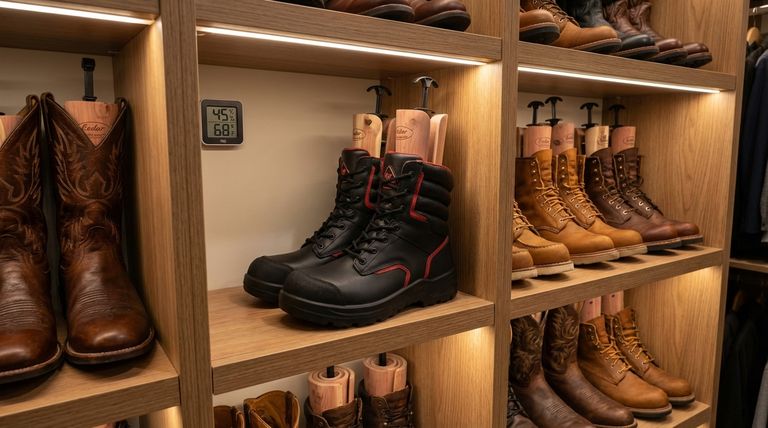
To properly store cowboy boots, you must keep them standing upright in a cool, dry environment, away from direct light. The most critical step is inserting cedar boot trees, which absorb damaging moisture while preserving the boot's essential shape from the inside out.
The goal of proper storage is not simply to put your boots away, but to actively combat the three forces that degrade them over time: moisture, gravity, and environmental stress. Your strategy must address both internal support and external conditions.
The Core Principles of Boot Preservation
Understanding why certain storage methods work is key to protecting your investment. Leather is a natural material that reacts to its environment, and proper storage mitigates the negative reactions that cause permanent damage.
Combatting Moisture
Moisture is the primary enemy of leather. It encourages the growth of mold and mildew, which can stain and weaken the material.
Furthermore, as leather gets wet and then dries, it can become stiff, brittle, and prone to cracking.
Cedar boot trees are the definitive solution. Cedar naturally absorbs excess moisture and odor from the boot's interior, stabilizing the leather and preventing degradation from the inside.
Defying Gravity and Maintaining Shape
Gravity constantly works to deform your boots when they aren't being worn. This manifests in two key areas.
First, the toe box can curl upwards and the vamp (the top part of the foot) can crease and collapse. A boot tree provides the internal structure needed to prevent this.
Second, the tall shaft of a cowboy boot will naturally slump over, creating deep, permanent creases in the leather. To prevent this, insert a shaper into the shaft, such as a rolled-up magazine, a purpose-made boot shaper, or even a section of a pool noodle.
Controlling the Environment
The external environment is just as important as the internal support. Storing boots in the wrong place can undo all your other efforts.
Heat and direct sunlight will dry out the leather's natural oils, leading to fading, brittleness, and cracking.
High humidity, found in basements or poorly ventilated spaces, creates the perfect breeding ground for mold. A spacious closet in a climate-controlled part of your home is the ideal location.
Common Pitfalls to Avoid
Many well-intentioned storage habits can inadvertently cause significant damage to your boots. Awareness of these common mistakes is crucial for long-term preservation.
The Problem with Plastic
Never store leather boots in a sealed plastic bag or an airtight plastic container for long periods.
These containers trap moisture against the leather, creating a humid microclimate that accelerates mold growth and material decomposition. If you must use a container, opt for a breathable fabric boot bag.
Storing Boots Unclean
Storing boots without cleaning them first traps dirt, salt, and grime against the leather. These substances can draw out moisture and abrade the surface over time.
Always wipe your boots down and ensure they are completely dry before putting them away. For long-term storage, a proper cleaning and conditioning is essential.
Choosing the Wrong Location
The most common mistake is storing boots in an attic, garage, or basement.
These areas experience the most extreme temperature and humidity fluctuations in a home, creating a hostile environment for leather. Stick to stable, climate-controlled living spaces.
Making the Right Choice for Your Goal
Your storage strategy can be tailored to how you use your boots. Use these guidelines to find the right balance of protection and convenience.
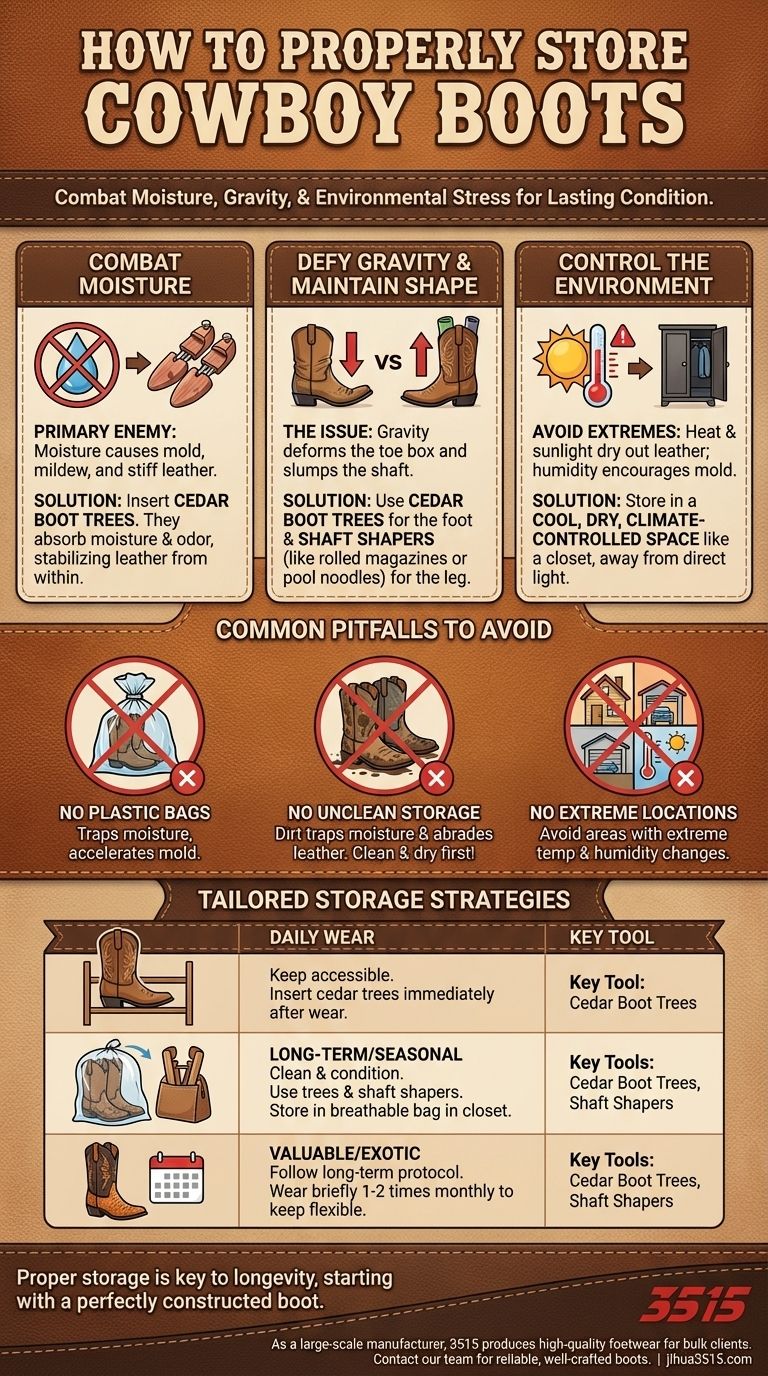
- If your primary focus is daily wear: Keep your boots accessible on a boot rack in your closet and insert cedar boot trees immediately after taking them off.
- If your primary focus is long-term or seasonal storage: First clean and condition the leather, then insert both cedar boot trees for the foot and shapers for the shaft before placing them in a breathable bag at the back of a closet.
- If your primary focus is preserving a valuable or exotic pair: Follow the long-term storage protocol and make a point to wear them for a short period once or twice a month to keep the leather flexible.
Proper storage is the single most effective way to ensure your boots last for years to come.
Summary Table:
| Storage Goal | Key Action | Essential Tool |
|---|---|---|
| Daily Wear | Keep accessible on a rack; insert trees after each wear. | Cedar Boot Trees |
| Long-Term/Seasonal Storage | Clean and condition; use trees and shaft shapers; store in a breathable bag. | Cedar Boot Trees, Shaft Shapers |
| Preserving Valuable/Exotic Boots | Follow long-term protocol; wear briefly 1-2 times a month. | Cedar Boot Trees, Shaft Shapers |
Ready to protect your investment? Proper storage is key to longevity, and it starts with a perfectly constructed boot. As a large-scale manufacturer, 3515 produces a comprehensive range of high-quality footwear for distributors, brand owners, and bulk clients. Our production capabilities encompass all types of durable boots built to last. Let's discuss how we can provide the reliable, well-crafted boots your customers deserve. Contact our team today for a consultation.
Visual Guide
Related Products
- High-Traction Suede Tactical Boots Wholesale & Custom Manufacturing
- Wholesale High-Traction Camo Boots - Custom Manufacturer for Brands
- Wholesale Lightweight Tactical Boots Custom Manufacturer for Desert & Combat Use
- Durable Leather Tactical Boots Wholesale & Custom Manufacturing for Brands
- Wholesale Durable Mid-Cut Tactical Boots for Custom & Private Label Brands
People Also Ask
- Why is sequential analysis utilized to evaluate tactical boots? Master Dynamic Boot Development and Ergonomic Performance
- How does the material of tactical boots affect their performance? Choose the Right Material for Your Mission
- How do tactical boots differ from regular boots? Performance, Durability & Design Explained
- How do military uniforms and tactical boots impact the prediction of thermal risk? Essential Safety Insights
- What are the benefits of integrating FES and sEMG into tactical boots? Safety, Reliability & Field-Ready Performance


















