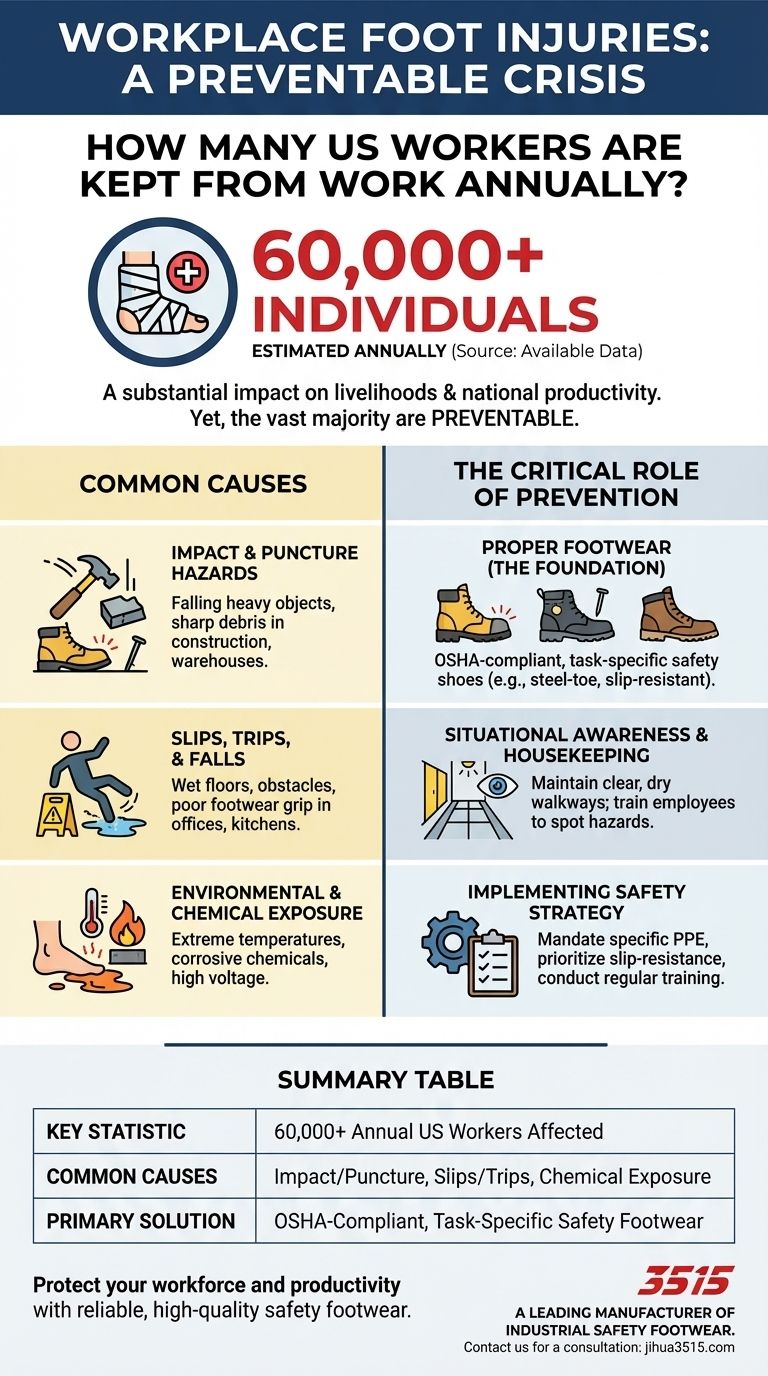
In the United States alone, foot injuries prevent a significant number of people from working each year. Based on available data, this figure is estimated to be at least 60,000 individuals annually, representing a substantial impact on both personal livelihoods and national productivity.
While the number itself is striking, the core issue is that the vast majority of these workplace foot injuries are preventable. Understanding the common causes is the first step toward implementing effective safety protocols and drastically reducing this figure.
The True Cost of Workplace Foot Injuries
Beyond the Individual Number
The figure of 60,000 workers sidelined is more than just a statistic. It represents lost wages for families, significant medical expenses, and chronic pain for individuals.
For businesses, each injury translates to lost productivity, potential worker's compensation claims, and the cost of hiring and training temporary replacements. The ripple effects impact project timelines and overall operational efficiency.
Common Types of Injuries
Workplace foot injuries are not monolithic. They range from acute trauma to chronic conditions.
Common incidents include crushing injuries from falling objects, punctures from sharp items on the ground, severe sprains from slips, and burns from chemical or thermal exposure.
Unpacking the Common Causes
Impact and Puncture Hazards
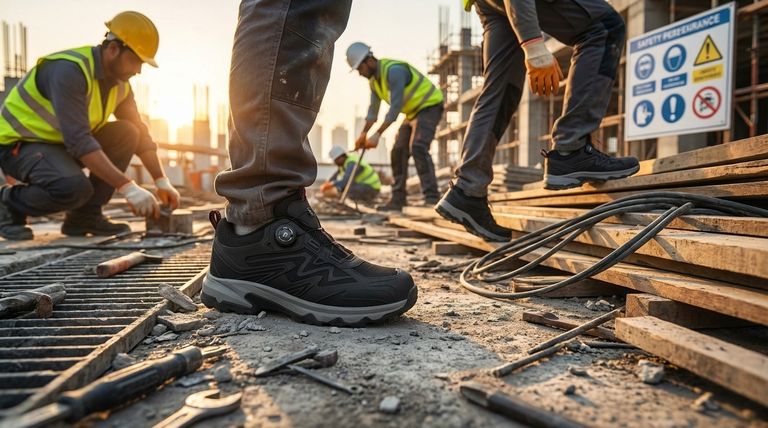
Many injuries occur in environments like construction sites, warehouses, and manufacturing plants. Heavy objects falling onto the foot or sharp debris like nails penetrating a shoe sole are primary causes.
This category of hazard is precisely what safety-toed boots and puncture-resistant soles are designed to prevent.
Slips, Trips, and Falls
A simple slip on a wet floor or a trip over an unseen obstacle is one of the most frequent causes of workplace injuries, often resulting in severe ankle sprains, fractures, or dislocations.
This risk is not confined to industrial settings; it is prevalent in offices, kitchens, and healthcare facilities. The key factor is often the condition of the walking surface and the grip of the footwear.
Environmental and Chemical Exposure
In certain professions, feet are exposed to extreme temperatures, corrosive chemicals, or high voltages. These hazards can cause severe burns, tissue damage, or electrical shock.
Specialized footwear is essential in these environments to provide a necessary barrier against these specific dangers.
The Critical Role of Prevention
The Foundation: Proper Footwear
The single most effective preventative measure is ensuring the use of appropriate, OSHA-compliant footwear. This goes beyond simply wearing closed-toe shoes.
The specific type of safety shoe or boot must be matched to the specific hazards of the job, whether that requires steel toes, slip-resistant soles, or chemical-resistant materials.
Situational Awareness and Housekeeping
Beyond personal protective equipment (PPE), environmental safety is paramount. Maintaining clear, dry, and well-lit walkways is a simple but highly effective strategy.
Fostering a culture of situational awareness, where employees are trained to spot and report potential hazards, dramatically reduces the likelihood of incidents.
Implementing an Effective Safety Strategy
A proactive approach is the only way to protect your team and your operations from the cost of foot injuries.
- If your primary focus is a high-hazard environment (construction, manufacturing): Mandate and provide task-specific safety footwear with features like impact resistance and puncture-proof soles.
- If your primary focus is a service environment (kitchens, healthcare): Prioritize certified, slip-resistant footwear and enforce rigorous housekeeping protocols for floor safety.
- If your primary focus is creating a universal safety culture: Implement regular training on hazard identification and the proper use and maintenance of all required PPE.
Ultimately, protecting the workforce from foot injuries begins with acknowledging the risks and committing to proven, preventative solutions.
Summary Table:
| Key Statistic | Details |
|---|---|
| Annual US Workers Affected | 60,000+ |
| Common Causes | Impact/Puncture, Slips/Trips, Chemical Exposure |
| Primary Solution | OSHA-Compliant, Task-Specific Safety Footwear |
Protect your workforce and productivity with 3515, a leading manufacturer of industrial safety footwear.
As a large-scale manufacturer, 3515 produces a comprehensive range of OSHA-compliant boots and shoes for distributors, brand owners, and bulk clients. Our production capabilities encompass all types of safety footwear designed to prevent common workplace injuries, including:
- Steel-toe boots for impact and compression hazards.
- Puncture-resistant soles for construction and warehouse environments.
- Slip-resistant outsoles for kitchens, healthcare, and service industries.
Reduce lost workdays and enhance your safety culture with reliable, high-quality footwear. Contact 3515 today for a consultation and discover the right safety solution for your team.
Visual Guide
Related Products
- Premium Suede Sport Safety Shoes for Wholesale & Bulk Orders
- Premium Lightweight Safety Shoes for Wholesale & Bulk Orders
- Wholesale Anti-Smash & Puncture-Proof Safety Shoes Custom Manufacturing for Brands
- Premium KPU Injection Athletic Style Safety Shoes
- Premium Safety Shoes with Rotating Buckle Safety Sneakers
People Also Ask
- What industries have specific OSHA footwear requirements? Ensure Compliance & Protect Your Workforce
- What are the primary functions of professional safety shoes? Maximize Safety in Water Supply Confined Spaces
- What role do specialized safety shoes play in preventing falls? Engineering Stability in Industrial Environments
- How Specialized Footwear Impacts Side-Cutting Performance and Injury Risk Assessment
- How do I choose the best safety shoes? Match Certified Features to Your Hazards