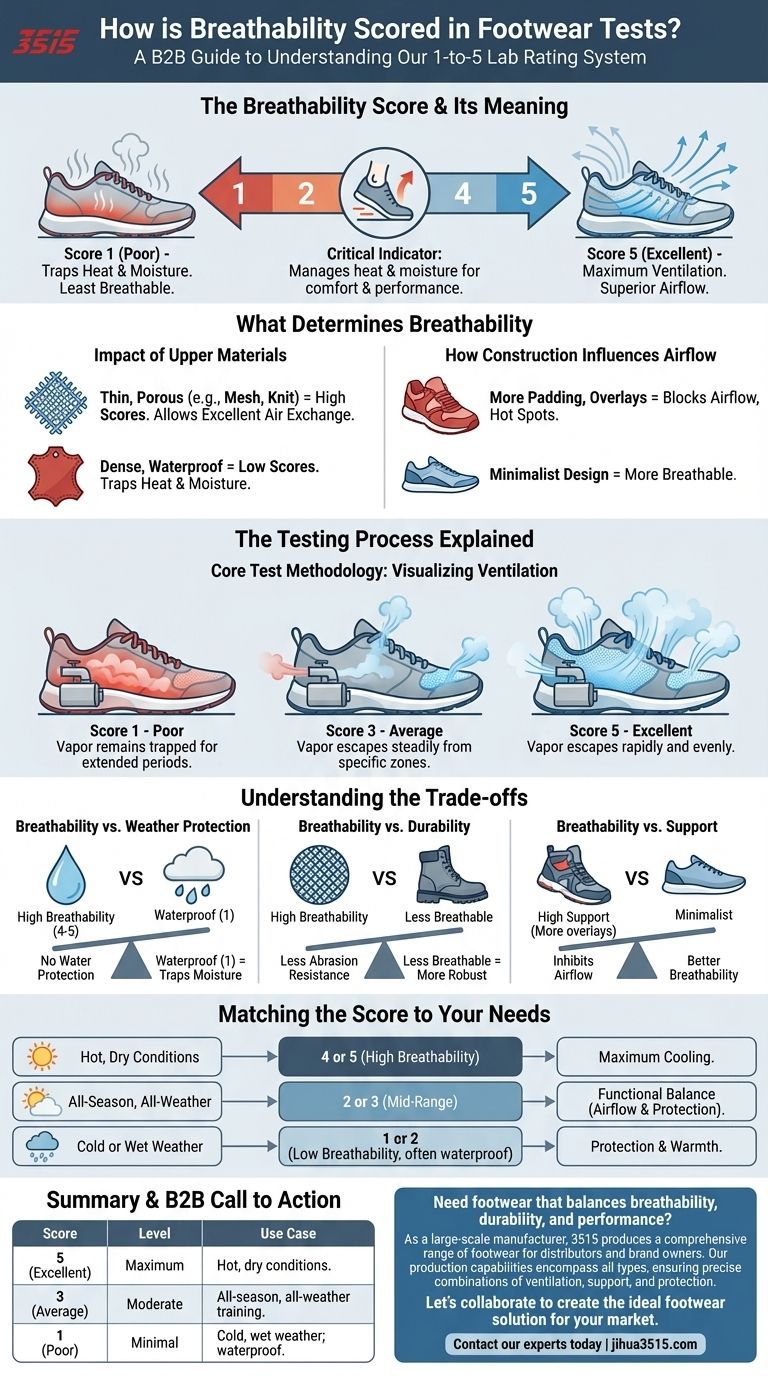
In our lab tests, breathability is rated on a straightforward 1 to 5 scale. A score of 1 indicates the least breathable shoe, trapping the most heat, while a score of 5 represents maximum ventilation and airflow.
The breathability score is more than just a number; it's a critical indicator of how effectively a shoe manages heat and moisture, which directly impacts your comfort and performance, especially in warm conditions.
What "Breathability" Actually Measures
A shoe's breathability score reflects its ability to allow water vapor (sweat) and heat to escape from inside the shoe. This is fundamental to keeping your feet cool, dry, and comfortable during activity.
The Impact of Upper Materials
The materials used in a shoe's upper are the single biggest factor in its breathability. Thin, porous materials like open-weave mesh or engineered knit fabrics allow for excellent air exchange and receive high scores.
Conversely, dense materials like leather, thick synthetic overlays, or waterproof membranes (like Gore-Tex) trap heat and moisture, leading to much lower breathability scores.
How Construction Influences Airflow
Beyond materials, a shoe's construction plays a key role. Features like a thick, padded tongue or numerous bonded overlays can create hot spots by blocking airflow, even if the primary upper material is breathable.
A minimalist design with fewer layers and less padding will almost always be more breathable than a heavily structured and cushioned shoe.
The Testing Process Explained
To assign a score, we need a consistent and objective way to visualize and quantify how well a shoe ventilates.
The Core Test Methodology
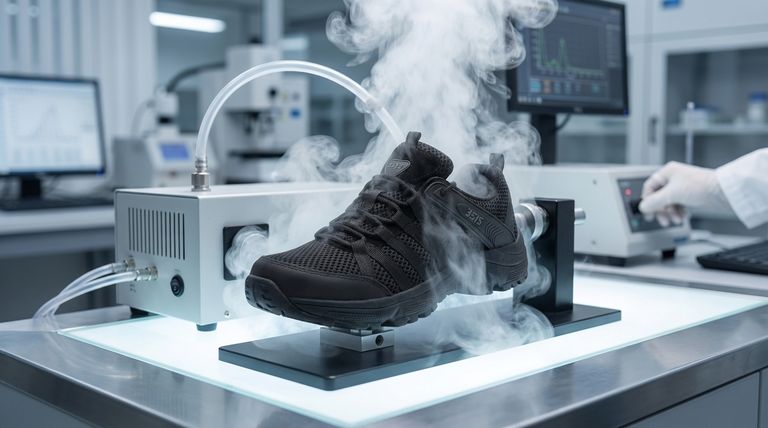
Our primary method involves filling each shoe with a non-toxic vapor, such as that from a fog machine. This allows us to visually observe how quickly and from which areas the vapor escapes the shoe's upper.
This test provides a clear, immediate indication of the shoe's ventilation performance across its entire surface.
Translating Observation to a Score
We then translate these visual results into our 1-to-5 rating system.
- A score of 5 (Excellent): Vapor escapes rapidly and evenly from almost the entire upper, indicating superior ventilation.
- A score of 3 (Average): Vapor escapes steadily from specific zones, like the toebox, but is noticeably slower or absent in other areas.
- A score of 1 (Poor): Vapor remains trapped inside the shoe for an extended period, with very little or no visible escape. This is typical for waterproof footwear.
Understanding the Trade-offs
Choosing a shoe with high breathability often involves compromising on other features. It is crucial to understand these trade-offs to select the right footwear for your needs.
Breathability vs. Weather Protection
This is the most significant trade-off. Shoes with the highest breathability scores (4-5) offer virtually no protection from water. Conversely, waterproof shoes will always score a 1 for breathability because the membrane designed to keep water out also traps moisture and heat in.
Breathability vs. Durability
The lightweight, open-weave mesh materials that excel at ventilation are often less resistant to abrasion and tearing than the thicker, more robust materials found on less breathable shoes.
Breathability vs. Support
Shoes built for maximum stability often feature more overlays, denser materials, and a more structured heel counter. These supportive elements can inhibit airflow and lead to lower breathability scores compared to neutral, minimalist trainers.
Matching the Score to Your Needs
Use the breathability score as a tool to find the shoe that best aligns with your typical running environment and preferences.
- If your primary focus is running in hot, dry conditions: Prioritize shoes with a breathability score of 4 or 5 for maximum cooling.
- If your primary focus is all-season, all-weather training: A mid-range score of 2 or 3 often provides a functional balance between airflow and protection.
- If your primary focus is running in cold or wet weather: A low score of 1 or 2, especially in a shoe with a waterproof membrane, is your ideal choice.
Ultimately, understanding this score empowers you to choose footwear that works with your environment, not against it.
Summary Table:
| Score | Ventilation Level | Description | Typical Use Case |
|---|---|---|---|
| 5 (Excellent) | Maximum | Vapor escapes rapidly and evenly from most of the upper. | Hot, dry conditions; maximum cooling. |
| 3 (Average) | Moderate | Vapor escapes steadily from specific zones (e.g., toebox). | All-season, all-weather training; balanced performance. |
| 1 (Poor) | Minimal | Vapor remains trapped inside for an extended period. | Cold, wet weather; waterproof footwear. |
Need footwear that perfectly balances breathability, durability, and performance?
As a large-scale manufacturer, 3515 produces a comprehensive range of footwear for distributors, brand owners, and bulk clients. Our production capabilities encompass all types of shoes and boots, ensuring we can deliver the precise combination of ventilation, support, and protection your customers demand.
Let's collaborate to create the ideal footwear solution for your market. Contact our experts today to discuss your needs!
Visual Guide
Related Products
- Lightweight Breathable Training Shoes for Wholesale & Custom OEM Manufacturing
- Wholesale Breathable Training Shoes Custom Athletic Footwear Manufacturer
- Lightweight Breathable Sneakers with Wet-Traction Grip for Wholesale & Private Label
- Wholesale Durable & Breathable Training Shoes for Custom Brands
- Custom OEM Training Shoes Wholesale Manufacturer Durable & Breathable
People Also Ask
- Why are lightweight training shoes often preferred over professional hiking boots in urban walking? Maximize City Comfort
- What is the primary role of specialized training or orthopedic shoes? Enhance Safety in Elderly Balance Training
- Why are professional-grade training shoes essential for physical therapy? Ensure Patient Safety and Gait Stability
- Why are the slip-resistance and stability performance of training shoes critical in gait analysis? Ensure Data Accuracy
- Why is the use of flat-soled or professional training shoes essential for WBV? Maximize Vibration Energy Transfer