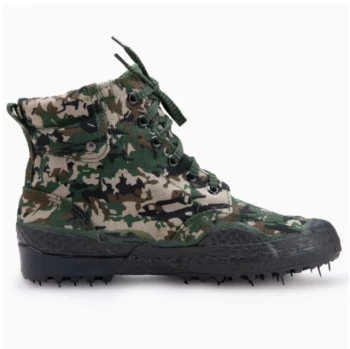
In modern jungle boots, drain holes have been fundamentally redesigned from simple metal eyelets into sophisticated water-evacuation systems. The upgrade moves away from bulky, clog-prone strainers made of poor materials and toward strategically placed, low-profile vents that use advanced technology to expel water rapidly and reliably.
The core upgrade is a shift in philosophy: from passively letting water out to actively ejecting it. Modern drain holes are now part of an integrated system designed to reduce weight, minimize slip risk, and improve foot health in wet conditions.

The Problem with Outdated Drain Hole Designs
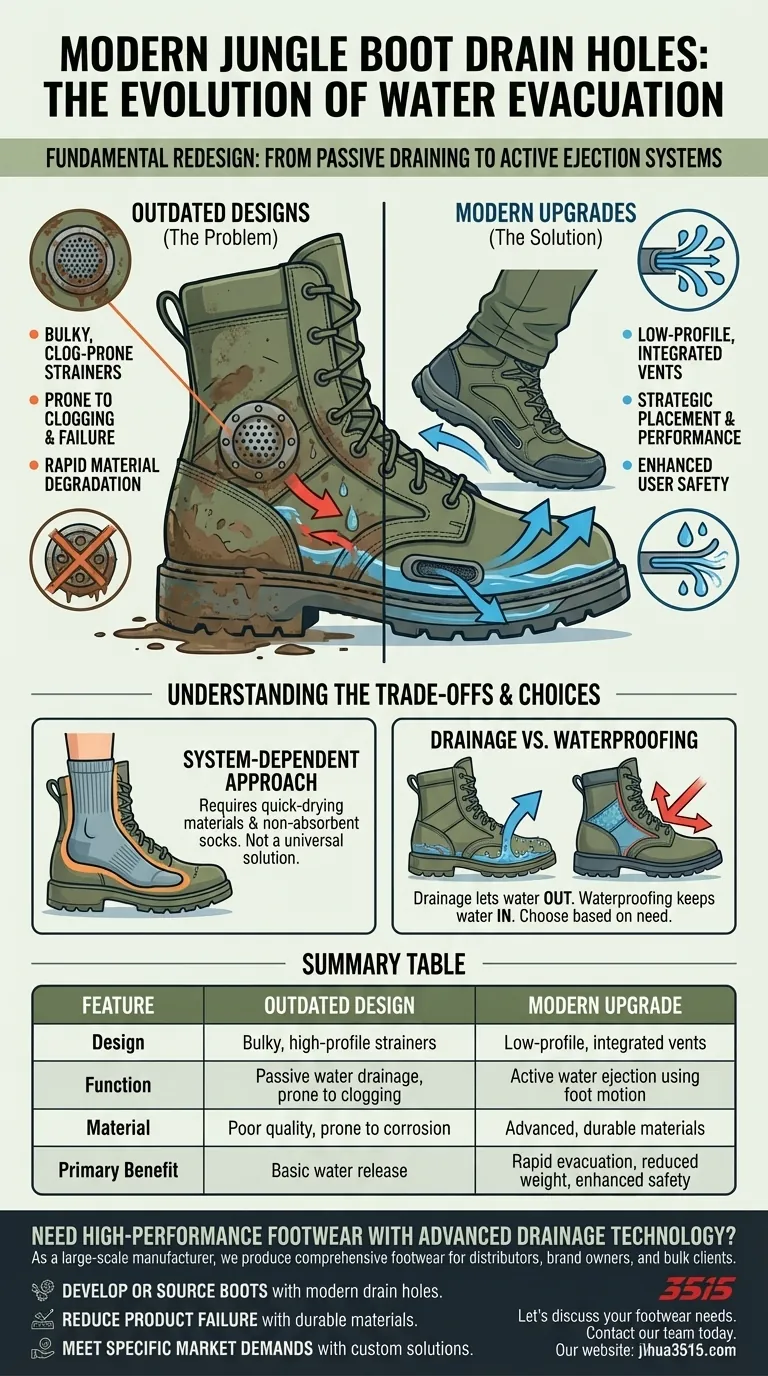
To understand the upgrade, we must first recognize the flaws of traditional designs. Older jungle boots featured drainage systems that often became a liability.
Bulky, High-Profile Strainers
Outdated drain holes typically used prominent metal strainers. These bulky components were prone to snagging on terrain and, more critically, created a perfect trap for mud, silt, and debris.
Prone to Clogging and Failure
Once clogged, these old-style drains stopped working entirely. The boot would retain water, defeating its primary purpose and becoming dangerously heavy.
Rapid Material Degradation
The poor quality of materials used in older strainers often led to corrosion and degradation. This not only reduced drainage effectiveness but could also compromise the structural integrity of the boot wall over time.
Key Upgrades in Modern Drainage Systems
Modern designs address each of these historical failures directly, treating water management as a critical performance feature.
Low-Profile, Integrated Vents
Instead of a bulky, add-on strainer, new drain holes are often sleek, integrated vents. This low-profile design is far less likely to clog with debris and seamlessly blends into the boot's construction.
Strategic Placement and Performance
Modern drain holes are strategically placed to work with the natural mechanics of walking. This placement uses the foot's pumping action to actively push water out with each step, ensuring continuous and efficient evacuation.
Enhanced User Safety
By quickly clearing water from the boot, these systems reduce the boot's overall weight and mitigate the risk of slipping. This is especially critical in urban environments where water on smooth surfaces can be treacherous.
Understanding the Trade-offs
While modern drainage systems are a significant improvement, they operate within a specific context and are not a universal solution for every environment.
A System-Dependent Approach
The effectiveness of advanced drain holes depends on the entire footwear system. They perform best when paired with quick-drying boot materials and non-absorbent socks. If the rest of the boot remains saturated, the drains can only do so much.
Drainage vs. Waterproofing
It is critical to remember that drain holes are designed to let water out, not to keep it from getting in. They are ideal for situations where submersion is inevitable. For keeping feet dry from external moisture like rain or shallow puddles, a waterproof membrane is a different and more suitable technology.
Making the Right Choice for Your Goal
Selecting the right boot depends entirely on your operational needs and environment.
- If your primary focus is amphibious or jungle operations: Prioritize boots with modern, low-profile drainage systems to guarantee rapid water evacuation and prevent water-logging.
- If your primary focus is urban or mixed-terrain use: Seek out boots with strategically placed vents that specifically mention reducing slip risk by clearing water from underfoot.
- If your primary focus is keeping feet completely dry from external moisture: A boot with a waterproof membrane is the correct choice, as a drainage system will not prevent water entry.
Ultimately, understanding the evolution of this technology empowers you to select footwear that performs as a true piece of equipment.
Summary Table:
| Feature | Outdated Design | Modern Upgrade |
|---|---|---|
| Design | Bulky, high-profile metal strainers | Low-profile, integrated vents |
| Function | Passive water drainage, prone to clogging | Active water ejection using foot motion |
| Material | Poor quality, prone to corrosion | Advanced, durable materials |
| Primary Benefit | Basic water release | Rapid evacuation, reduced weight, enhanced safety |
Need High-Performance Footwear with Advanced Drainage Technology?
As a large-scale manufacturer, 3515 produces a comprehensive range of footwear for distributors, brand owners, and bulk clients. Our production capabilities encompass all types of shoes and boots, including jungle boots engineered with the latest water-evacuation systems.
We can help you:
- Develop or source boots with modern, low-profile drain holes for superior performance in wet conditions.
- Reduce product failure with durable materials and reliable construction.
- Meet specific market demands with custom solutions for jungle, urban, or mixed-terrain use.
Let's discuss your footwear needs. Contact our team today to explore how we can bring value to your product line.
Visual Guide
Related Products
- Wholesale Lightweight Tactical Boots Custom Manufacturer for Desert & Combat Use
- Durable Spiked Camouflage Boots Wholesale & Factory Production
- Wholesale High-Traction Camo Boots - Custom Manufacturer for Brands
- Durable Leather High-Ankle Tactical Boots for Wholesale & Custom Manufacturing
- Durable High-Ankle Tactical Boots Wholesale Manufacturer for Custom & Bulk Orders
People Also Ask
- What are the common types of combat boots? Find the Right Boot for Your Mission
- What specialized protections do tactical boots offer? Maximize Endurance with High-Performance Footwear
- What is the role of high-frequency acquisition hardware in technical skill analysis for outdoor and tactical boots?
- What are the different types of tactical boots available? Find the Right Boot for Your Mission
- How does additive manufacturing equipment reduce environmental risks? Sustainable Tactics for Modern Footwear Production