
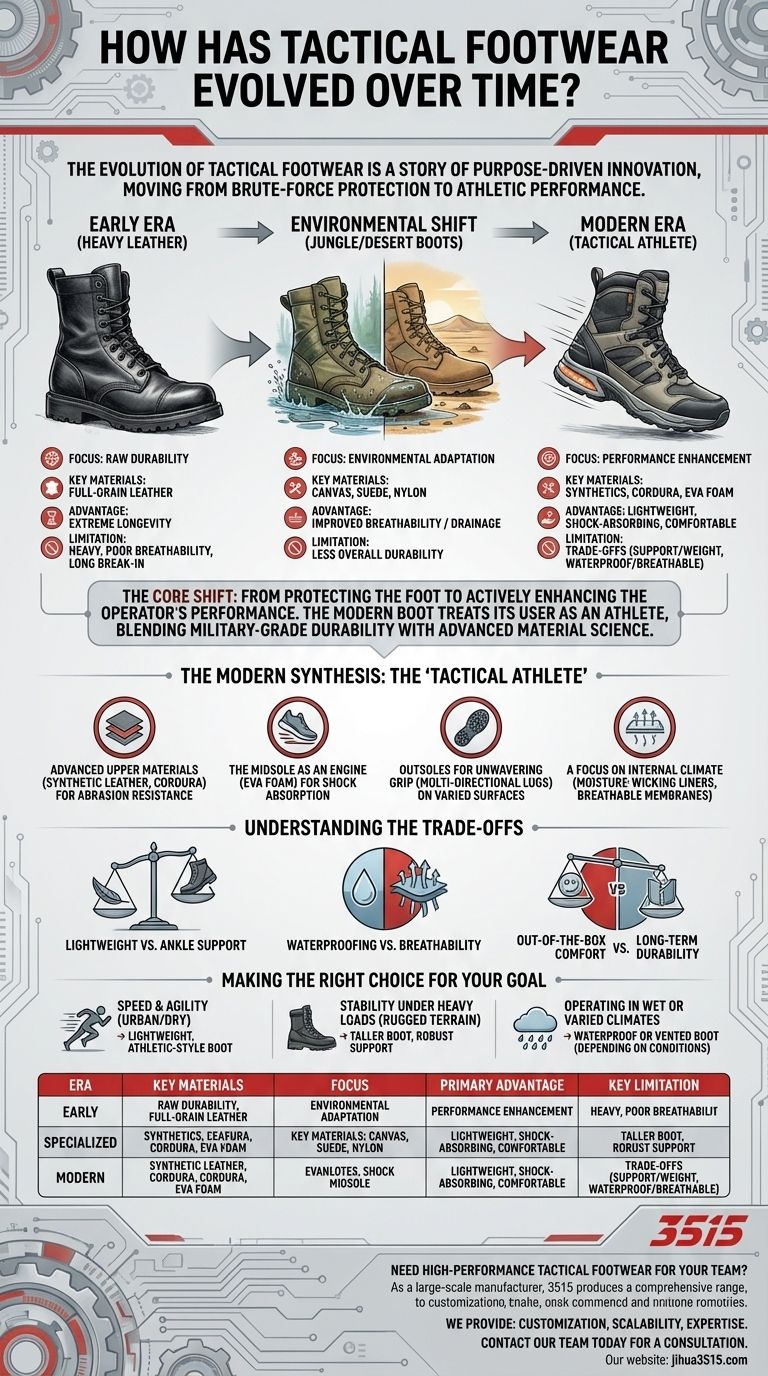
The evolution of tactical footwear is a story of purpose-driven innovation, moving from brute-force protection to athletic performance. Early designs were heavy, cumbersome, and built solely for durability. Today’s tactical shoes are lightweight, breathable, and comfortable, incorporating advanced technologies like shock-absorbing midsoles and moisture-wicking fabrics to meet the demands of modern operators in diverse environments.
The core shift in tactical footwear design is the move from simply protecting the foot to actively enhancing the operator's performance. The modern boot treats its user as an athlete, blending military-grade durability with the advanced material science of high-performance athletic gear.
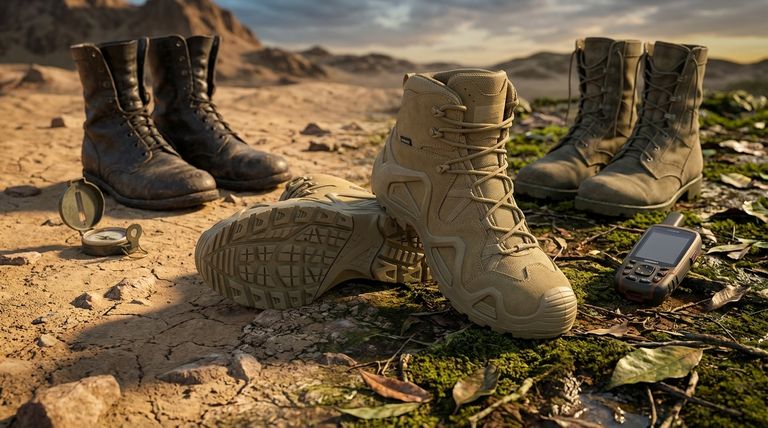
From Raw Durability to Specialized Performance
The central challenge in tactical footwear has always been balancing protection with mobility. Early designs prioritized the former, often at the expense of the latter.
The Era of Heavy Leather
The classic all-leather combat boot was defined by its singular focus: durability. It was designed to protect the foot from harsh terrain and last for years.
However, these boots were extremely heavy, required a long and often painful break-in period, and performed poorly in wet conditions, trapping moisture and leading to foot ailments.
The Environmental Shift: Jungle and Desert Boots
The Vietnam War highlighted the severe limitations of leather in hot, wet environments. This led to the development of the jungle boot, which incorporated canvas uppers and drainage vents to shed water and improve breathability.
Similarly, conflicts in the Middle East spurred the creation of the desert boot. This design swapped heavy, polishable leather for lighter suede and nylon fabrics, drastically improving ventilation in arid climates. These boots marked the first major step toward environmental specialization.
The Modern Synthesis: The "Tactical Athlete"
Today’s designs are a fusion of lessons learned from decades of military operations and breakthroughs in sports science. The modern operator is viewed as a "tactical athlete" who needs footwear that supports dynamic, high-intensity movement.
Advanced Upper Materials
Modern boots use a combination of materials to optimize performance. Synthetic leather and high-denier nylon fabrics like Cordura provide excellent abrasion resistance without the weight and water-logging issues of traditional leather.
The Midsole as an Engine
The most significant athletic influence is seen in the midsole. Using materials like EVA foam, modern boots provide significant shock absorption, reducing fatigue and the risk of stress injuries during long patrols or fast-paced maneuvers.
Outsoles for Unwavering Grip
Outsoles are no longer just thick pieces of rubber. They now feature scientifically designed, multi-directional lug patterns made from specialized compounds. These designs provide superior, slip-resistant grip on varied surfaces, from wet concrete to loose gravel.
A Focus on Internal Climate
Managing moisture from both inside and out is critical. Modern boots often feature moisture-wicking liners to pull sweat away from the skin and may incorporate waterproof yet breathable membranes to block external water while allowing vapor to escape.
Understanding the Trade-offs
No single boot is perfect for every situation. Understanding the inherent compromises in design is key to making an informed choice.
Lightweight vs. Ankle Support
Extremely lightweight, sneaker-like boots offer incredible mobility and comfort. However, they may provide less ankle stability and protection under heavy loads compared to more traditional, rigid 8-inch boots.
Waterproofing vs. Breathability
A fully waterproof boot is excellent for keeping feet dry from external moisture. In hot, arid climates, however, that same waterproof membrane can trap sweat, making a more breathable, non-waterproof boot that drains quickly a superior choice.
Out-of-the-Box Comfort vs. Long-Term Durability
Softer, more flexible materials often provide immediate comfort with no break-in period. Conversely, boots built with stiffer, more robust materials may require some break-in time but often provide greater long-term durability and support in punishing terrain.
Making the Right Choice for Your Goal
Your specific operational environment and mission set should dictate your choice of footwear.
- If your primary focus is speed and agility in urban or dry environments: Seek a lightweight, athletic-style boot with excellent midsole cushioning and a flexible, slip-resistant outsole.
- If your primary focus is stability under heavy loads in rugged terrain: Prioritize a taller boot (6-8 inches) with robust ankle support and a stiffer sole for better protection and load-bearing capability.
- If your primary focus is operating in wet or varied climates: A boot with a proven waterproof membrane is a strong choice, but for hot and humid conditions, consider a non-waterproof boot with drainage vents.
Ultimately, modern tactical footwear offers a specialized tool for every environment, and understanding this evolution allows you to select the right tool for the job.
Summary Table:
| Era | Key Materials | Focus | Primary Advantage | Key Limitation |
|---|---|---|---|---|
| Early (Heavy Leather) | Full-grain leather | Raw durability | Extreme longevity | Heavy, poor breathability, long break-in |
| Specialized (Jungle/Desert) | Canvas, suede, nylon | Environmental adaptation | Improved breathability/drainage | Less overall durability than leather |
| Modern (Tactical Athlete) | Synthetics, Cordura, EVA foam | Performance enhancement | Lightweight, shock-absorbing, comfortable | Trade-offs between support/weight, waterproofing/breathability |
Need High-Performance Tactical Footwear for Your Team?
As a large-scale manufacturer, 3515 produces a comprehensive range of tactical footwear for distributors, brand owners, and bulk clients. Our production capabilities encompass all types of tactical boots and shoes, incorporating the latest material science for durability, comfort, and performance.
We provide:
- Customization: Tailor designs to your specific operational needs and branding.
- Scalability: Reliable, high-volume production to meet your demand.
- Expertise: Decades of experience crafting footwear for demanding environments.
Let's discuss how we can equip your operators with the right footwear for the job.
Contact our team today for a consultation
Visual Guide
Related Products
- Durable Leather High-Ankle Tactical Boots for Wholesale & Custom Manufacturing
- Durable Leather Tactical Boots Wholesale & Custom Manufacturing for Brands
- Durable High-Ankle Tactical Boots Wholesale Manufacturer for Custom & Bulk Orders
- Durable Mid-Cut Tactical Boots for Wholesale & Private Label
- Wholesale Waterproof Tactical Boots Custom Suede & High-Traction Soles
People Also Ask
- How do military uniforms and tactical boots impact the prediction of thermal risk? Essential Safety Insights
- How does the material of tactical boots affect their performance? Choose the Right Material for Your Mission
- Why is sequential analysis utilized to evaluate tactical boots? Master Dynamic Boot Development and Ergonomic Performance
- How do tactical boots differ from regular boots? Performance, Durability & Design Explained
- What are the primary differences between tactical boots and combat boots? Choose the Right Boot for Your Mission



















