In short, the insole preparation is the most critical foundational step in Goodyear welt construction. A canvas or leather "rib" is either carved into or attached to the underside of the insole, creating a strong anchor point to which the upper and the leather welt are stitched. This prepared insole acts as the central backbone holding the entire shoe together.
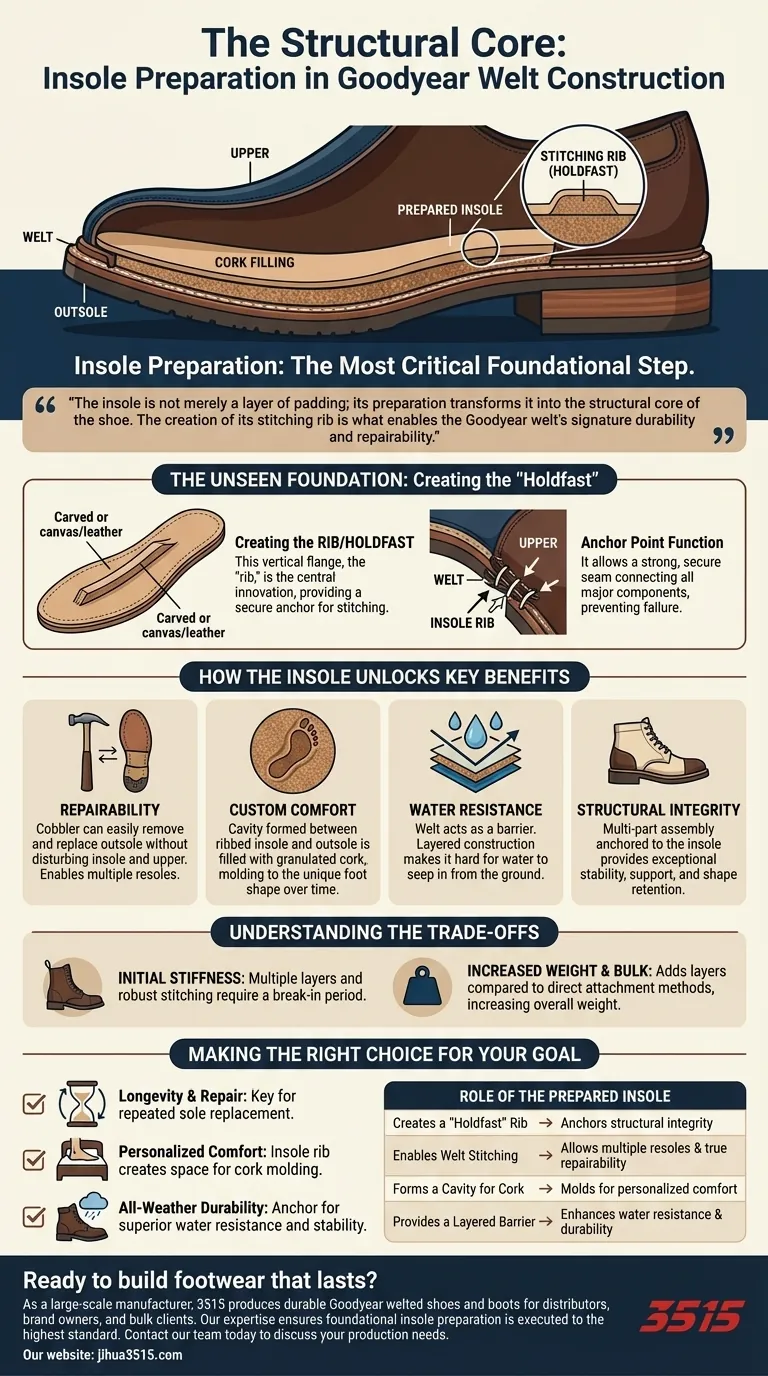
The insole is not merely a layer of padding; its preparation transforms it into the structural core of the shoe. The creation of its stitching rib is what enables the Goodyear welt's signature durability and repairability.
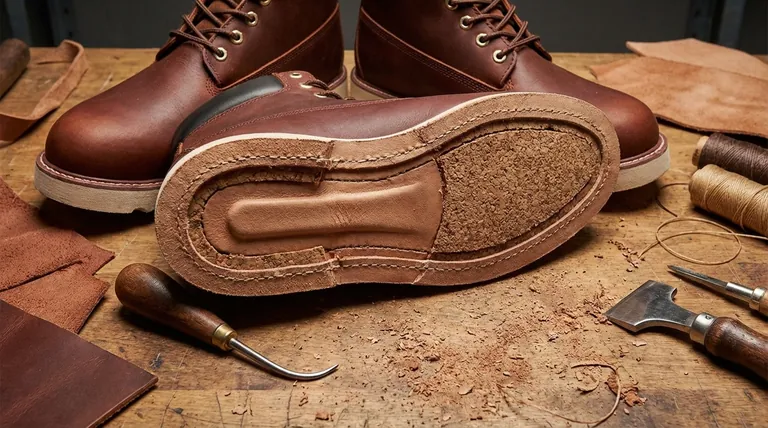
The Insole: The Unseen Foundation
The entire Goodyear welt process begins with the insole. While invisible in the finished shoe, its preparation dictates the footwear's final strength, comfort, and longevity.
Creating the "Holdfast"
The key preparatory step is the creation of a vertical flange, often called a rib or holdfast, on the perimeter of the insole's underside. This is the central innovation of the Goodyear welt method.
This rib serves as the primary attachment point for all the other components. It provides a secure, raised lip for the stitching to bite into, ensuring a robust connection.
Why This Rib is Crucial
Without this prepared rib, the entire construction method would fail. It is the anchor that allows a strong, inward-facing stitch to connect the insole, the upper, and the welt (a separate strip of leather) together in a single, secure seam.
How the Insole Unlocks Key Benefits
The insole's foundational role is directly responsible for the renowned advantages of Goodyear-welted footwear. It creates a system, not just a shoe.
Enabling True Repairability
Because the outsole is stitched to the welt—not directly to the upper—a cobbler can easily remove and replace a worn-out sole. The insole and upper remain undisturbed, allowing for multiple resoles over the shoe's lifetime.
Creating Space for Custom Comfort
The cavity formed between the ribbed insole and the outsole is filled with a cushioning material, typically granulated cork. Over time, this cork filling compresses and molds to the unique shape of your foot, creating a custom-like fit.
Enhancing Water Resistance
The welt acts as a barrier between the upper and the outsole. By stitching these components together via the insole's rib, the construction creates a more complex and layered path, making it much harder for water to seep in from the ground.
Providing Structural Integrity
This multi-part assembly, anchored to the prepared insole, provides exceptional stability and support. The shoe maintains its shape and structural integrity for years, even as the upper leather conforms to your gait.
Understanding the Trade-offs
While this construction is revered for its quality, its foundational complexity comes with inherent trade-offs that are important to recognize.
Initial Stiffness
The multiple layers—insole, cork, midsole, outsole—and robust stitching result in a shoe that can feel quite stiff out of the box. A break-in period is required for the cork to mold and the leather to soften.
Increased Weight and Bulk
Compared to more direct attachment methods like cementing, the Goodyear welt adds layers and materials. This inherently increases the shoe's overall weight and profile.
Making the Right Choice for Your Goal
Understanding the insole's role helps you appreciate why Goodyear-welted footwear is considered a long-term investment.
- If your primary focus is longevity and repair: The prepared insole is the key, as it allows the sole to be replaced repeatedly without compromising the shoe's structure.
- If your primary focus is personalized comfort: The insole's rib creates the space for the cork footbed that will mold perfectly to your foot over time.
- If your primary focus is all-weather durability: The insole is the anchor for the welted construction that provides superior water resistance and structural stability.
By starting with a properly prepared insole, Goodyear welting builds a shoe that is designed to last a lifetime, not just a season.
Summary Table:
| Role of the Prepared Insole | Key Benefit for the Shoe |
|---|---|
| Creates a "Holdfast" Rib | Anchors the upper, welt, and sole for structural integrity |
| Enables Welt Stitching | Allows for multiple resoles and true long-term repairability |
| Forms a Cavity for Cork | Molds to the foot for personalized comfort over time |
| Provides a Layered Barrier | Enhances water resistance and overall durability |
Ready to build footwear that lasts? As a large-scale manufacturer, 3515 produces a comprehensive range of durable Goodyear welted shoes and boots for distributors, brand owners, and bulk clients. Our expertise ensures the foundational insole preparation is executed to the highest standard, guaranteeing the longevity and quality your customers expect. Contact our team today to discuss your production needs.
Visual Guide
Related Products
- Heavy-Duty Goodyear Welted Pull-On Safety Rigger Boot
- Durable Goodyear Welt Leather Work Boots for Wholesale & Private Label
- Wholesale Durable Leather Work Boots | 8-Inch Goodyear Welt Manufacturer
- Wholesale Durable & Breathable Training Shoes for Custom Brands
- Wholesale Breathable Training Shoes Custom Athletic Footwear Manufacturer
People Also Ask
- What are the key elements of quality boot construction? Ensure Longevity & Performance
- Are Goodyear welted boots worth it? The Ultimate Guide to Lifelong Footwear
- What is a Goodyear welt on a boot? The Secret to Durable, Repairable Footwear
- What makes Goodyear Welt boots suitable for harsh environments? Unmatched Durability & Repairability
- What additional high-quality materials are used in Goodyear Welt boots? A Guide to Advanced Components