
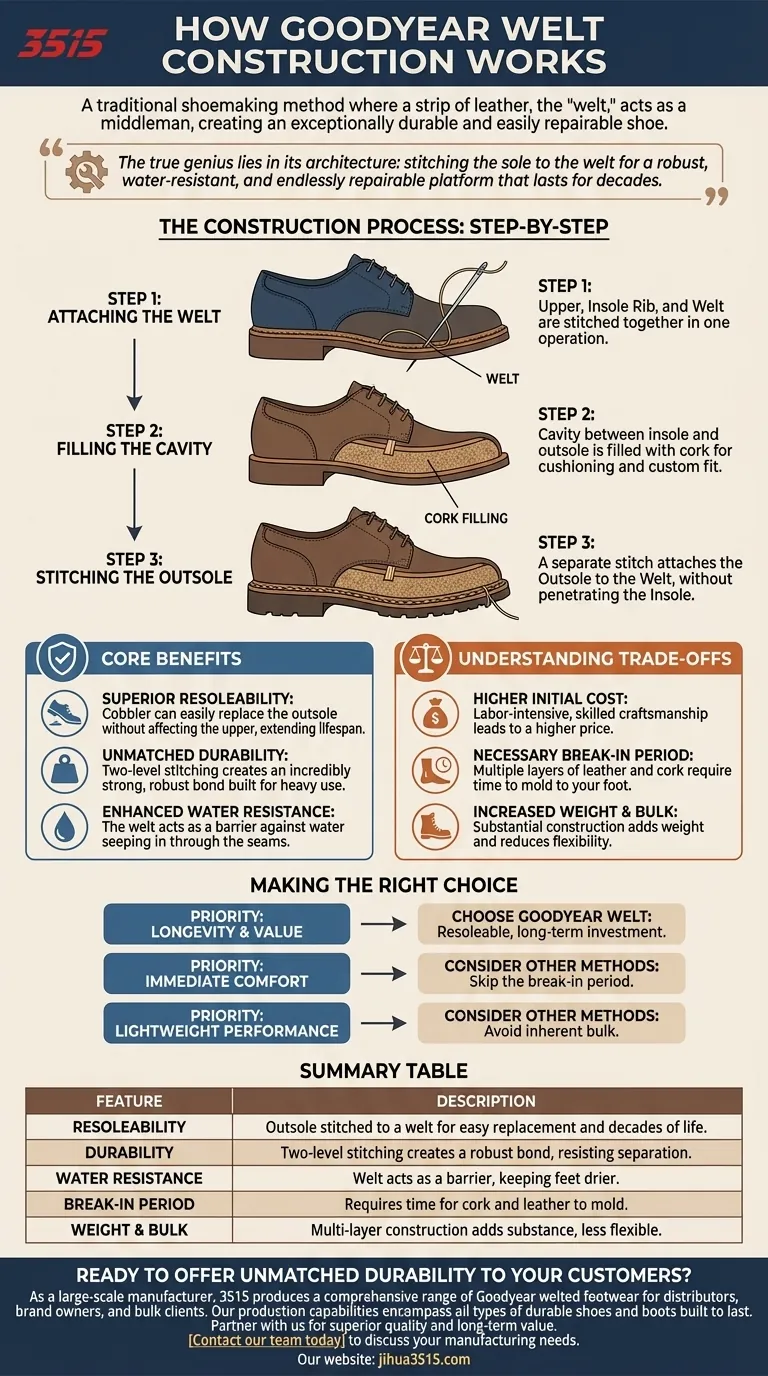
At its core, Goodyear Welt Construction is a traditional shoemaking method where a strip of leather, known as the "welt," acts as a middleman between the upper part of the shoe and the sole. This welt is first stitched to the upper and the insole, and then the outsole is stitched directly to the welt. This two-level stitching process creates an exceptionally durable and easily repairable shoe.
The true genius of the Goodyear welt lies in its architecture. By stitching the sole to the welt instead of directly to the upper, it creates a robust, water-resistant, and endlessly repairable platform that allows a shoe to last for decades, not just seasons.
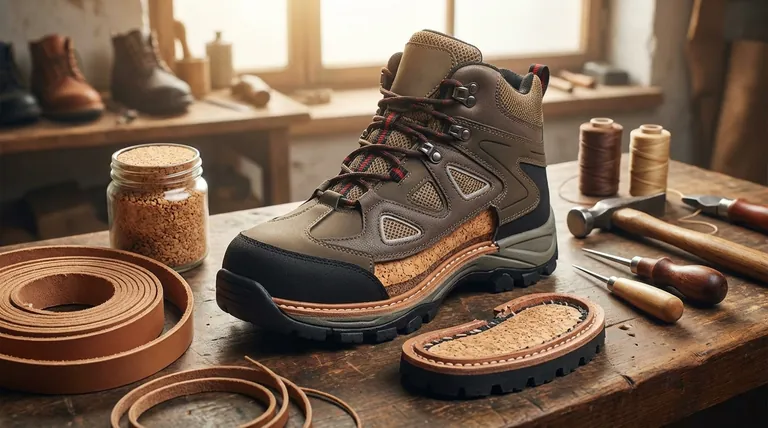
How a Goodyear Welt Is Constructed
To understand why this method is considered a gold standard, it’s helpful to visualize the key steps. It is a precise process that builds the shoe in distinct, durable layers.
The Key Components
A Goodyear welted shoe is an assembly of several critical parts. The upper is the main body of the shoe that covers your foot. The insole is the material inside directly beneath your foot. The welt is a dedicated strip of leather, and the outsole is the layer that contacts the ground.
Step 1: Attaching the Welt
The process begins by preparing the insole with a perpendicular "rib" or ridge that runs along its edge. The upper is pulled taut over the shoe last (a foot-shaped mold), and its edge is stitched securely to this insole rib. In the same stitch, the leather welt is attached, locking all three components—upper, insole, and welt—together.
Step 2: Filling the Cavity
This stitching method creates a natural cavity between the insole and the outsole. This space is filled with a layer of granulated cork. This cork filling provides cushioning, insulation, and, over time, molds to the shape of your foot for a custom fit.
Step 3: Stitching the Outsole
Finally, the outsole is attached. A separate, heavy-duty stitch is used to sew the outsole directly to the welt, running around the outside of the shoe. This is the visible stitch you often see on the top edge of a welted shoe's sole. Because this stitch never penetrates the insole, the integrity of the upper is never compromised.
The Core Benefits of This Method
The complexity of the Goodyear welt process directly translates into tangible, long-term advantages for the owner.
Superior Resoleability
This is the most significant benefit. Since the outsole is only stitched to the welt, a cobbler can easily remove the old sole and stitch on a new one without disturbing the fundamental structure of the shoe. This allows for multiple resoles, dramatically extending the footwear's lifespan.
Unmatched Durability
The two-level stitching system creates an incredibly strong bond between all parts of the shoe. This robust construction is built to withstand heavy use and years of wear, resisting the sole separation common in cheaper, cemented footwear.
Enhanced Water Resistance
The welt acts as a small wall or buffer between the upper and the outsole. This design makes it much more difficult for water on the ground to seep into the shoe through the seams, keeping your feet drier than other construction methods.
Understanding the Trade-offs
While revered, the Goodyear welt is not the perfect solution for every situation. Its robust nature comes with inherent compromises.
The Higher Initial Cost
Goodyear welting is a labor-intensive and material-heavy process that requires skilled craftsmanship. This intricacy and quality naturally result in a higher purchase price compared to simpler construction methods.
A Necessary Break-in Period
The multiple layers of thick leather, the cork footbed, and the sturdy stitching make new Goodyear welted shoes notoriously stiff. They require a significant break-in period as the cork molds to your foot and the leather becomes more pliable.
Increased Weight and Bulk
This construction method is, by definition, substantial. The extra layers of the welt and midsole add weight and create a less flexible shoe, which may not be ideal for activities requiring agility or lightweight footwear.
Making the Right Choice for Your Goal
Deciding if Goodyear welted footwear is right for you depends entirely on your priorities.
- If your primary focus is longevity and value over time: A Goodyear welt is the undisputed champion, as its resoleable nature makes it a long-term investment.
- If your primary focus is immediate, out-of-the-box comfort: You may prefer a more flexible construction that forgoes the stiff break-in period.
- If your primary focus is lightweight performance: The inherent bulk of a Goodyear welt makes it less suitable than modern, bonded constructions for athletic or highly mobile use.
Ultimately, choosing a Goodyear welt is an investment in a durable, repairable footwear platform that trades initial flexibility for a potential lifetime of service.
Summary Table:
| Key Feature | Description |
|---|---|
| Resoleability | Outsole is stitched to a welt, allowing for easy replacement and extending the shoe's life for decades. |
| Durability | Two-level stitching creates a robust bond, resisting sole separation and heavy wear. |
| Water Resistance | The welt acts as a barrier, making it difficult for water to seep into the shoe. |
| Break-in Period | Requires time for the cork footbed to mold to your foot and the leather to soften. |
| Weight & Bulk | The multi-layer construction adds substance, resulting in a less flexible, heavier shoe. |
Ready to Offer Unmatched Durability to Your Customers?
As a large-scale manufacturer, 3515 produces a comprehensive range of Goodyear welted footwear for distributors, brand owners, and bulk clients. Our production capabilities encompass all types of durable shoes and boots built to last.
Partner with us to provide your customers with the superior quality and long-term value of Goodyear welt construction. Contact our team today to discuss your manufacturing needs.
Visual Guide
Related Products
- Durable Goodyear Welt Leather Work Boots for Wholesale & Private Label
- Wholesale Durable Leather Work Boots | 8-Inch Goodyear Welt Manufacturer
- Durable Leather Work Boots Wholesale Manufacturer & Custom Factory
- Premium Lightweight Safety Shoes for Wholesale & Bulk Orders
- Wholesale Durable & Breathable Training Shoes for Custom Brands
People Also Ask
- What is the difference between full-grain and top-grain leather? Premium Material Guide for Boot Manufacturers
- What are the advantages of leather as an upper material for work boots? Unmatched Durability & Custom Comfort
- Why is it important to waterproof leather work boots? Protect Your Investment and Performance
- How should new leather work boots be broken in? A Guide to Comfort and Durability
- What are the advantages of leather uppers in work boots? Unmatched Durability & Protection










