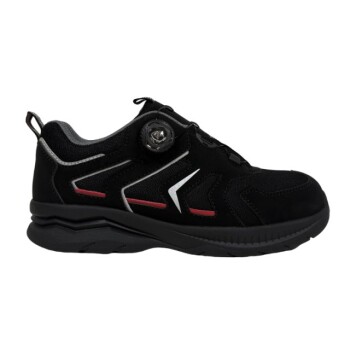
The Factorial Survey method functions as a sophisticated "simulated control system" that integrates the reach of traditional survey research with the rigor of experimental design. Rather than simply asking users for general opinions, this approach presents respondents with specific scenario descriptions where key footwear attributes—such as slip resistance, impact protection, and material durability—are systematically varied. This allows researchers to isolate how changes in technical specifications directly influence the overall performance evaluation of safety shoes and tactical boots.
By embedding experimental controls within a survey format, this method creates a unique testing ground. It enables researchers to draw strong causal inferences about product features while retaining the real-world context (external validity) that allows for accurate market predictions.
The Mechanics of the Method
Blending Experiment and Survey
The Factorial Survey is a hybrid methodology. It takes the broad data collection capabilities of a standard questionnaire and fuses them with experimental controls usually found in a lab.
This creates a simulated control system. Researchers do not just observe existing preferences; they actively manipulate the variables presented to the respondent to test specific hypotheses.
Systematic Variation of Attributes
In a systematic evaluation, safety footwear is not judged as a monolithic product. Instead, the method breaks the footwear down into its constituent factors, such as material durability or impact protection.
The researcher creates vignettes (scenarios) where these factors change. For example, one scenario might describe a boot with high slip resistance but moderate durability, while another reverses those traits.
Measuring the "Why" Behind the Choice
By observing how evaluations change as the factors change, the method reveals the weight users place on specific features. It moves beyond "what" users like to "why" they like it.
Ensuring Data Integrity
Controlling Confounding Variables
One of the greatest challenges in product evaluation is noise, or confounding variables. In a standard survey, a user's answer might be biased by brand loyalty or past experiences that the researcher cannot see.
The Factorial Survey mitigates this by controlling the information the user receives. Because the scenario is strictly defined, the researcher knows that the resulting evaluation is driven by the factors presented, not by hidden variables.
Maintaining External Validity
While laboratory tests are precise, they often lack real-world context. A machine can test impact resistance, but it cannot test how a human values that resistance against comfort.
This method maintains high external validity. Because it uses realistic scenario descriptions, it captures human judgment in a way that purely mechanical testing cannot.
Understanding the Trade-offs
The Reliance on Simulation
While this method offers high control, it remains a simulation. It relies on the respondent's ability to accurately imagine the scenario described.
Complexity of Design
This is not a simple opinion poll. It requires the precise construction of scenarios to ensure that the variations in technical features are realistic and meaningful to the respondent.
Making the Right Choice for Your Goal
To determine if the Factorial Survey method is the correct tool for your safety footwear evaluation, consider your specific objectives.
- If your primary focus is determining the exact value of a specific feature: This method is ideal because it allows you to isolate variables like slip resistance to see how they causally affect user perception.
- If your primary focus is simple market satisfaction: A traditional survey may be faster, as the Factorial Survey requires complex experimental design to be effective.
Use this method when you need to bridge the gap between technical engineering specs and human user preference.
Summary Table:
| Feature | Factorial Survey Method | Traditional Survey | Laboratory Testing |
|---|---|---|---|
| Primary Goal | Causal inference of attributes | General opinion & satisfaction | Physical property verification |
| Attribute Analysis | Isolated variable manipulation | Broad, non-isolated feedback | Purely technical/mechanical |
| External Validity | High (Realistic scenarios) | Medium (Subjective bias) | Low (Artificial environment) |
| Best Used For | Evaluating technical trade-offs | Rapid market sentiment | Quality control & compliance |
Elevate Your Product Strategy with 3515
As a leading large-scale manufacturer serving global distributors and brand owners, 3515 leverages decades of expertise to transform complex performance requirements into market-ready footwear. Whether you are developing high-spec Safety Shoes, rugged Tactical Boots, or specialized Outdoor and Training footwear, our comprehensive production capabilities ensure your technical requirements meet human-centric performance standards.
From bulk manufacturing of Dress & Formal shoes to the precision engineering of our flagship safety series, we provide the scalability and quality your brand demands. Contact us today to discuss your specific footwear requirements and discover how our manufacturing excellence can drive your success.
References
- Volker Lingnau, Florian Beham. The link between corporate sustainability and willingness to invest: new evidence from the field of ethical investments. DOI: 10.1007/s00187-022-00340-z
This article is also based on technical information from 3515 Knowledge Base .
Related Products
- Safety Footwear Wholesale Manufacturer for Custom OEM/ODM Production
- Premium Suede Sport Safety Shoes for Wholesale & Bulk Orders
- Premium Safety Shoes with Rotating Buckle Safety Sneakers
- Premium Lightweight Safety Shoes for Wholesale & Bulk Orders
- Puncture-Resistant Velcro Safety Boots for Wholesale & Custom Manufacturing
People Also Ask
- What are the key OSHA regulations for safety footwear? Ensure Compliance & Protect Your Workforce
- Why is high-load mechanical testing equipment necessary for safety footwear? Ensure Life-Saving Compression Resistance
- What does a red rectangle with a white C letter on safety footwear mean? Essential Guide to Conductive Footwear
- What is the difference between oil resistance and slip resistance in footwear? Protect Your Boots and Your Safety
- What are the basic requirements of the ASTM F2413-05 standard? Mandatory Impact & Compression Protection