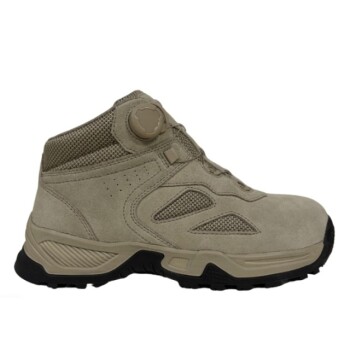
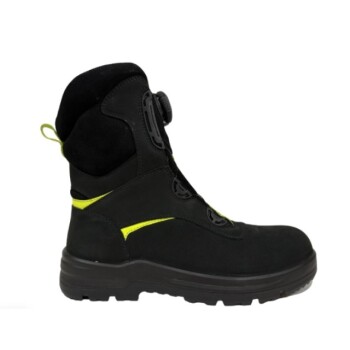
In short, lace-to-toe boots improve stability by distributing lacing tension over a much larger area of your foot. This design allows you to create a highly customized and secure fit that extends from the ankle all the way down to the ball of your foot, effectively locking your foot in place and preventing internal movement.
The fundamental advantage of a lace-to-toe system is its ability to transform the boot into a customizable exoskeleton for your foot. By distributing tightening forces evenly, it minimizes internal foot slippage, which is the primary source of instability on uneven ground.
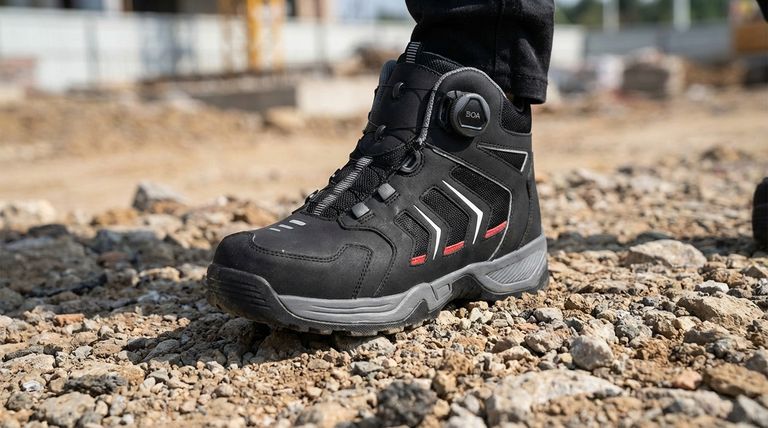
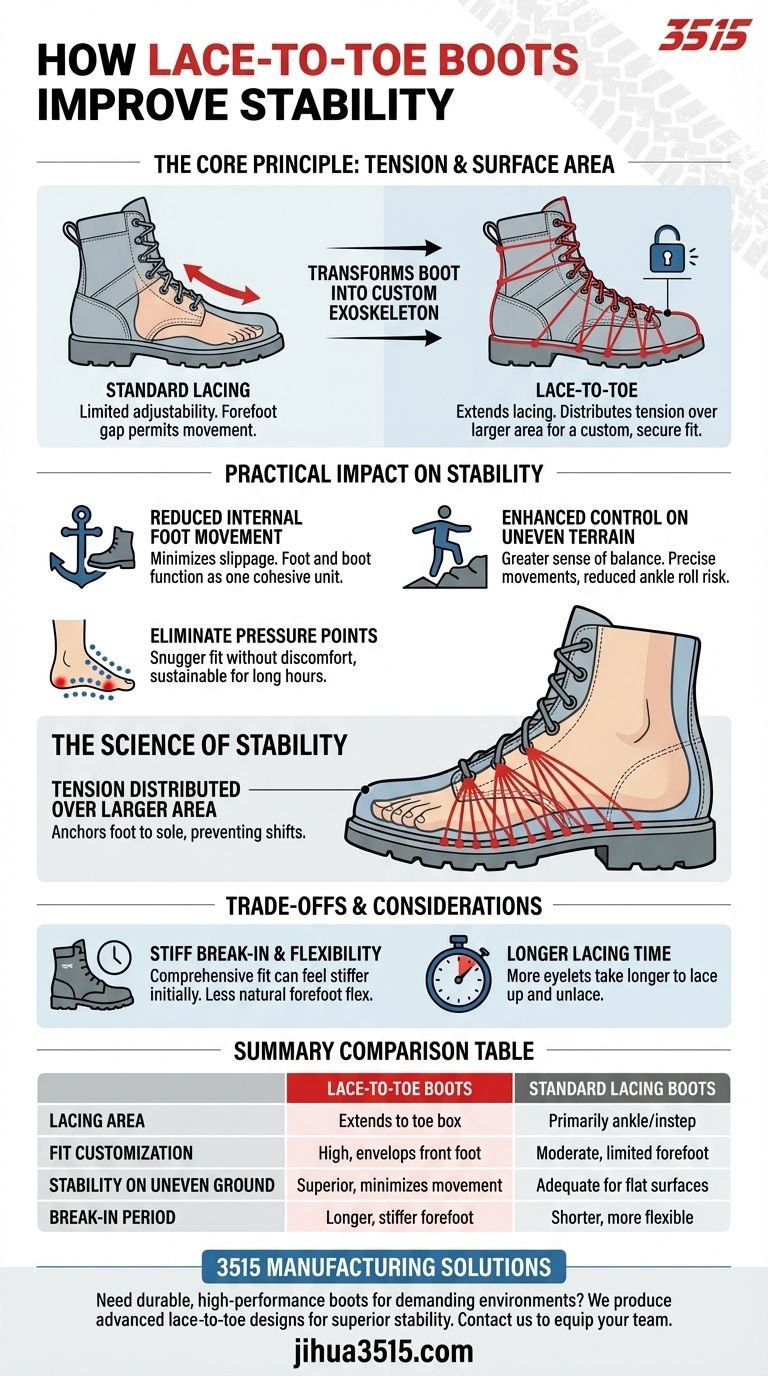
The Core Principle: Tension and Surface Area
To understand the benefit of a lace-to-toe design, we first need to look at how traditional boot lacing works and where its limitations lie.
How Standard Lacing Functions
A standard boot's lacing system primarily secures the foot around the ankle and over the instep. This design is effective for general use on flat surfaces.
However, the forefoot and toe area have very little adjustability. This can leave a small but critical gap, allowing your foot to slide forward or side-to-side inside the boot.
The Lace-to-Toe Advantage
Lace-to-toe boots extend the lacing eyelets much closer to the toe box. This dramatically increases the surface area you can control with the laces.
Instead of just pulling the top of the boot tight, you are now enveloping the entire front half of your foot, adjusting the fit around its widest part.
Eliminating Pressure Points for a Tighter Fit
Spreading the tension over this larger area is crucial. It allows you to achieve a much snugger fit without creating uncomfortable pressure points on your instep.
This even distribution of force is what makes a secure fit sustainable for long hours, preventing the pain and redness that can come from over-tightening a small area.
The Practical Impact on Stability
This superior fit translates directly to better performance and safety, especially when navigating challenging environments.
Reducing Internal Foot Movement
The primary benefit is the near-elimination of internal foot slippage. When you walk on a slope or uneven terrain, your foot naturally wants to shift inside the boot.
By creating a snug, glove-like fit around the ball of the foot, the lace-to-toe design anchors your foot to the boot's sole. Your foot and the boot begin to function as a single, cohesive unit.
Enhanced Control on Uneven Terrain
This lack of internal movement gives you a greater sense of control and balance. With your foot firmly planted, you can make more precise movements and significantly reduce the risk of an ankle roll or stumble.
Understanding the Trade-offs
While highly effective, the lace-to-toe design is not without its considerations. It represents a specific engineering choice with inherent trade-offs.
Break-in and Flexibility
The comprehensive fit that provides such great stability can also make the boot feel stiffer, especially during the break-in period. The forefoot area will have less natural flex than a plain-toe boot.
Lacing Time and Convenience
More eyelets mean it simply takes longer to lace up and unlace the boots. For users who need to take their boots on and off frequently throughout the day, this can be a minor inconvenience.
Potential for User Error
The high degree of adjustability means you can also lace them improperly. It’s important to experiment with different lacing techniques to ensure pressure is distributed evenly and you're not cutting off circulation to any part of your foot.
Making the Right Choice for Your Needs
Ultimately, the choice between a lace-to-toe and a standard lacing system depends entirely on your primary activities and needs.
- If your primary focus is maximum stability on uneven ground: Lace-to-toe is the superior choice for its unparalleled custom fit and control.
- If your primary focus is flexibility and convenience for work on flat surfaces: A standard lacing system may offer sufficient support with greater comfort and ease of use.
- If you have wide or hard-to-fit feet: The adjustability of a lace-to-toe boot can provide a significantly more comfortable and secure fit than standard designs.
Choosing the right lacing system is about matching the boot's engineering to the demands of your environment.
Summary Table:
| Feature | Lace-to-Toe Boots | Standard Lacing Boots |
|---|---|---|
| Lacing Area | Extends to the toe box | Primarily ankle and instep |
| Fit Customization | High, envelops the entire front foot | Moderate, limited forefoot adjustability |
| Stability on Uneven Ground | Superior, minimizes internal foot movement | Adequate for flat surfaces |
| Break-in Period | Longer due to stiffer forefoot | Shorter, more flexible |
| Convenience | Takes longer to lace/unlace | Quicker and easier |
Need durable, high-performance boots for demanding environments? As a large-scale manufacturer, 3515 produces a comprehensive range of footwear for distributors, brand owners, and bulk clients. Our production capabilities encompass all types of shoes and boots, including advanced lace-to-toe designs that offer superior stability and a custom fit. Let us help you equip your team or customers with footwear built for control and safety. Contact us today to discuss your specific needs and explore our manufacturing solutions!
Visual Guide
Related Products
- Premium Wholesale Wheat Nubuck Safety Boot with Rapid Lacing System
- Durable Goodyear Welt Leather Work Boots for Wholesale & Private Label
- Wholesale Classic Leather Lace-Up Ankle Boots for Brand Manufacturing
- Premium Wholesale Tactical Style Safety Shoes Boots with Quick Lacing
- Advanced KPU Athletic Safety Shoe with Steel Toe Cap Anti-Slip Rotary Lacing System
People Also Ask
- Why are oil-resistant and anti-slip properties critical for industrial safety boots? Expert Outsole Engineering Guide
- What are the primary protective functions of industrial safety boots in oil palm plantations? Master Rough Terrain Safety
- How do industrial safety boots assist maintenance personnel working on high-level palm oil factory structures?
- What are the primary protective functions of industrial safety boots in granite quarry environments? Essential Guide
- Why are industrial safety boots with high-grip outsoles required for oil leaks and B3 waste? Ensure Worker Stability