
In short, technology improves tactical footwear by systematically engineering every component—from materials to construction—to reduce operator fatigue, enhance environmental adaptability, and increase physical capability. This is achieved through advanced lightweight composites, specialized outsole designs for superior traction, and climate-specific features that keep the user protected and comfortable.
The core shift is from viewing tactical footwear as simple protection to understanding it as an integrated performance system. Modern technology ensures the boot works with the user, enhancing their natural abilities and extending their operational effectiveness in demanding situations.

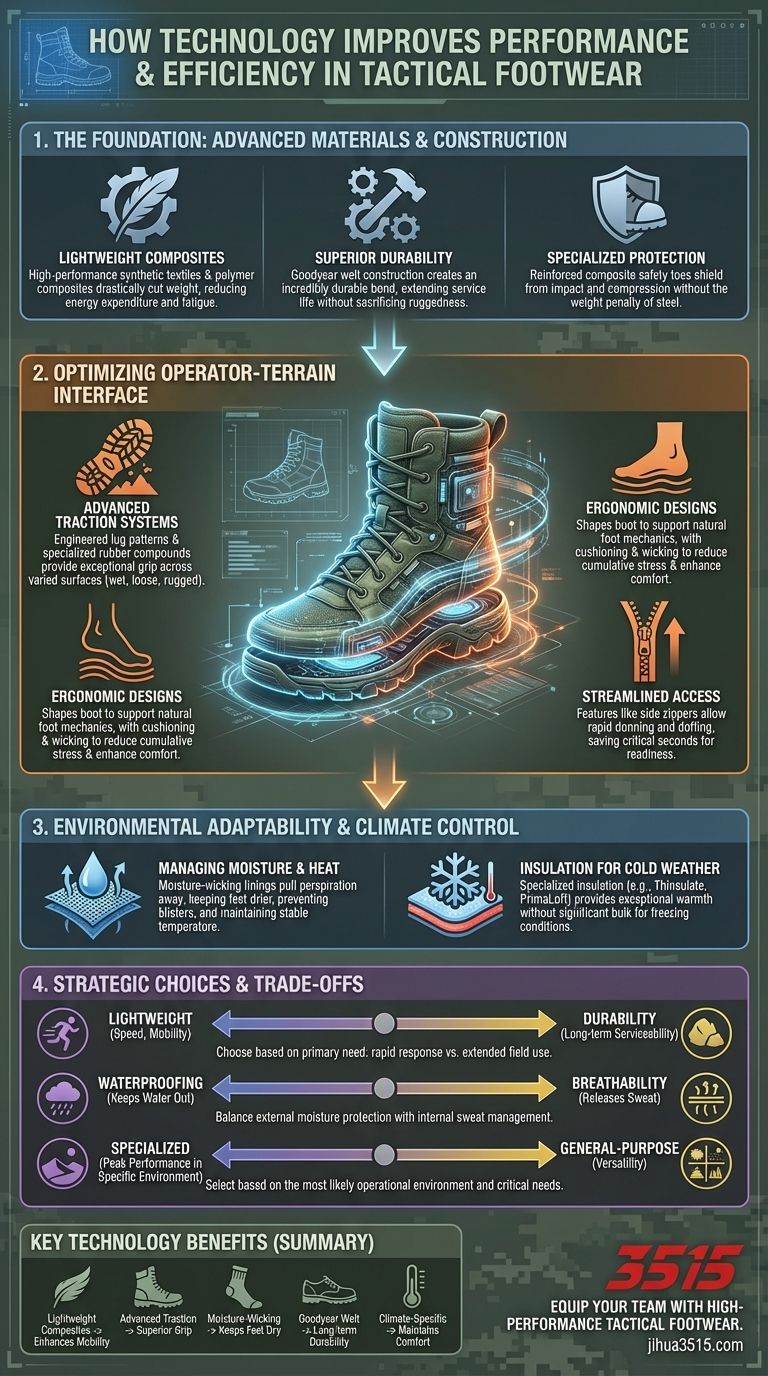
The Foundation: Advanced Materials and Construction
The most significant leaps in footwear performance begin with the materials used and how they are assembled. This foundation dictates the boot's weight, durability, and protective capabilities.
Reducing Weight for Enhanced Mobility
Modern tactical footwear utilizes advanced lightweight materials, such as high-performance synthetic textiles and polymer composites.
By drastically cutting down on weight compared to traditional leather, these boots reduce the energy an operator must expend with every step. This directly translates to increased speed, better mobility, and less fatigue over long periods.
Superior Durability Without the Bulk
While lightweight, modern boots do not sacrifice ruggedness. Construction methods like Goodyear welt construction create an incredibly durable bond between the upper and the outsole.
This technique, combined with abrasion-resistant fabrics, ensures the footwear can withstand harsh use while remaining serviceable for far longer.
Specialized Protection Features
Technology enables targeted protection where it's needed most. Features like reinforced or composite safety toes shield the foot from impact and compression hazards without the weight penalty of steel. This adds a critical layer of safety in unpredictable environments.
Optimizing the Operator-Terrain Interface
How the boot connects the user to the ground is a critical factor in performance. Technology in this area focuses on grip, stability, and biomechanical support.
Advanced Traction Systems
The outsole is no longer a simple piece of rubber. It is an advanced traction system with carefully engineered lug patterns and specialized rubber compounds.
These designs provide exceptional grip and stability across a wide variety of surfaces, from wet urban pavement and loose gravel to rugged, uneven outdoor terrain.
Ergonomics for Reduced Fatigue
Ergonomic designs shape the boot to support the natural mechanics of the human foot.
Combined with advanced cushioning systems and moisture-wicking linings, these features enhance comfort and reduce the cumulative stress of extended wear. This allows the operator to stay focused and effective for longer durations.
Streamlined Access and Fit
Simple innovations can have a major impact on efficiency. Features like side zippers allow for rapid donning and doffing, saving critical seconds when responding to an alert. This small detail enhances readiness and convenience.
Environmental Adaptability and Climate Control
An operator's effectiveness can be severely compromised by environmental conditions. Modern tactical footwear integrates technology to mitigate the effects of extreme weather.
Managing Moisture and Heat
In any climate, managing sweat is crucial for comfort and foot health. Moisture-wicking linings actively pull perspiration away from the skin, keeping feet drier. This helps prevent blisters and maintains a more stable internal temperature during high-exertion activities.
Insulation for Cold Weather Operations
For cold environments, specialized insulation is key. Materials like Thinsulate or PrimaLoft provide exceptional warmth without adding significant bulk or weight. This allows operators to remain effective in freezing conditions without being hampered by clumsy, oversized boots.
Understanding the Trade-offs
No single piece of footwear is perfect for every mission. Recognizing the inherent trade-offs in boot technology is essential for making an informed choice.
Lightweight vs. Durability
While technology has narrowed the gap, an ultra-lightweight boot designed for speed may not have the same long-term durability as a heavier boot featuring Goodyear welt construction. The choice depends on whether the primary need is mobility or extended field serviceability.
Waterproofing vs. Breathability
A fully waterproof membrane is excellent for keeping external moisture out, but it can limit breathability. In hot, dry climates, this can trap sweat and lead to discomfort. A more breathable, non-waterproof boot might be the more efficient choice for desert environments.
Specialized vs. General-Purpose
A boot with heavy insulation is a critical tool in the arctic but a significant liability in the jungle. Highly specialized footwear offers peak performance in its intended environment but may perform poorly outside of it.
Making the Right Choice for Your Mission
Your gear selection should be driven by your most likely operational environment and critical performance needs.
- If your primary focus is rapid response and mobility: Prioritize boots made with lightweight synthetic materials and a flexible, ergonomic design.
- If your primary focus is durability and protection in rugged terrain: Look for features like Goodyear welt construction, reinforced toes, and aggressive outsole patterns.
- If your primary focus is comfort and effectiveness during long patrols: Emphasize advanced cushioning systems and high-quality moisture-wicking linings.
- If your primary focus is operating in a specific climate: Select boots with specialized features like thermal insulation for cold or enhanced ventilation for heat.
Ultimately, choosing the right tactical footwear means treating it as a critical performance tool, not just an article of clothing.
Summary Table:
| Technology Feature | Key Benefit |
|---|---|
| Lightweight Composites | Reduces energy expenditure, enhances mobility |
| Advanced Traction Systems | Provides superior grip on varied terrain |
| Moisture-Wicking Linings | Keeps feet dry, prevents blisters |
| Goodyear Welt Construction | Ensures long-term durability and serviceability |
| Climate-Specific Insulation | Maintains warmth or breathability as needed |
Ready to equip your team with high-performance tactical footwear?
As a large-scale manufacturer, 3515 produces a comprehensive range of durable, technologically advanced boots and shoes for distributors, brand owners, and bulk clients. Our production capabilities encompass all types of tactical footwear, engineered to enhance operator performance and efficiency in any environment.
Contact us today to discuss your specific needs and discover how 3515 can be your trusted manufacturing partner.
Visual Guide
Related Products
- Durable Leather High-Ankle Tactical Boots for Wholesale & Custom Manufacturing
- Durable Leather Tactical Boots Wholesale & Custom Manufacturing for Brands
- Durable High-Ankle Tactical Boots Wholesale Manufacturer for Custom & Bulk Orders
- Durable Mid-Cut Tactical Boots for Wholesale & Private Label
- Wholesale Waterproof Tactical Boots Custom Suede & High-Traction Soles
People Also Ask
- How do military uniforms and tactical boots impact the prediction of thermal risk? Essential Safety Insights
- How does the material of tactical boots affect their performance? Choose the Right Material for Your Mission
- Why is sequential analysis utilized to evaluate tactical boots? Master Dynamic Boot Development and Ergonomic Performance
- How do tactical boots differ from regular boots? Performance, Durability & Design Explained
- What are the primary differences between tactical boots and combat boots? Choose the Right Boot for Your Mission



















