
At its core, tactical footwear ensures durability and protection through a system of carefully selected materials and purpose-driven construction. It's engineered not just to resist damage, but to provide a stable, protective platform that allows the user to remain agile and effective in harsh, unpredictable environments.
The central principle behind tactical footwear is not just adding armor, but achieving a critical balance. It's about combining rugged protection against environmental hazards with the flexibility and support needed for high-performance mobility.
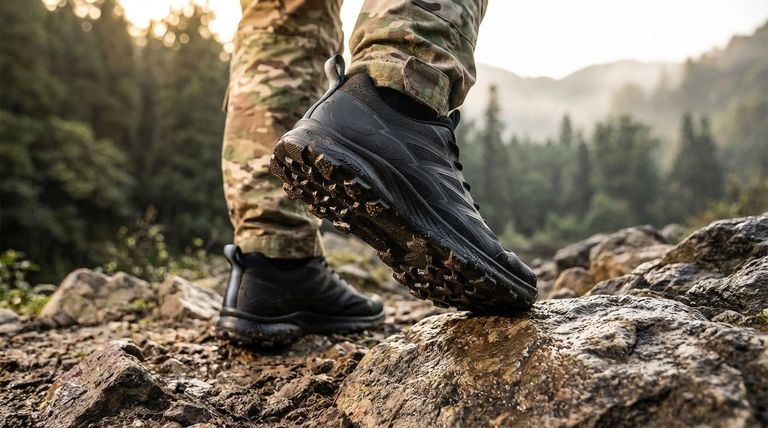
The Core Components of Durability
True durability in tactical footwear comes from a synergy between the outer materials, the construction methods, and the design of the sole. Each element is chosen to withstand extreme stress.
Advanced Upper Materials
The upper part of the boot faces constant abrasion, flexing, and exposure. Manufacturers use a combination of materials like full-grain leather for its toughness and synthetics like high-denier nylon for its lightweight, breathable, and abrasion-resistant properties.
Reinforced Construction
How a boot is put together is as important as what it's made of. Heavy-duty stitching, strong adhesives, and reinforced eyelets ensure the boot doesn't fail at its seams or stress points when pushed to its limits.
Outsole Engineering
The outsole is the boot's point of contact with the world. Tactical outsoles are made from durable rubber compounds designed for slip-resistance and feature aggressive lug patterns that provide superior traction on varied surfaces, from wet concrete to loose gravel.
Key Protective Features Explained
Protection in tactical footwear is multi-faceted, guarding against everything from direct impact to environmental hazards and the risk of personal injury.
Toe and Heel Reinforcement
While some models incorporate certified safety toes (like steel or composite), most tactical boots feature reinforced toe caps and heel counters. These are designed to protect against impact and abrasion rather than just crushing weight, preserving the boot's structure and shielding the foot.
Ankle Support and Stability
Navigating uneven terrain requires significant ankle stability to prevent sprains and injuries. Tactical boots are typically designed with a higher cuff and a rigid structure around the heel and ankle to lock the foot in place, providing crucial support during dynamic movement.
Environmental Resistance
A key function is to safeguard the user from the environment. This often includes waterproof membranes that keep feet dry while allowing vapor to escape, as well as materials that resist damage from water, mud, and oil.
Understanding the Trade-offs
Choosing tactical footwear involves balancing competing needs. No single boot is perfect for every situation, and understanding the inherent compromises is key.
Protection vs. Agility
Heavier, more rigid boots offer maximum protection and support but can reduce flexibility and increase fatigue. Lighter boots enhance speed and agility but may sacrifice some durability and protective features.
Breathability vs. Waterproofing
A fully waterproof boot is excellent for wet conditions but will inherently be less breathable than a non-waterproof alternative. This can lead to heat and moisture buildup in hot, dry climates, highlighting the need to match the boot to the environment.
Tactical vs. Standard Safety Shoes
Standard safety shoes are built to meet specific workplace hazard certifications, primarily focusing on protection from crushing and punctures. Tactical footwear is designed for operational performance, balancing protection with mobility, support, and traction across diverse terrains.
Making the Right Choice for Your Goal
Your specific need should dictate your selection. Consider the most likely challenges you will face to find the optimal balance of features.
- If your primary focus is certified workplace safety: A dedicated safety shoe with a steel or composite toe is the correct and necessary choice.
- If your primary focus is performance in varied, rough terrain: A true tactical boot with robust ankle support and an aggressive outsole provides the ideal blend of protection and mobility.
- If your primary focus is lightweight agility in urban environments: A lighter tactical boot or a more athletic-style shoe will offer better flexibility and reduced weight for speed.
Ultimately, understanding how a boot is engineered empowers you to select footwear that functions as a reliable tool for your specific mission.
Summary Table:
| Feature | Purpose | Key Benefit |
|---|---|---|
| Advanced Upper Materials | Withstand abrasion and exposure | Toughness and breathability |
| Reinforced Construction | Prevent failure at stress points | Long-lasting structural integrity |
| Outsole Engineering | Provide superior traction | Slip-resistance on varied surfaces |
| Toe/Heel Reinforcement | Protect against impact | Enhanced foot protection |
| Ankle Support | Stabilize foot on uneven terrain | Injury prevention and support |
| Environmental Resistance | Guard against water and elements | Keep feet dry and comfortable |
Ready to equip your team with high-performance tactical footwear?
As a large-scale manufacturer, 3515 produces a comprehensive range of durable and protective footwear for distributors, brand owners, and bulk clients. Our production capabilities encompass all types of tactical boots and shoes, engineered to meet the demands of varied, rough terrain and urban environments.
We provide the optimal balance of protection, mobility, and durability your customers need. Contact us today to discuss your specific requirements and discover how we can be your reliable manufacturing partner.
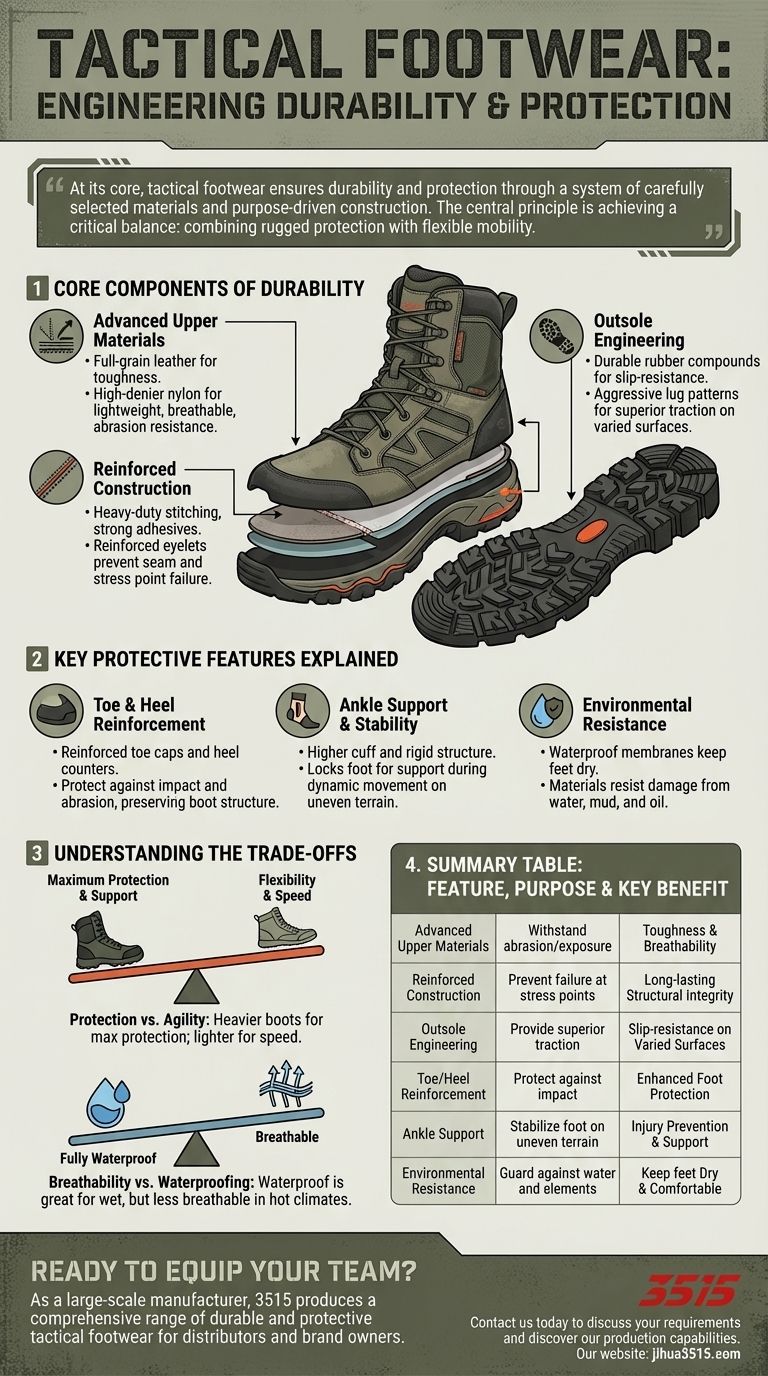
Visual Guide
Related Products
- Durable Leather High-Ankle Tactical Boots for Wholesale & Custom Manufacturing
- Durable Leather Tactical Boots Wholesale & Custom Manufacturing for Brands
- Durable High-Ankle Tactical Boots Wholesale Manufacturer for Custom & Bulk Orders
- Durable Mid-Cut Tactical Boots for Wholesale & Private Label
- Wholesale Waterproof Tactical Boots Custom Suede & High-Traction Soles
People Also Ask
- How do military uniforms and tactical boots impact the prediction of thermal risk? Essential Safety Insights
- How does the material of tactical boots affect their performance? Choose the Right Material for Your Mission
- Why is sequential analysis utilized to evaluate tactical boots? Master Dynamic Boot Development and Ergonomic Performance
- How do tactical boots differ from regular boots? Performance, Durability & Design Explained
- What are the primary differences between tactical boots and combat boots? Choose the Right Boot for Your Mission



















