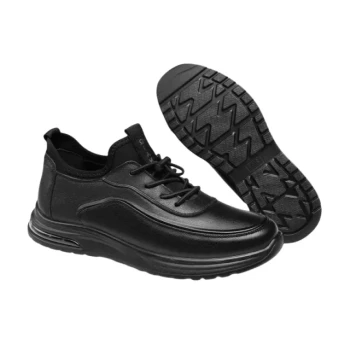
Reducing shoe conflict serves as a critical protective barrier against the recurrence of Insertional Achilles Tendinopathy (IAT). By minimizing the direct pressure and friction applied by the shoe’s heel counter against the sensitive posterosuperior region of the calcaneus, professional footwear design preserves surgical outcomes and prevents chronic irritation.
Post-treatment recovery relies heavily on shielding the heel bone from external compression. Optimized footwear design minimizes physical irritation at the insertion site, ensuring that mechanical friction does not compromise the healing process or patient comfort.
The Mechanics of Shoe Conflict
Identifying the Pressure Point
Shoe conflict is defined by the direct interaction between the back of the footwear and the posterosuperior region of the calcaneus (heel bone).
Standard footwear often possesses a rigid heel counter that exerts continuous force on this specific area.
Post-Treatment Vulnerability
Following treatment for IAT, the calcaneal area remains highly sensitive to external pressure.
Even minor friction or compression in this region can trigger inflammation or undo the benefits of surgical intervention.
Structural Solutions in Professional Design
Optimizing Heel Cup Geometry
Professional footwear addresses conflict by refining the anatomical shape of the heel cup.
This design modification contours the shoe to accommodate the natural prominence of the heel bone rather than pressing flat against it.
Specialized Padding Integration
To further reduce contact stress, designers utilize specialized padding materials within the heel counter.
This creates a buffer that absorbs pressure, reducing the physical irritation that typically leads to pain recurrence.
The Role of Stability in Prevention
Supporting the Kinetic Chain
While reducing heel conflict is primary, the overall stability of the shoe plays a supporting role.
As noted in rehabilitation protocols, shoes with superior stability ensure mechanical forces are correctly distributed during movement.
Facilitating Safe Movement
Proper stability prevents the foot from shifting inside the shoe, which could inadvertently cause friction against the heel counter.
This balance allows for necessary movements, such as the eccentric exercises required for rehabilitation, without re-injuring the tissue.
Understanding the Trade-offs
The Fit vs. Friction Dilemma
Eliminating shoe conflict requires a delicate balance between a roomy heel cup and a secure fit.
If the heel area is too spacious, the foot may slide, leading to blisters or instability; if it is too tight, it reintroduces the original conflict.
Material Degradation
The specialized padding used to reduce compression will compress and degrade over time.
Users must monitor their footwear, as worn-out padding can lose its protective qualities and silently reintroduce pressure to the calcaneus.
Making the Right Choice for Your Goal
To select footwear that prevents IAT recurrence, consider your current stage of recovery:
- If your primary focus is protecting surgical results: Prioritize shoes with a contoured heel cup and specialized padding to eliminate direct pressure on the calcaneus.
- If your primary focus is active rehabilitation: Look for shoes with superior arch support and stability to safely manage loads during eccentric exercises.
By systematically removing external compression from the equation, you transform your footwear from a source of irritation into a tool for sustained recovery.
Summary Table:
| Feature | Design Solution | Benefit for IAT Prevention |
|---|---|---|
| Heel Cup Geometry | Anatomical contouring | Reduces direct pressure on the calcaneus |
| Heel Counter | Specialized padding buffers | Absorbs friction and prevents chronic irritation |
| Structural Stability | Secure arch & midfoot support | Minimizes foot sliding to prevent kinetic chain stress |
| Material Choice | Compression-resistant foam | Maintains long-term protection for surgical sites |
Partner with 3515 for Advanced Ergonomic Footwear Solutions
As a large-scale manufacturer serving distributors and brand owners, 3515 offers comprehensive production capabilities for all footwear types, anchored by our flagship Safety Shoes series. Our expertise in professional footwear design ensures that we can help you provide products that minimize shoe conflict and protect your customers' health.
From work and tactical boots to outdoor shoes, training shoes, and dress & formal footwear, we deliver the quality and bulk requirements you need to succeed in the market.
Ready to elevate your footwear line with superior comfort and medical-grade design?
Contact Us Today to Discuss Your Bulk Requirements
References
- Hubert Hörterer, Sebastian Felix Baumbach. Recurrence rates for surgically treated insertional Achilles tendinopathy. DOI: 10.1007/s00402-023-05155-8
This article is also based on technical information from 3515 Knowledge Base .
Related Products
- Wholesale Comfortable Business Casual Shoes Custom Manufacturing
- Custom Manufactured Air Cushion Leather Business Shoes for Wholesale
- Wholesale Breathable Training Shoes Custom Athletic Footwear Manufacturer
- Durable Goodyear Welt Leather Work Boots for Wholesale & Private Label
- Durable Leather Work Boots for Wholesale & Custom Manufacturing
People Also Ask
- What are the key characteristics of business casual shoes? Achieve Polished Versatility for Your Wardrobe
- Which types of shoes should be avoided with business casual attire? Maintain a Polished Professional Image
- What should be considered when selecting shoes for a casual business setting? Achieve the Perfect Balance of Style and Comfort
- What is the recommended approach to trying on business casual shoes? Ensure a Perfect Fit for Your Workday
- What are some types of business casual shoes? Build a Versatile & Professional Footwear Wardrobe