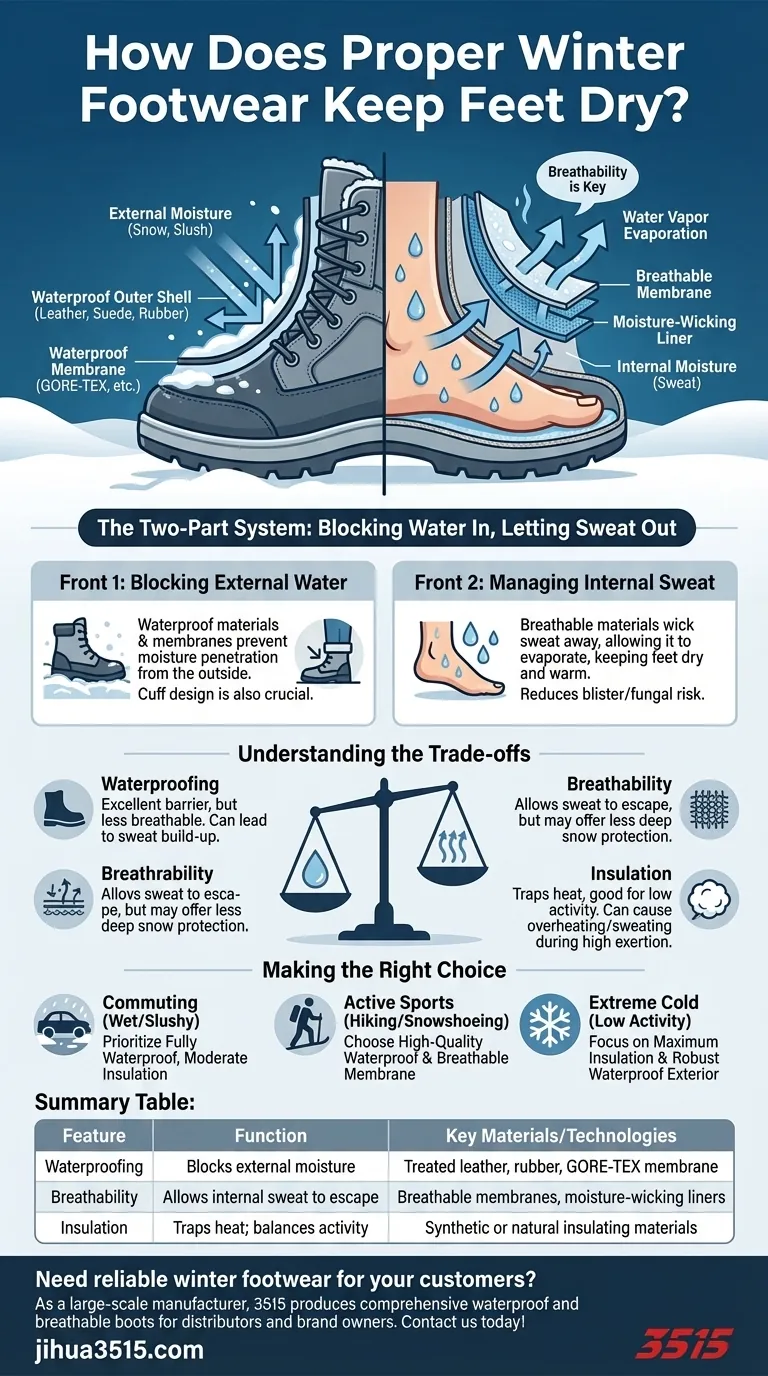
Proper winter footwear keeps feet dry through a two-part system. It uses a waterproof outer layer to block external moisture like snow and slush, while simultaneously employing breathable materials that allow internal moisture, like sweat, to escape. This dual approach is critical for preventing the dampness that leads to cold feet and potential health issues.
The core principle of dry winter footwear isn't just about blocking water from getting in; it's equally about letting sweat get out. True dryness is a balance between waterproofing and breathability.
The Two-Front War Against Moisture
Keeping feet dry in winter means fighting moisture from two different sources: the environment outside and your own body inside. Effective winter boots are engineered to handle both challenges simultaneously.
Front 1: Blocking External Water
The most obvious function of a winter boot is to act as a barrier against snow, ice, and slush.
Waterproofing the Outer Shell
Most quality winter boots use materials like treated leather, suede, or rubber for their outer layers, or "uppers." These materials are inherently water-resistant or are treated to become so. This first line of defense prevents the bulk of external moisture from soaking through the boot.
The Role of a Waterproof Membrane
Beneath the outer material often lies a dedicated waterproof, breathable membrane, such as a GORE-TEX (or similar "TEX") liner. This is a specialized layer with microscopic pores that are too small for water droplets to pass through from the outside, but large enough for water vapor (sweat) to escape from the inside.
Preventing Entry from the Top
A boot's design also matters. Wearing trousers with a cuff that covers the top of your boots can prevent snow and water from simply falling inside, bypassing all the waterproofing technology.
Front 2: Managing Internal Sweat
Your feet can produce a significant amount of sweat, even in cold weather. If this moisture is trapped, it will make your socks damp, which rapidly chills your feet and can lead to serious discomfort and health risks.
The Importance of Breathability
This is where breathable upper layers and membranes become essential. Materials that allow water vapor to pass through them are considered "breathable." This process, known as moisture-wicking, moves sweat away from your skin and socks, allowing it to evaporate out of the boot.
Why Breathability Prevents Cold Feet
A wet sock will draw heat away from your foot much faster than a dry one. By managing sweat effectively, breathable materials help keep your socks and feet dry, which is fundamental to keeping them warm. It also drastically reduces the risk of blisters and fungal infections, which thrive in damp environments.
Understanding the Trade-offs
Choosing the right footwear involves balancing competing priorities. No single boot is perfect for every situation.
Waterproofing vs. Breathability
The most waterproof materials, like solid rubber, are often the least breathable. A fully rubber boot is excellent for standing in puddles but can cause your feet to become very sweaty and damp during active use. Conversely, highly breathable boots may offer less robust protection against deep snow or slush.
Insulation vs. Activity Level
Heavily insulated boots are great for low-activity situations, like standing at a bus stop. However, during high-exertion activities like snowshoeing, that same insulation can cause excessive sweating, leading to damp feet that get cold the moment you stop moving.
Making the Right Choice for Your Needs
To select the best footwear, match the boot's features to your intended activity and environment.
- If your primary focus is commuting in wet, slushy city conditions: Prioritize a fully waterproof outer shell, like rubber or treated leather, with moderate insulation.
- If your primary focus is active winter sports like hiking or snowshoeing: Choose a boot with a high-quality waterproof and breathable membrane to manage sweat effectively.
- If your primary focus is extreme cold with low activity: Look for maximum insulation combined with a robust waterproof exterior, as breathability is less of a concern.
Ultimately, understanding that dryness comes from managing moisture both inside and out is the key to keeping your feet comfortable and safe all winter.
Summary Table:
| Feature | Function | Key Materials/Technologies |
|---|---|---|
| Waterproofing | Blocks external moisture (snow, slush) | Treated leather, rubber, GORE-TEX membrane |
| Breathability | Allows internal sweat vapor to escape | Breathable membranes, moisture-wicking liners |
| Insulation | Traps heat; must be balanced with activity level | Synthetic or natural insulating materials |
Need reliable winter footwear for your customers?
As a large-scale manufacturer, 3515 produces a comprehensive range of waterproof and breathable boots and shoes for distributors, brand owners, and bulk clients. Our production capabilities ensure high-quality footwear that effectively manages moisture for ultimate comfort and safety.
Contact us today to discuss your specific needs and discover how we can deliver value to your business!
Visual Guide
Related Products
- Premium Insulated Safety Boots and Shoes for Wholesale & Bulk Orders
- Factory Direct Wholesale Rain Boots Durable Waterproof & Fully Customizable
- Durable Waterproof Rain Boots | Custom Manufacturer for Wholesale & Brands
- Wholesale Waterproof Tactical Boots Custom Suede & High-Traction Soles
- Premium Waterproof High-Cut Industrial Safety Boots for Wholesale and Bulk Orders
People Also Ask
- What are the recommended insulation ratings for mild winter conditions? A Guide for Active & Stationary Workers
- How does insulation thickness correlate with temperature ranges? A Guide to Choosing the Right Warmth
- What insulation level is needed for severe cold and stationary work? 1200g or Higher is Essential
- What safety advantages do insulated boots offer beyond warmth? Dielectric Protection & Superior Grip
- How does fleece lining contribute to the warmth of insulated boots? Trapping Air for Superior Cold Protection