
Indoor footwear primarily prevents plantar fasciitis by providing consistent arch support, which reduces the strain on a critical ligament in your foot. When you walk barefoot on hard, flat surfaces, your foot's arch can collapse with each step, overstretching the plantar fascia and causing the micro-tears and inflammation that define this painful condition.
The core issue is the conflict between our foot's natural design and our modern, hard-surfaced environment. Indoor footwear acts as a necessary buffer, supporting the foot's structure to prevent the repetitive strain that leads to plantar fasciitis.
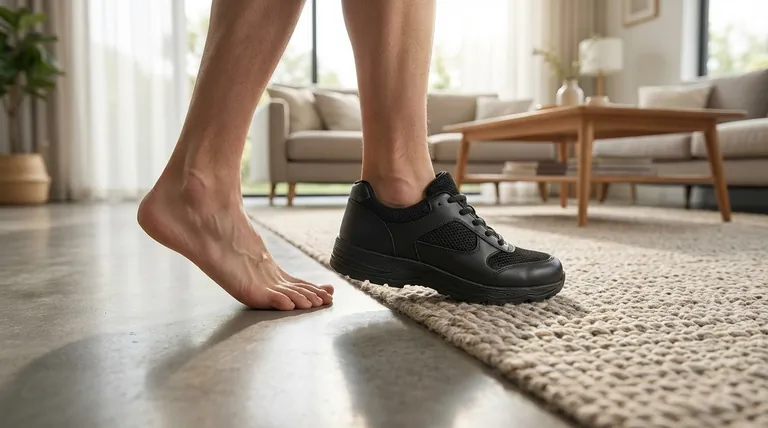
The Core Problem: Why Hard Surfaces Cause Strain
To understand the solution, we must first appreciate the mechanical problem. Your foot is a complex structure not originally designed for the unyielding surfaces of tile, wood, and concrete floors that dominate our homes.
The Role of the Plantar Fascia
Think of the plantar fascia as a thick, fibrous bowstring connecting your heel bone to the base of your toes. Its primary job is to support the arch of your foot and absorb the shock of walking.
Arch Collapse and Micro-Tears
When you walk barefoot on a hard floor, your arch has a tendency to flatten or "collapse" under your body weight. This action repeatedly stretches the plantar fascia beyond its comfortable limit, creating microscopic tears in the ligament.
The Cumulative Effect of Stress
Plantar fasciitis is rarely the result of a single event. It is a repetitive stress injury. Over time, the accumulated micro-tears lead to inflammation, swelling, and the characteristic sharp, stabbing pain in the heel, especially in the morning.
How Indoor Footwear Provides a Solution
Supportive indoor footwear directly counteracts the mechanical failures that lead to plantar fasciitis. The right shoe provides a corrective environment for your foot with every step.
Essential Feature 1: Arch Support
This is the most critical function. An indoor shoe with proper arch support acts like a scaffold, preventing the arch from collapsing. This single feature dramatically reduces the tension and strain on the plantar fascia, giving it a chance to rest and heal.
Essential Feature 2: Shock Absorption
Modern homes are filled with high-impact surfaces. A shoe with excellent shock absorption uses cushioning materials to dissipate the force of each footfall, protecting the heel and the already-irritated ligament from further jarring.
Essential Feature 3: Corrective Structure
A well-designed shoe provides a stable and supportive base. This helps control any excessive inward rolling of the foot (overpronation), which is a common contributor to the strain on the plantar fascia.
Understanding the Pitfalls
Simply wearing something on your feet indoors is not enough. Choosing the wrong type of footwear can be ineffective or even counterproductive.
Not All Indoor Shoes Are Equal
Traditional, flimsy slippers or flat-soled slip-ons offer virtually no support. They may feel comfortable, but they allow your arch to collapse just as it would if you were barefoot, offering no protection against the root cause of the problem.
The Myth of Constant Softness
While cushioning is important for shock absorption, a shoe that is only soft and lacks structure can fail to provide adequate arch support. The ideal shoe balances cushioning with a firm, supportive foundation.
Making the Right Choice for Your Goal
Selecting the right indoor footwear depends on whether you are focused on prevention or active recovery.
- If your primary focus is preventing pain: Choose a supportive slipper or sandal with a built-in, contoured footbed that provides moderate arch support and cushioning.
- If your primary focus is recovering from active plantar fasciitis: Opt for a dedicated indoor shoe or recovery slip-on with firm, structured arch support and deep heel cupping to maximize stability and reduce stress.
By providing your feet with the support they need, you are taking a proactive step to manage pain and protect your long-term foot health.
Summary Table:
| Key Benefit | How It Helps Prevent Plantar Fasciitis |
|---|---|
| Arch Support | Prevents the arch from collapsing, reducing strain on the plantar fascia ligament. |
| Shock Absorption | Cushions impact on hard floors, protecting the heel and ligament from repetitive stress. |
| Corrective Structure | Controls overpronation (inward rolling), providing a stable base for the foot. |
Ready to protect your feet?
As a large-scale manufacturer, 3515 produces a comprehensive range of supportive footwear for distributors, brand owners, and bulk clients. Our production capabilities encompass all types of shoes and boots, including the precise arch support and cushioning technology detailed above.
Let us help you provide the right footwear solution for your customers' foot health needs.
Contact us today to discuss your requirements!
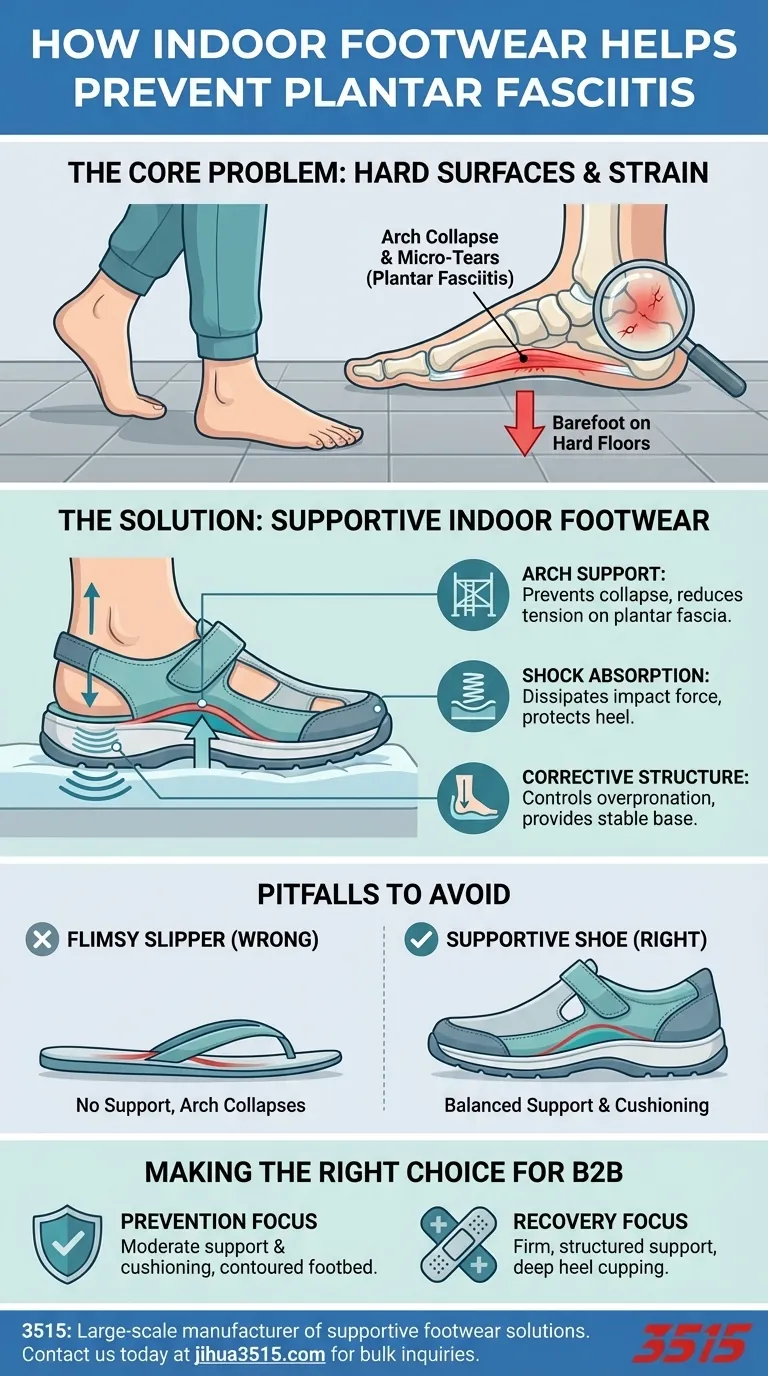
Visual Guide
Related Products
- Premium Safety Shoes with Rotating Buckle Safety Sneakers
- Premium Suede Sport Safety Shoes for Wholesale & Bulk Orders
- Lightweight Breathable Training Shoes for Wholesale & Custom OEM Manufacturing
- Durable Steel Toe Safety Boots Wholesale & Custom Manufacturing
- Premium Wheat Nubuck Safety Shoes for Bulk Distribution
People Also Ask
- What are the main safety features of S1-S5 shoes? The 3 Essential Protections Explained
- What are the technical advantages of integrating sensors into safety shoes? Achieve Superior Motion Capture Precision
- What happens during the cutting stage of safety shoes manufacturing? Precision, Process & Quality
- How do specialized safety shoes protect against battery maintenance injuries? Prevent Impact and Chemical Burns
- What industries have specific OSHA footwear requirements? Ensure Compliance & Protect Your Workforce



















